

01Hand-built files
The file assembles itself.
- Statements, GST, ITR, bureau and account-aggregator data in one place
- The same calculations for every analyst
Analyst time down by half

CommercialAutoCredit · loan file, credit memo & field verification
For lenders’ credit and operations teams. Statements, GST returns, ITRs, bureau and account-aggregator data assembled into one file; a memo drafted against your policy bands with every line cited; field verification filed the same day. Credit officers decide — faster, and with the evidence in front of them.
WhySound familiar?
From credit heads, credit officers and operations teams at lenders. Composite quotes from discovery calls — the problems are real; the names are left out.

“Our analysts spend two days building a file.”
Statements, GST and ITRs are collected over email and spread into spreadsheets by hand.
Credit headSlow sanction TAT
“Every analyst writes the memo differently.”
Committees read uneven notes and ask the same questions every week.
Credit committee memberUneven credit notes
“The field report arrives three days after the visit.”
Photos sit on a phone; the file waits.
Operations managerFiles stuck on verification
HowWhat changes with AutoCredit
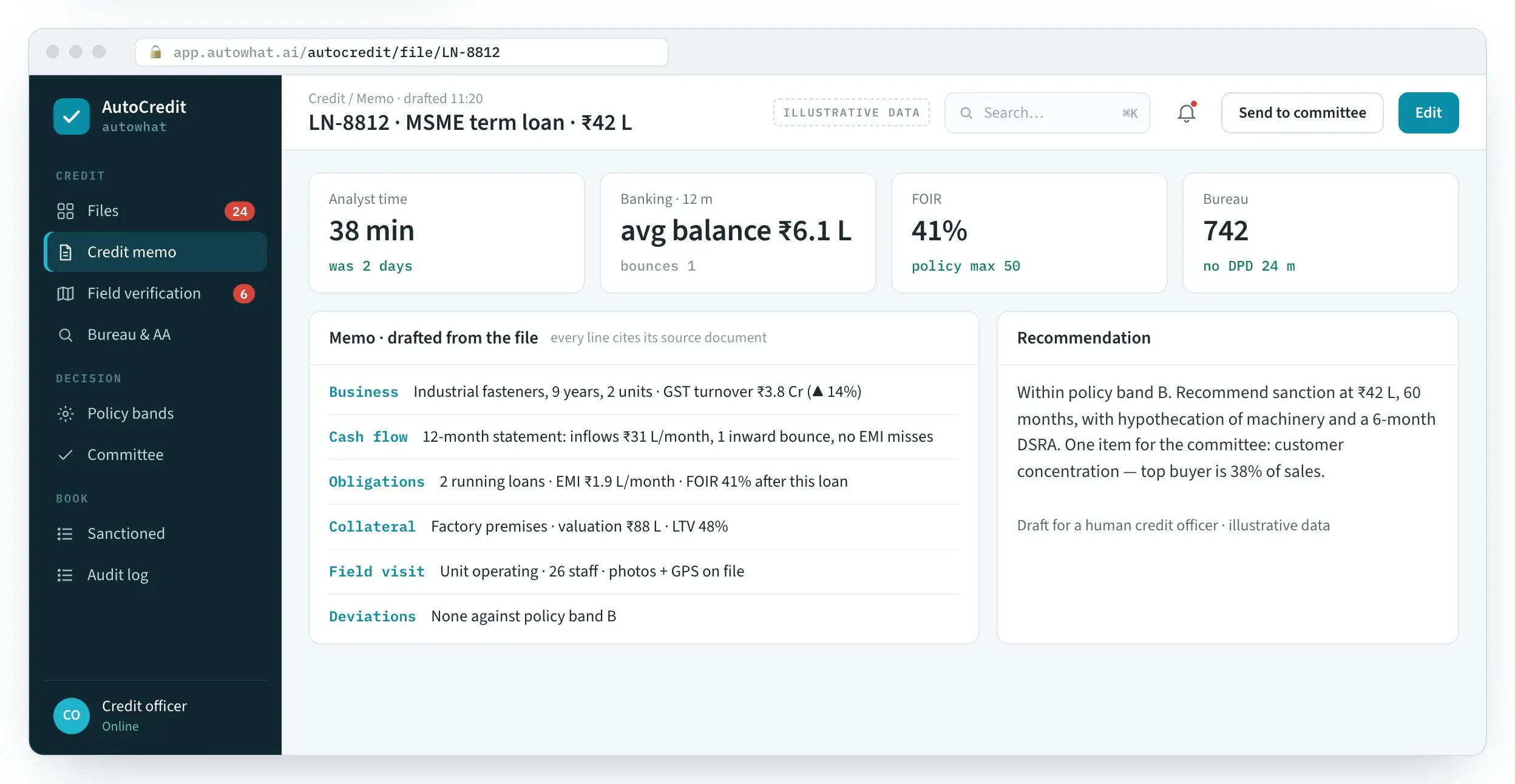
Product screens with illustrative data. In a working session we draft memos from your anonymised files.
01Hand-built files
Analyst time down by half
02Uneven memos
Committees read the same format

03Late field reports
No file waits on a visit

FieldAutoCredit in the field
The workplace it runs in, the person who uses it on a phone, the team at the desk and the detail it reads.

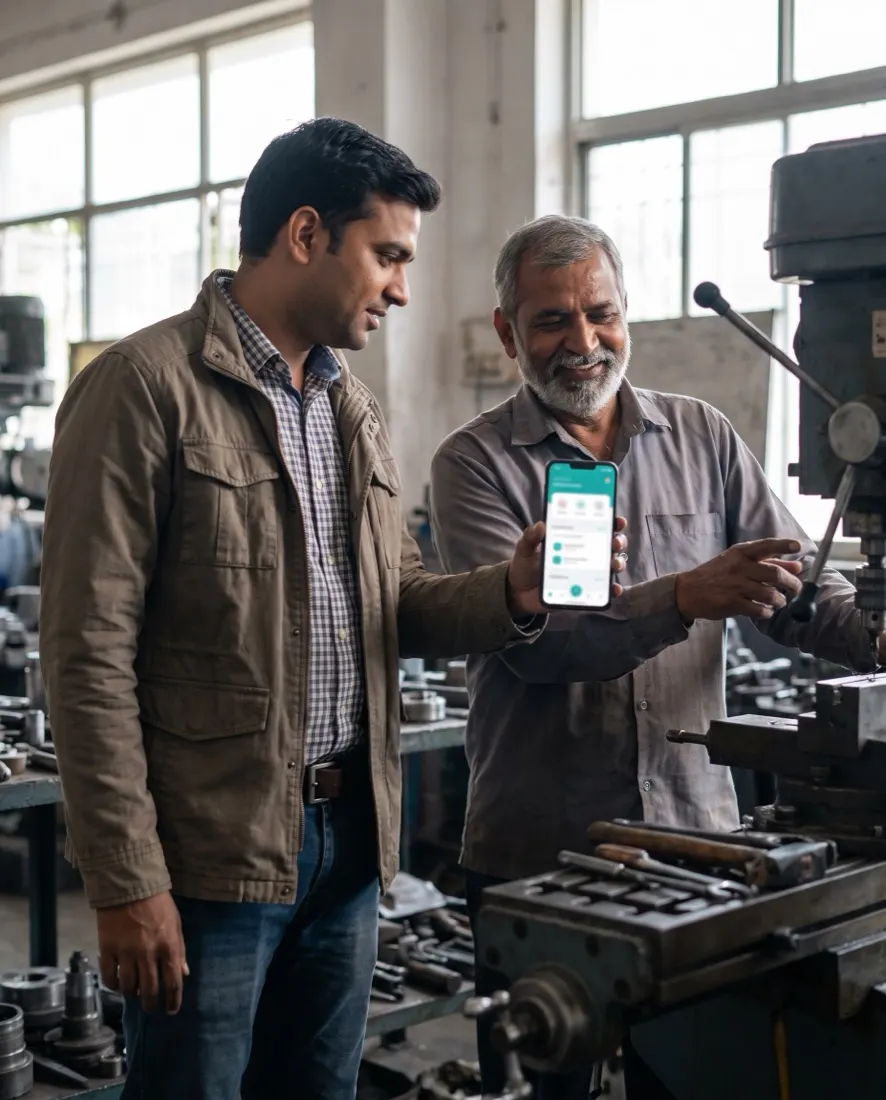
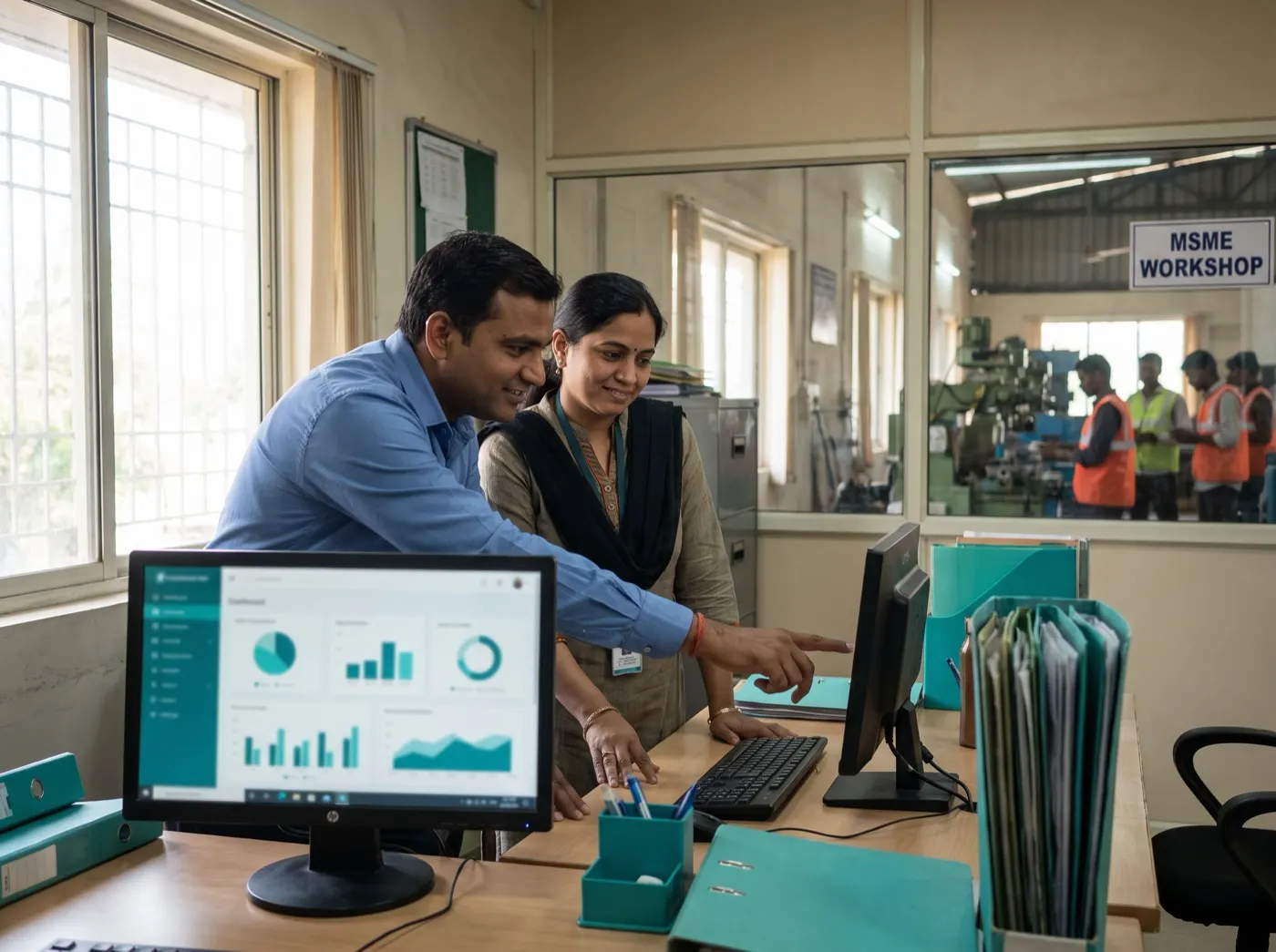

Photographs are illustrative — real customer sites are not shown.
01The screens
The memo, the file queue and field verification.
A memo drafted from the file against policy, with a recommendation for a credit officer.
Product screens with illustrative data — every name, place and figure is a placeholder.
02Before and after
Hand-built files and free-text memos make turnaround slow and notes uneven between analysts.
| Area | Today | With AutoCredit |
|---|---|---|
| File | Collected over email | Assembled from statements, GST, ITR, bureau, AA |
| Analysis | Spreadsheets per analyst | The same calculations every time |
| Memo | Written from scratch | Drafted against policy, every line cited |
| Field visit | Report days later | Photos and GPS on file the same day |
| Deviations | Found in committee | Flagged in the draft with the policy reference |
03Draft, cite, decide
AutoCredit prepares; your credit officers decide. Nothing is sanctioned by a model.
Documents
Statements, GST, ITR and KYC collected on WhatsApp or the portal.
Bureau · AA
Bureau and account-aggregator data where consent allows.
Cash flow
Banking, obligations, FOIR and GST trends computed the same way every time.
Field
Agent visits with checklist, photos and GPS; report same day.
Your policy
The file placed in your policy bands; deviations flagged.
Credit memo
A memo with every line cited to its source.
Committee
Credit officers and committee decide; comments kept.
Your LOS / LMS
Sanction written through the APIs you open.
04The platform
Start with one product; others reuse the same spine and policy engine.
05How we deliver
On the LOS and LMS you already run.
FAQQuestions we get about AutoCredit
AutoCredit is an Autowhat AI product for credit heads, credit officers and operations teams at lenders. Short, factual answers for buyers, procurement and the assistants people ask first.
In short. AutoCredit is an Autowhat AI product for credit heads, credit officers and operations teams at lenders. It is built for credit heads, credit officers and operations teams at lenders. It exists to remove the problems those teams describe in almost every first conversation: two days of analyst time to build each file; memos written differently by every analyst; and field reports that arrive days after the visit. With AutoCredit, teams get one file from statements, GST, ITR, bureau and AA, a cited memo placed in your policy bands, deviations flagged, and same-day field reports with photos and GPS. It connects to Bank statements, Bureau & AA, Your LOS / LMS and Field app, is used by Credit · ops · field agents, and runs on web + mobile. Like every Autowhat AI product, AutoCredit goes live on one site, lane or process first, usually within weeks, on managed cloud, in your own VPC or on-premises, and shares one operational record with the other products, so the second deployment reuses the data and integrations of the first.
Credit heads, credit officers and operations teams at lenders. The loan file assembled from statements, GST, ITR, bureau and account-aggregator data; a memo drafted against your policy bands with every line cited; field verification filed the same day.
two days of analyst time to build each file; memos written differently by every analyst; field reports that arrive days after the visit.
one file from statements, GST, ITR, bureau and AA; a cited memo placed in your policy bands, deviations flagged; same-day field reports with photos and GPS.
It connects to Bank statements, Bureau & AA, Your LOS / LMS, Field app. Users: Credit · ops · field agents. Channel: Web + mobile.
With a 30-minute working session on your own data — an engineer from the relevant sector, not a sales queue. The first wave is scoped in that call; most products go live on one site, lane or process within weeks and then scale.
On managed cloud, in your own VPC (AWS, Azure or GCP) or on-premises, with your keys. SOC 2 Type II and ISO 27001 controls, India data residency when required, and local or open-weight models when policy demands it. The data stays yours.
06Working session
Thirty minutes: your file checklist, your policy bands and a memo format agreed.