

CuriosityA data atlas · forty-five exhibits
How things work. Forty-five exhibits, one standard.
What nobody could see, where the joules go, which machines win and how long humanity waited for an answer — each exhibit with its units, its sources and what would prove it wrong.
- 45 exhibits
- 6 sections
- 5,300 years covered
- UnitsRule 01State the units, every time.
- FalsifiableRule 02Say what would prove the claim wrong.
- Noise floorRule 03Show how big the error bars really are.
- SourcesRule 04Cite where every number came from.
- Dated forecastsRule 05Date every prediction so it can be scored later.
- 2040Forecast horizonEvery forecast dated, so it can be scored.
01Section 01 · 11 exhibits
The invisible things. Who studied it, and how it ended.
Claims about things nobody could see — and what settled them.
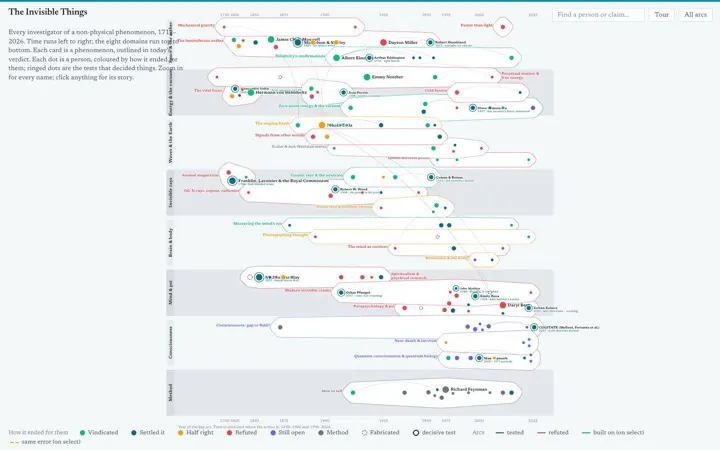
The Invisible Things
154 investigators, 28 phenomena, 136 claims — who studied what, and how it ended
Open exhibit →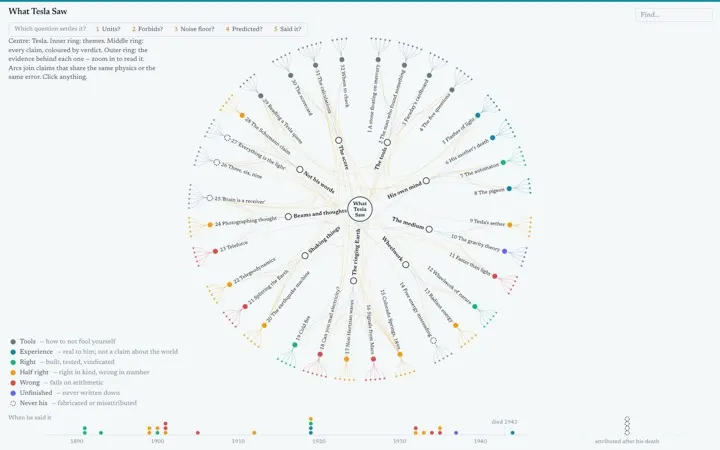
What Tesla Saw — the deep map
Tesla's non-physical claims, radially, by evidence
Open exhibit →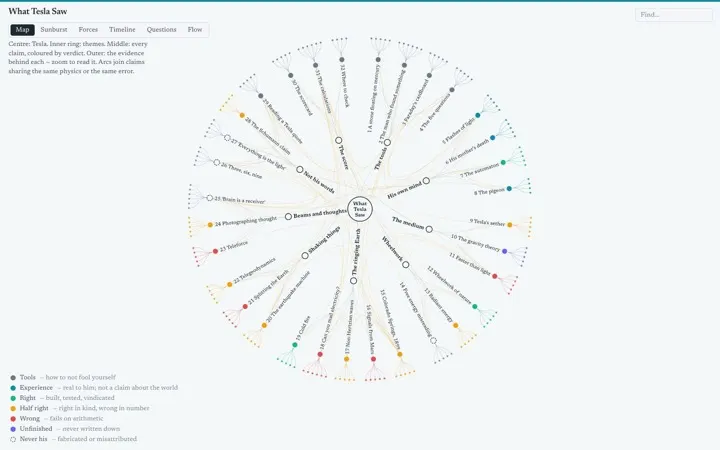
What Tesla Saw — the atlas
Six views of one inventor's invisible world
Open exhibit →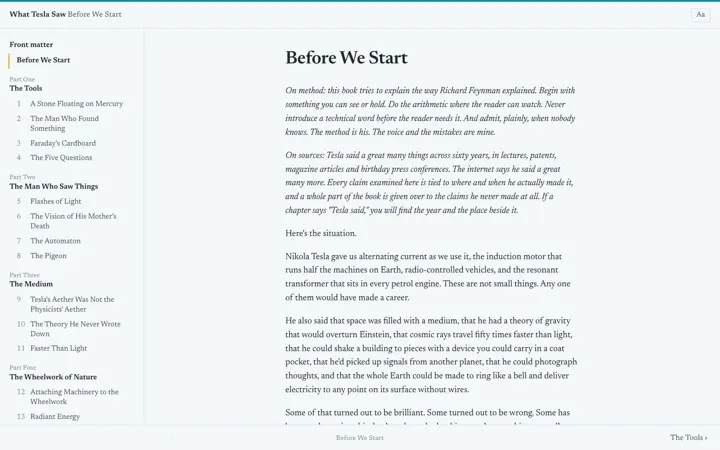
What Tesla Saw — the book
The written account, with sources
Open exhibit →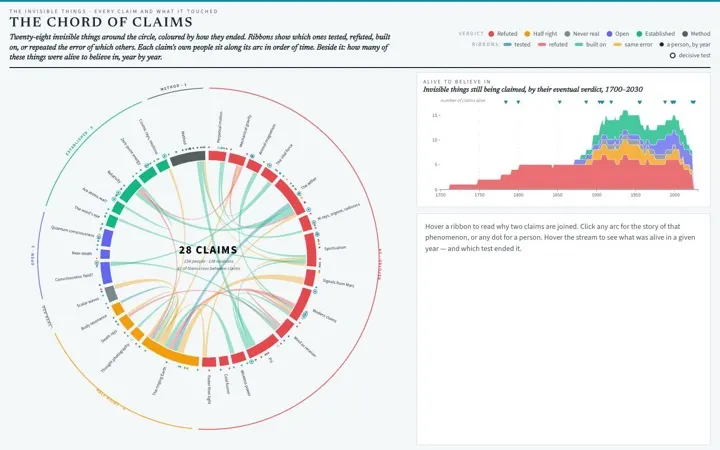
The Chord of Claims
Who believed what, and who shared a belief with whom
Open exhibit →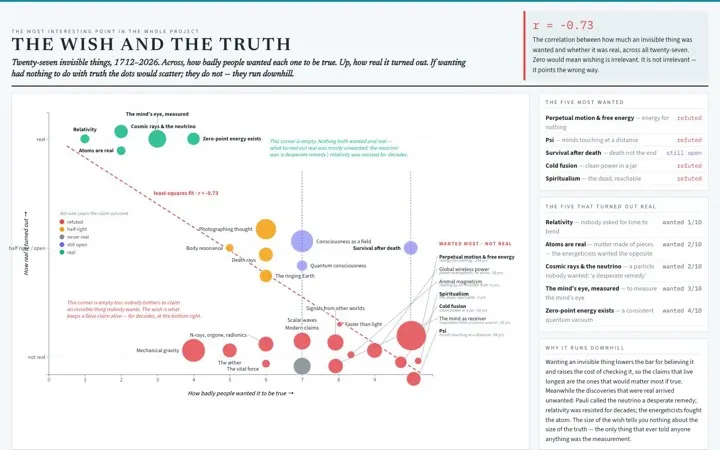
The Wish and the Truth
r = −0.73: the more a thing was wanted, the less likely it was true
Open exhibit →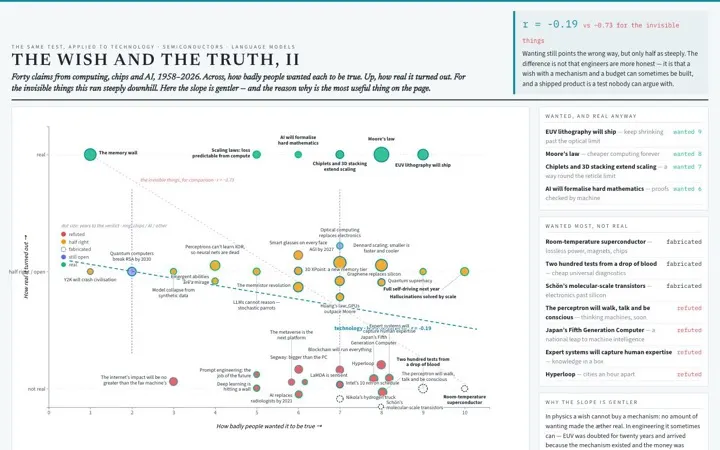
The Wish and the Truth — technology
r = −0.19: in technology, wanting barely matters. What fails is the date
Open exhibit →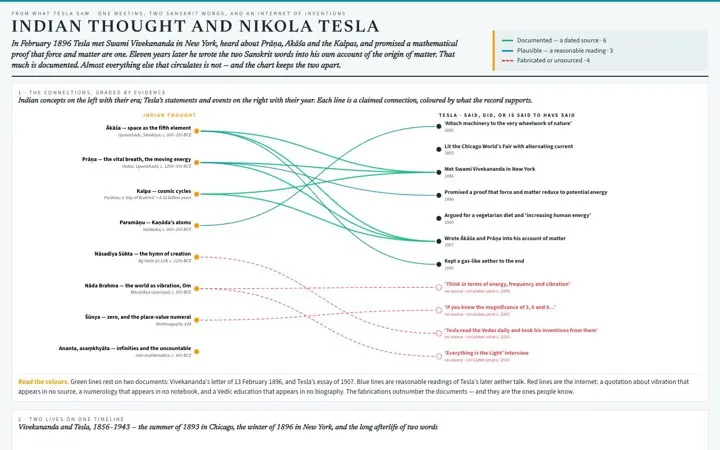
Indian Thought and Nikola Tesla
One meeting, two Sanskrit words, and an internet of fabrications
Open exhibit →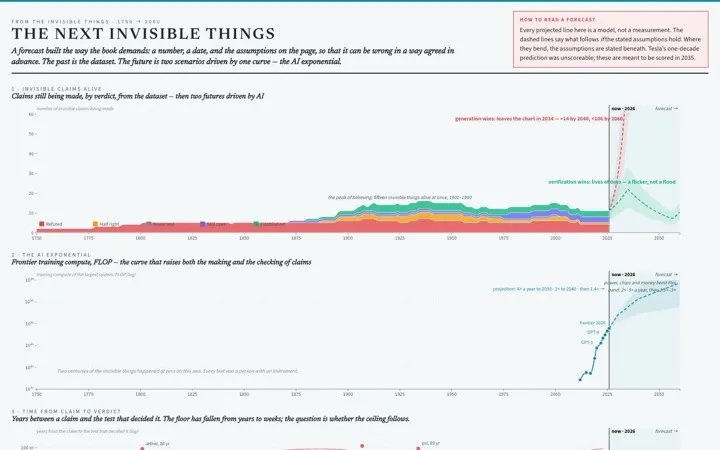
The Next Invisible Things
What is still unseen, and what would settle it
Open exhibit →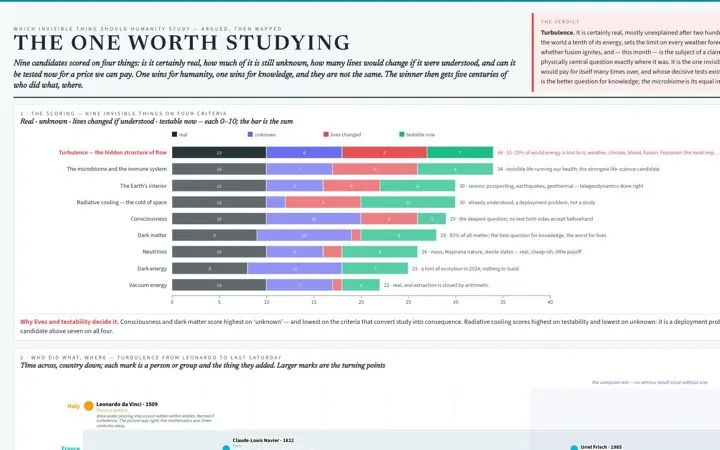
The One Worth Studying
Nine candidates scored; turbulence wins, and five centuries of who tried
Open exhibit →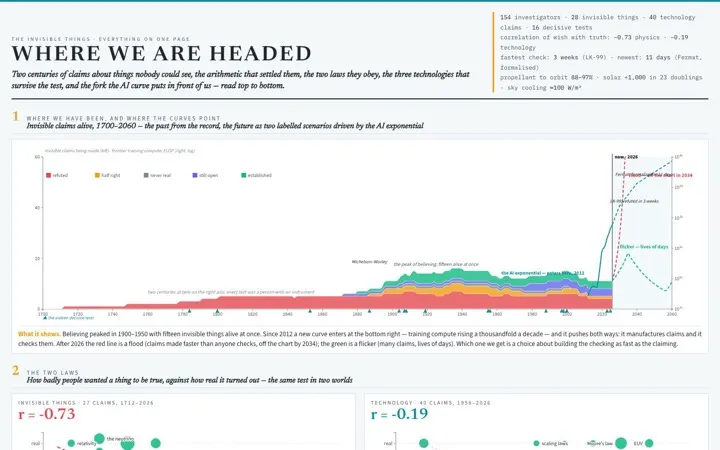
Where We Are Headed
The synthesis: two laws, three anchors, and what to do
Open exhibit →02Section 02 · 9 exhibits
Energy and matter. What the physics permits.
What the physics permits, what it costs, and who controls the supply.
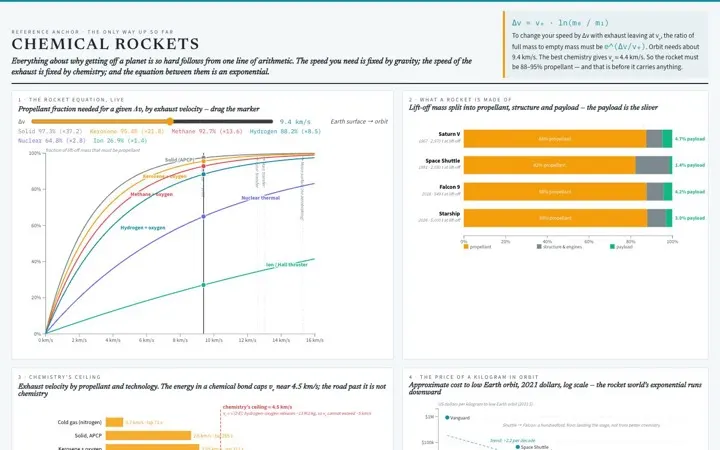
Chemical Rockets
90% fuel, because chemistry caps exhaust at 4.5 km/s
Open exhibit →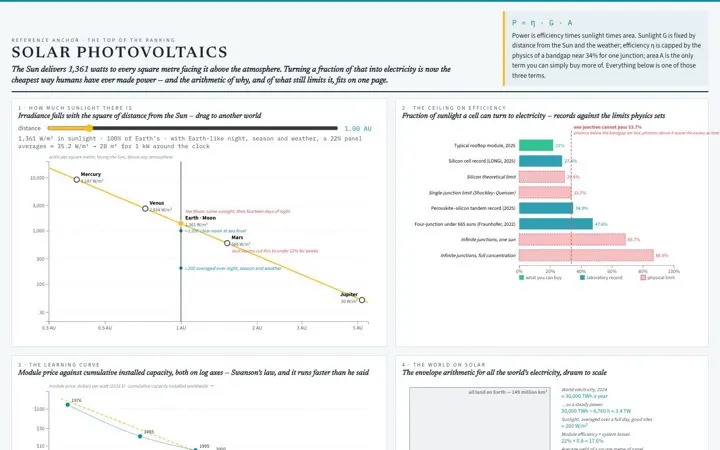
Solar Photovoltaics
The cheapest electricity ever made — and night is the limit
Open exhibit →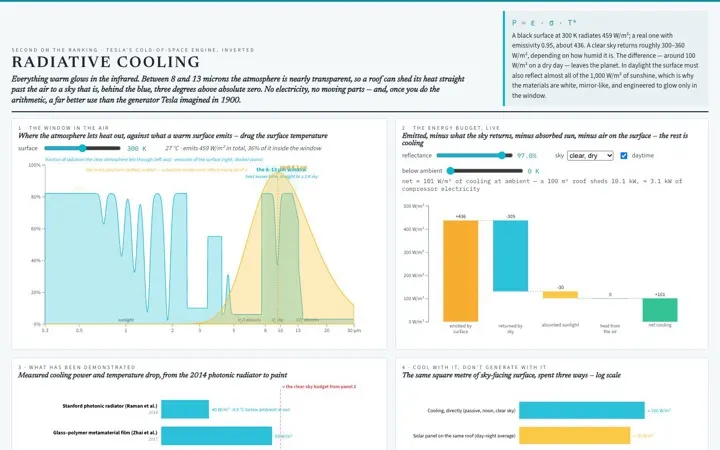
Radiative Cooling
The right sink, the wrong product: Tesla wanted a generator
Open exhibit →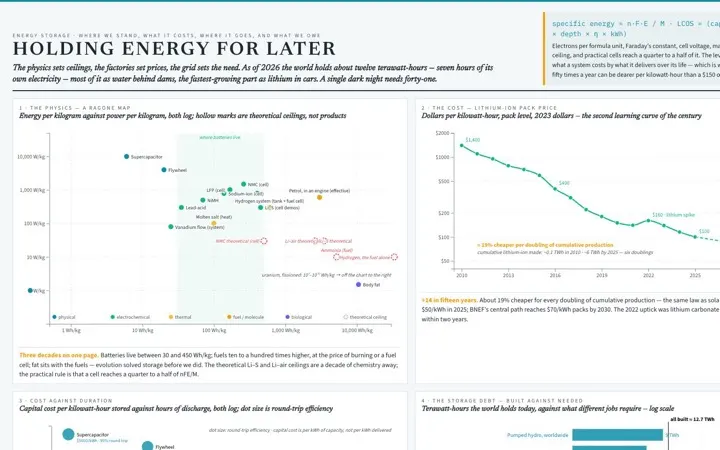
Holding Energy for Later
The world holds seven hours of its own electricity
Open exhibit →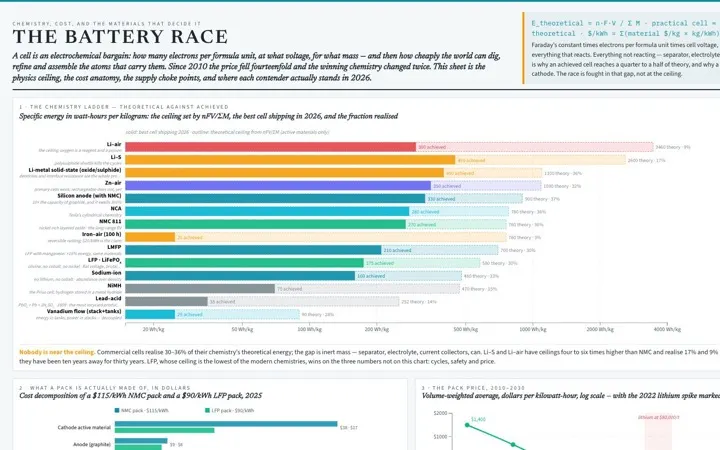
The Battery Race
Chemistry, cost, and the materials that decide it
Open exhibit →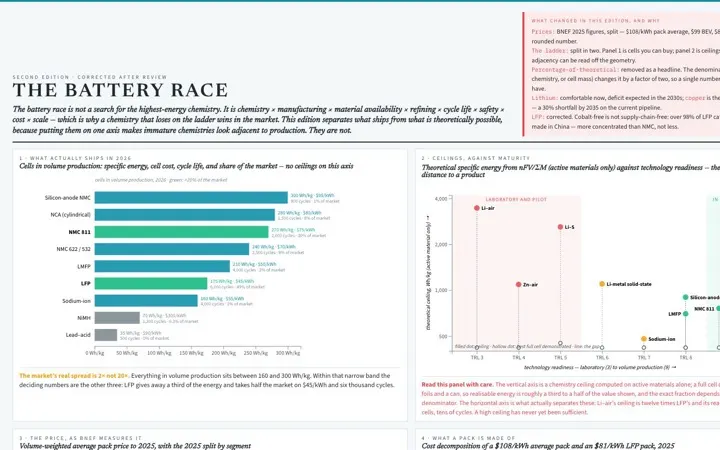
The Battery Race — second edition
Corrected after review, with the corrections shown
Open exhibit →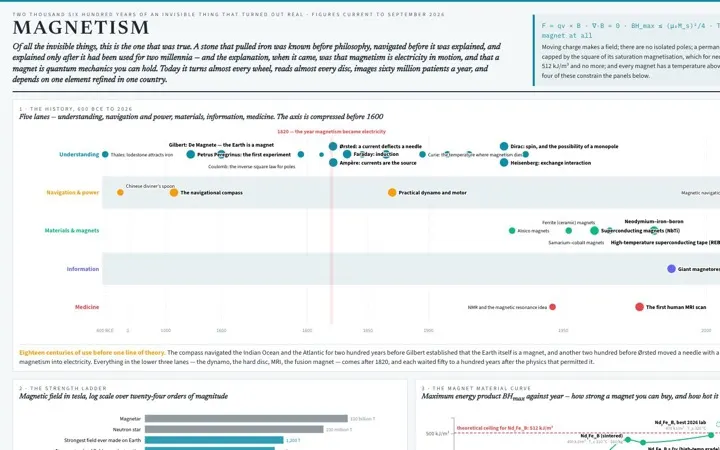
Magnetism
Used for two thousand years before anyone explained it
Open exhibit →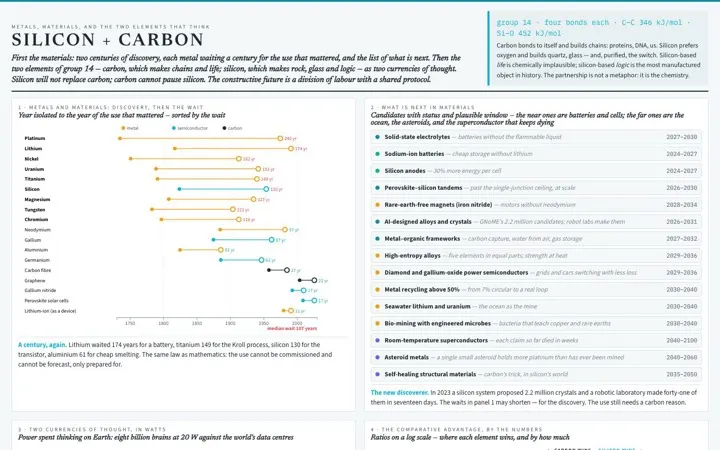
Silicon + Carbon
Two elements of group 14, and a division of labour
Open exhibit →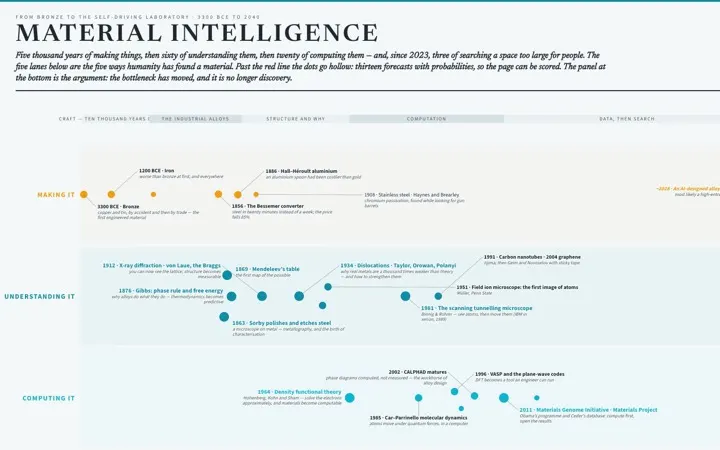
Material Intelligence
From bronze to the self-driving laboratory — and where the bottleneck moved
Open exhibit →03Section 03 · 10 exhibits
Computing and memory. Where the joules go.
Where the joules go, and what the next machine looks like.
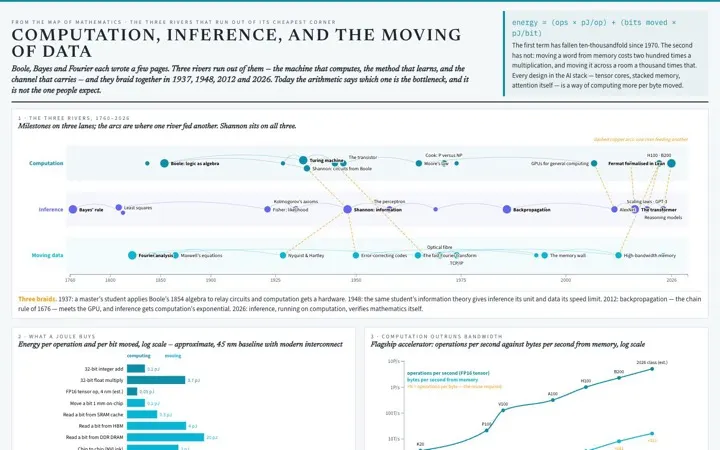
Three Rivers
Computation became free; moving data did not
Open exhibit →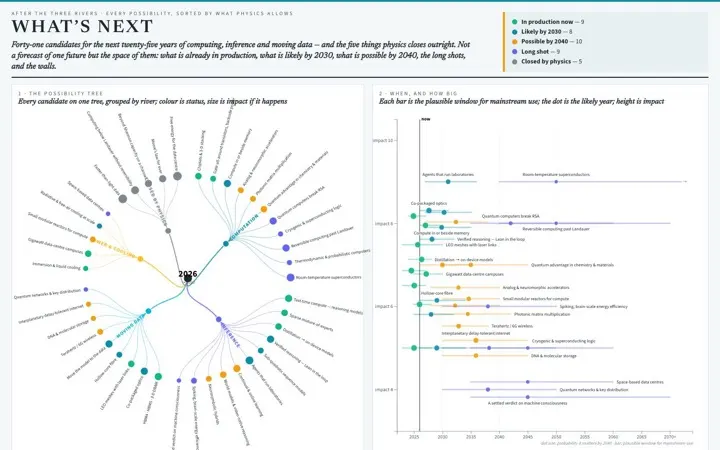
What's Next
41 candidates, 5 closed by physics, and the headroom to each wall
Open exhibit →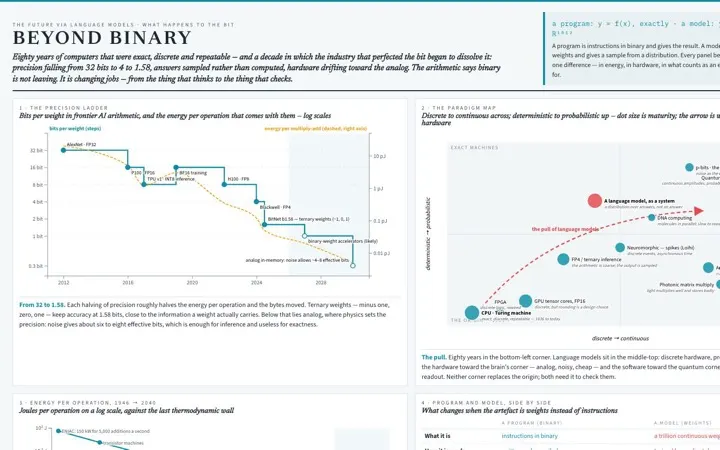
Beyond Binary
The bit is not replaced — it is promoted to referee
Open exhibit →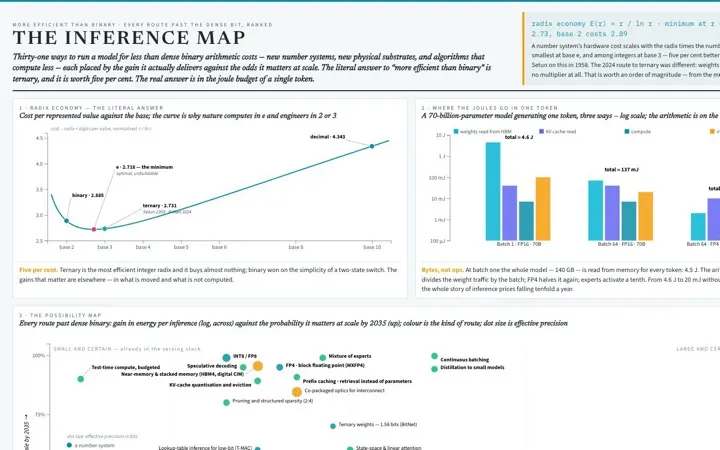
The Inference Map
31 routes past the dense bit, ranked by gain and odds
Open exhibit →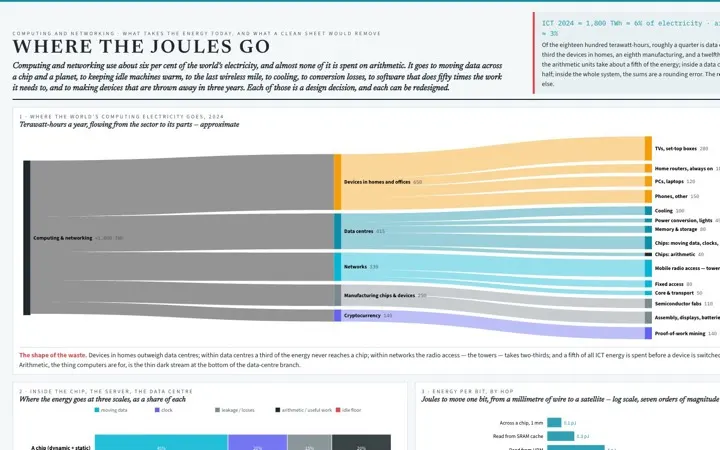
Where the Joules Go
Computers spend almost nothing on arithmetic
Open exhibit →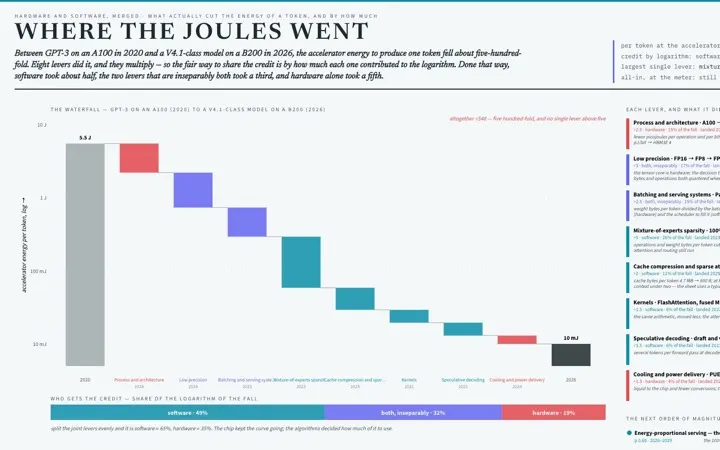
Where the Joules Went
÷548 per token — hardware and software, attributed
Open exhibit →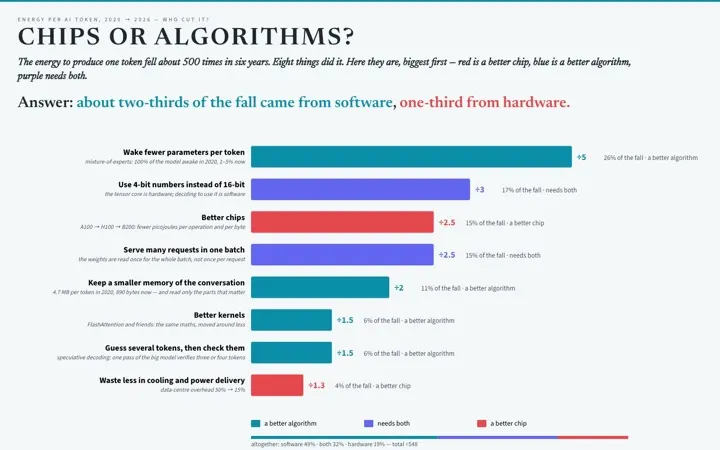
Chips or Algorithms?
The same answer, in ten seconds: two-thirds software
Open exhibit →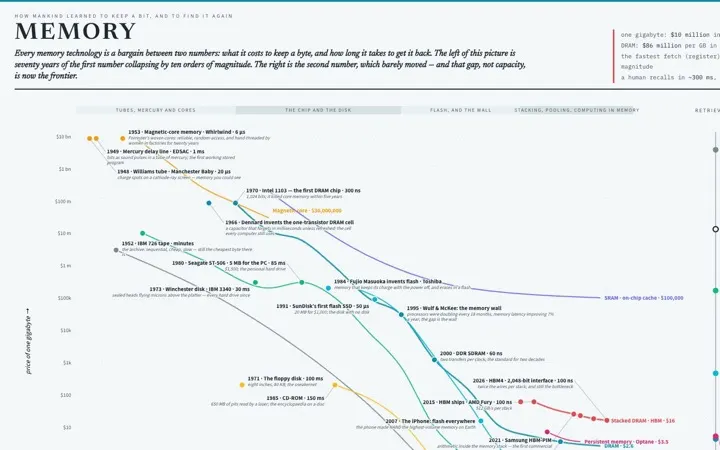
Memory
Price collapsed ten-billion-fold; retrieval barely moved
Open exhibit →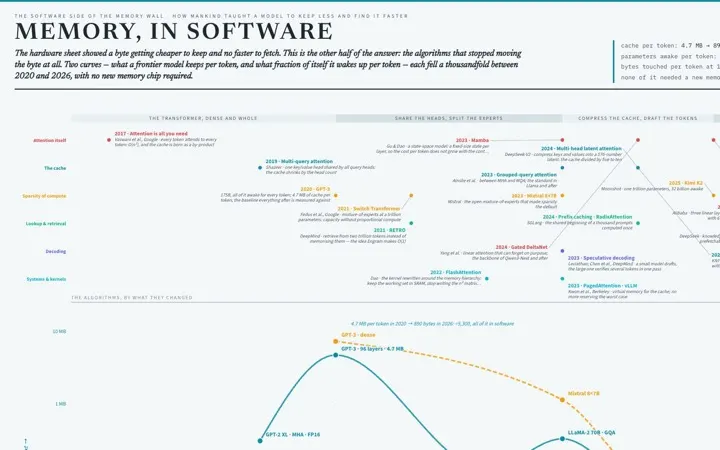
Memory, in Software
The algorithms that stopped moving the byte
Open exhibit →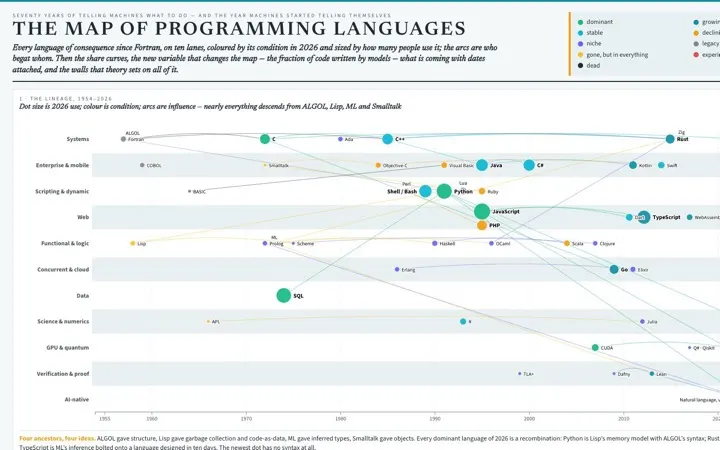
The Map of Programming Languages
Languages don't die — they pile up
Open exhibit →04Section 04 · 4 exhibits
Intelligence. What actually wins.
The models, the machines, and what actually wins.
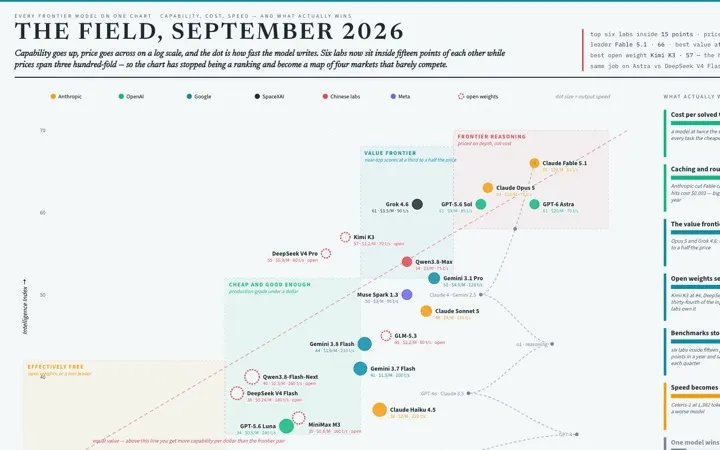
The Field, September 2026
Capability, cost, speed — and four markets that barely compete
Open exhibit →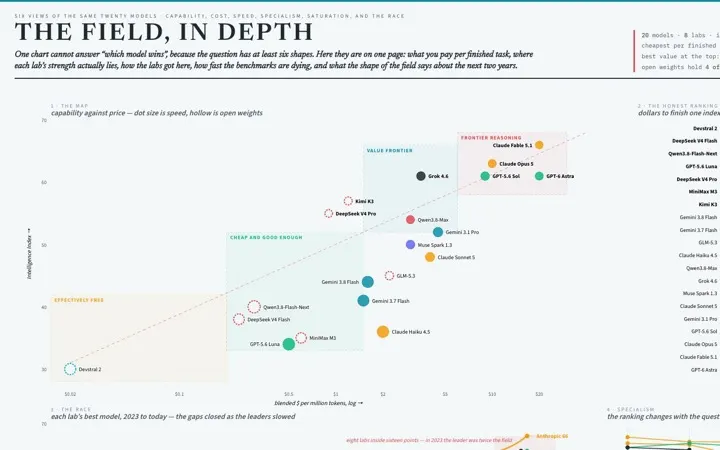
The Field, in Depth
Six views of the same twenty models
Open exhibit →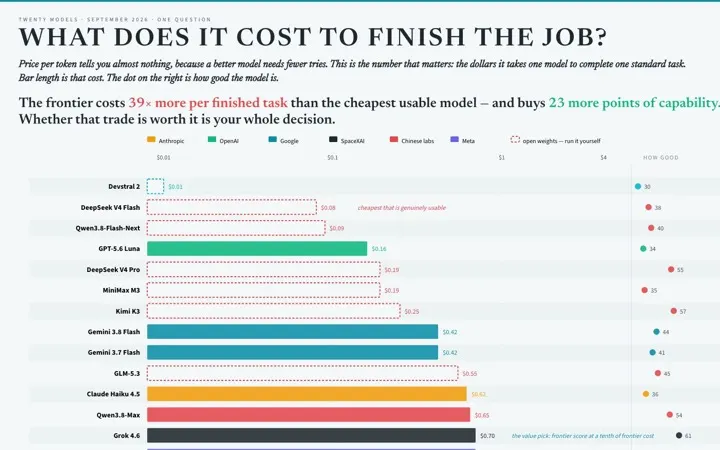
What Does It Cost to Finish the Job?
The one number that decides the purchase
Open exhibit →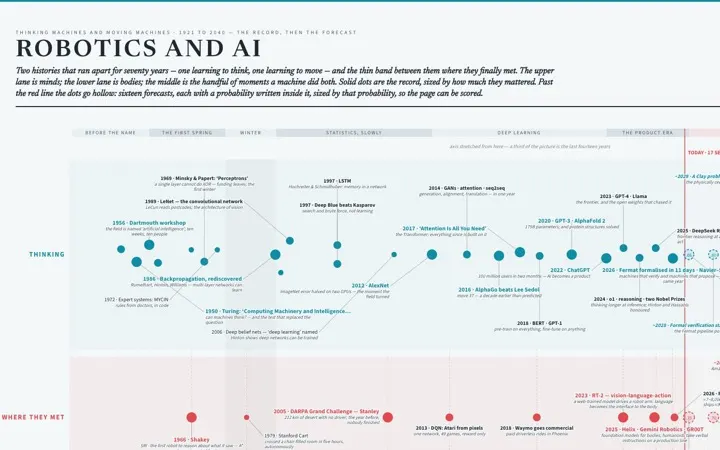
Robotics and AI
Thinking and moving — two histories, and where they met
Open exhibit →05Section 05 · 9 exhibits
Knowledge and time. How long we waited.
What humanity asked, how long it waited, and what the answer gave.
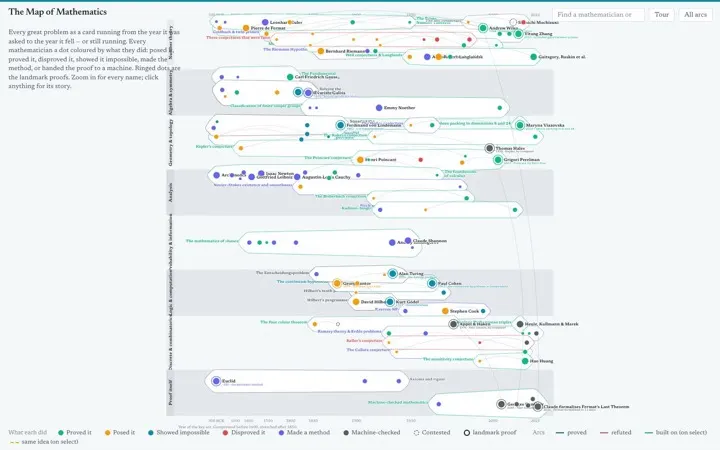
The Map of Mathematics
135 mathematicians, 37 problems, eight lanes, 2,600 years
Open exhibit →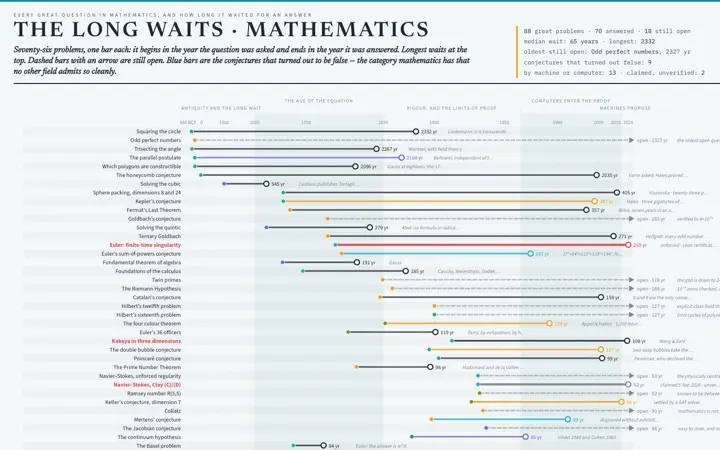
The Long Waits — Mathematics
88 problems sorted by the wait, including nine that were false
Open exhibit →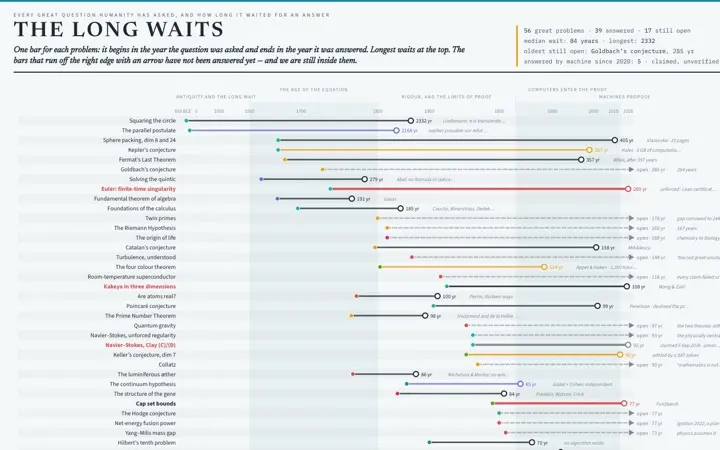
The Long Waits
56 great problems across every field
Open exhibit →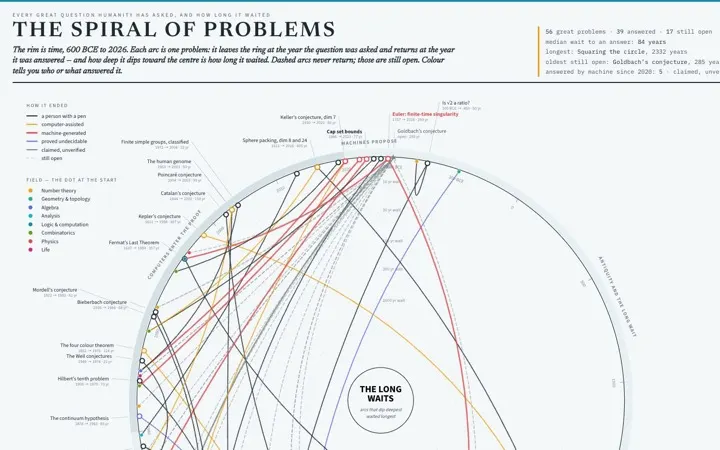
The Spiral of Problems
The same data, drawn as a spiral — the version that failed
Open exhibit →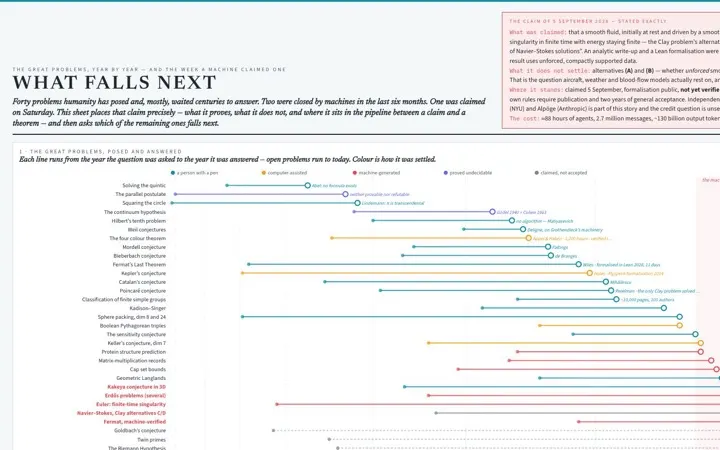
What Falls Next
The Clay board, the pipeline, and the September 2026 claim placed precisely
Open exhibit →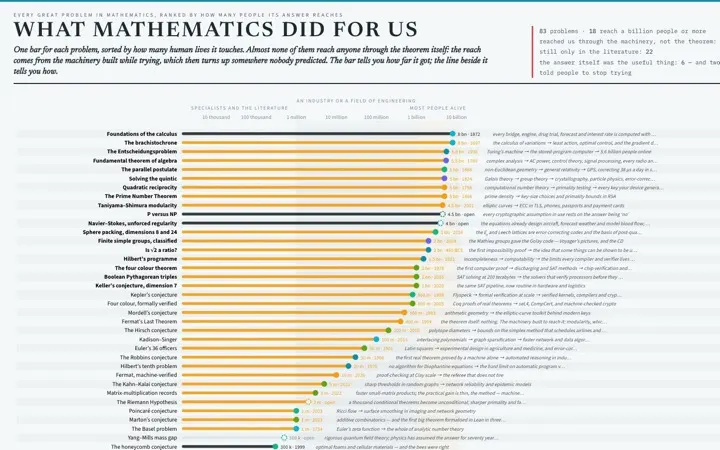
What Mathematics Did For Us
Ranked by how many people the answer reaches
Open exhibit →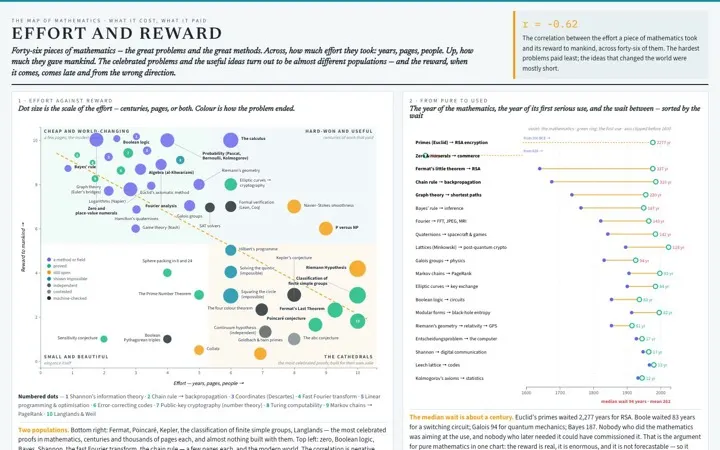
Effort and Reward
r = −0.62: the hardest problems gave the least
Open exhibit →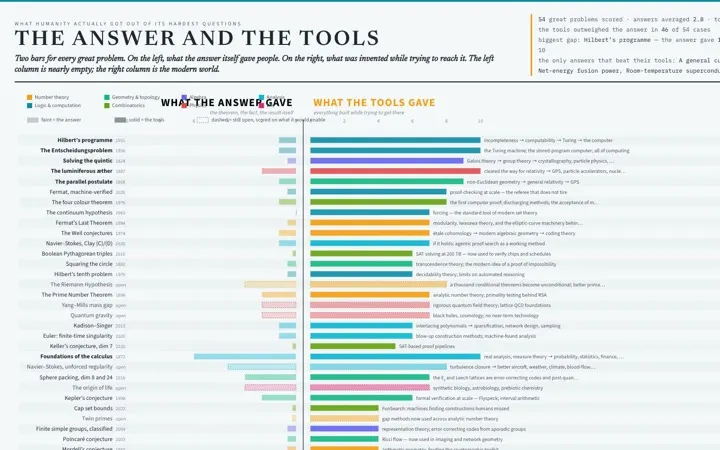
The Answer and the Tools
The attempt was worth more than the answer, almost every time
Open exhibit →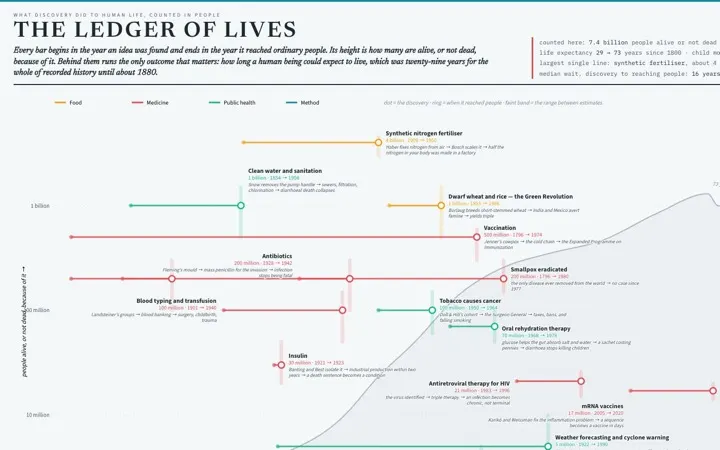
The Ledger of Lives
Discovery, counted in people alive or not dead
Open exhibit →06Section 06 · 2 exhibits
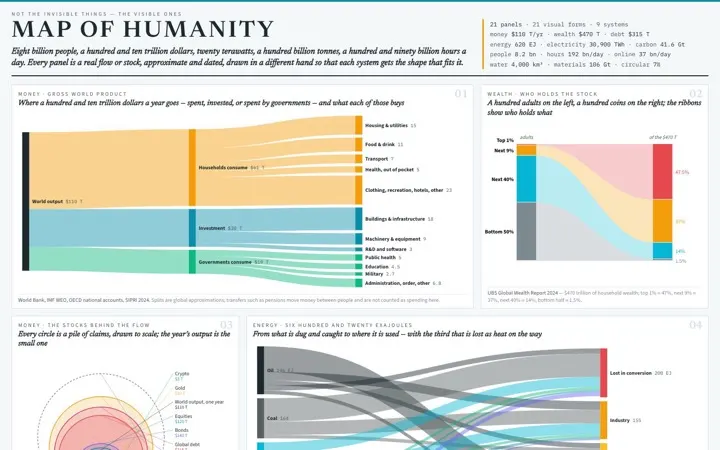
The world. Everything, at scale.
Everything, at scale.
No exhibit matches that search.
WhyA data atlas on a company site
The habit that builds our products is the habit behind these.
Map the system, count what moves through it, say what would prove you wrong. The same discipline that finds the leak in a supply chain finds it in a century of claims.