

01The monthly surprise
Energy, grade and recovery estimated every heat.
- A physics model of your furnace — mass, energy and slag — calibrated on plant data
- Drift flagged with its cause: basicity, reductant, electrodes
Act in the shift, not the month

EnterpriseFurnace Twin · physics-based digital twin
For submerged-arc and other smelting furnaces, where energy is half the operating cost and the recipe lives in senior operators’ heads. A physics model of your furnace — mass and energy balance, slag chemistry, kinetics — calibrated on every heat, with cited answers your whole shift can ask for.
WhySound familiar?
From plant heads, process engineers and furnace operators. Composite quotes from discovery calls — the problems are real; the names are left out.

“We learn the furnace used more power when the bill arrives.”
Energy is half the operating cost, but specific energy is only seen monthly — after the money is spent.
Plant headWeeks between cause and number
“The recipe lives in two senior operators’ heads.”
Reductant ratio and slag basicity are set by habit; when those operators are away, every heat is a gamble.
Process engineerKnowledge that walks out of the gate
“We can’t try a new blend without risking a heat.”
Every change is tested on the real furnace, so most good ideas are never tried.
Furnace in-chargeSavings left on the table
HowWhat changes with Furnace Twin
Product screens with illustrative data. In a briefing we model one of your furnaces.
01The monthly surprise
Act in the shift, not the month
02Knowledge in heads
Experience that stays in the plant

03Risky trials
Fewer gambles, faster savings

FieldFurnace Twin in the field
The workplace it runs in, the person who uses it on a phone, the team at the desk and the detail it reads.
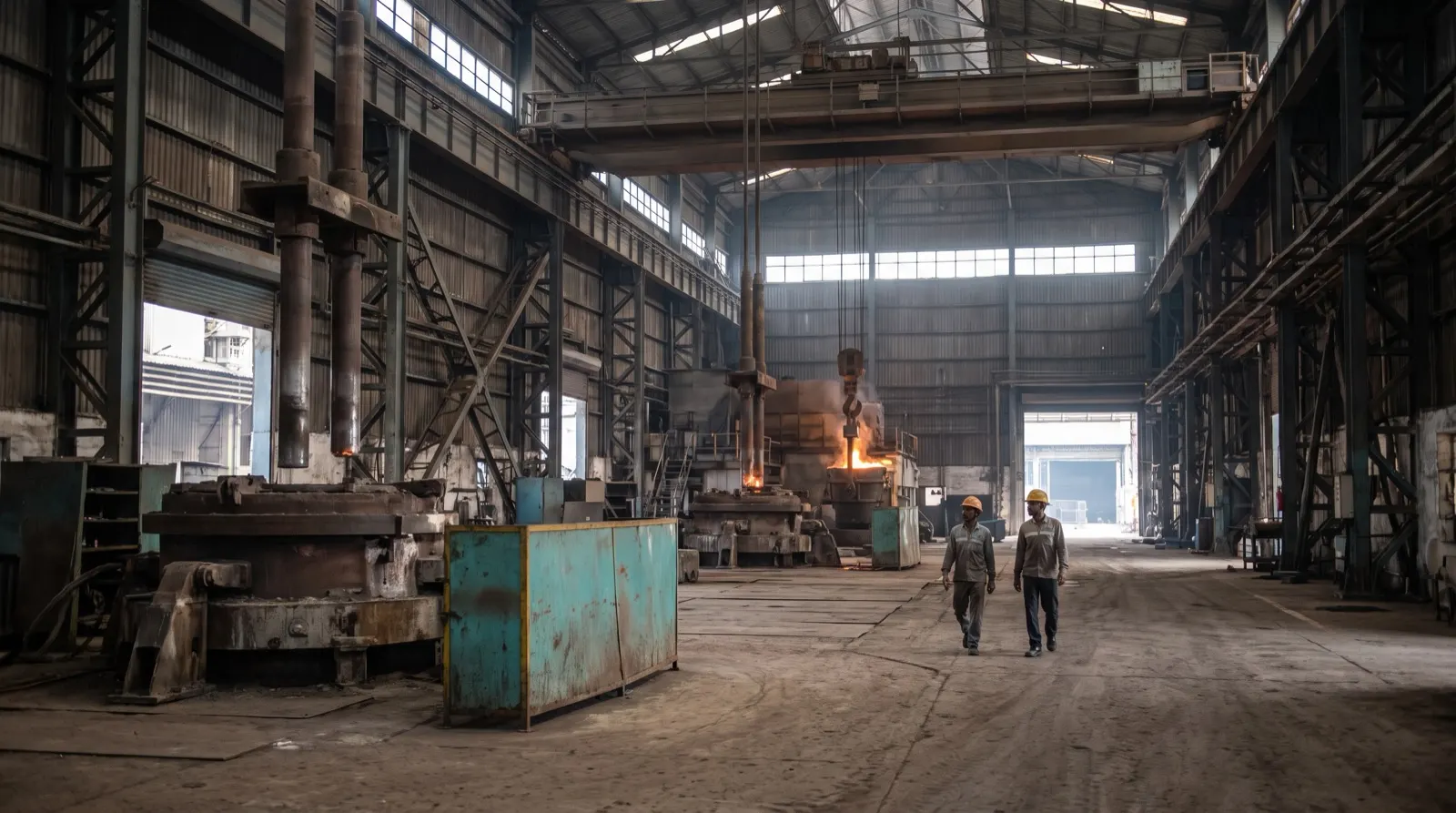
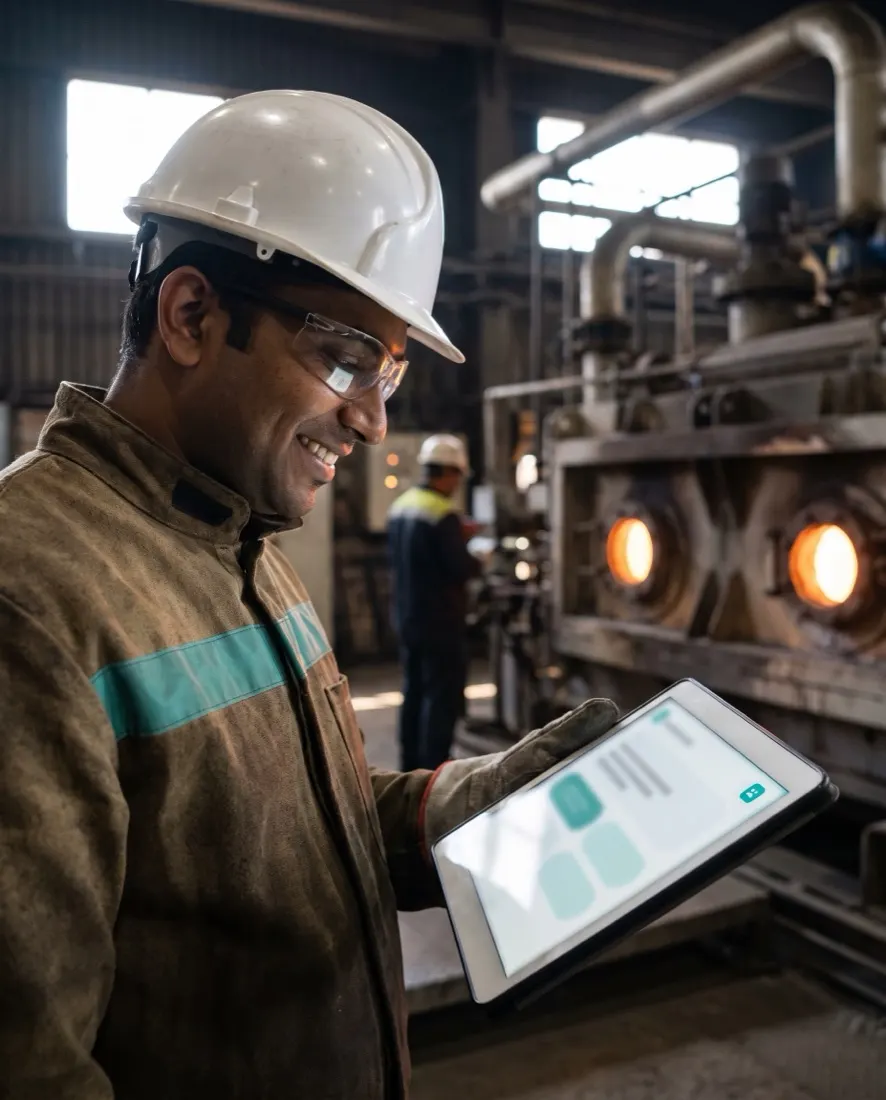
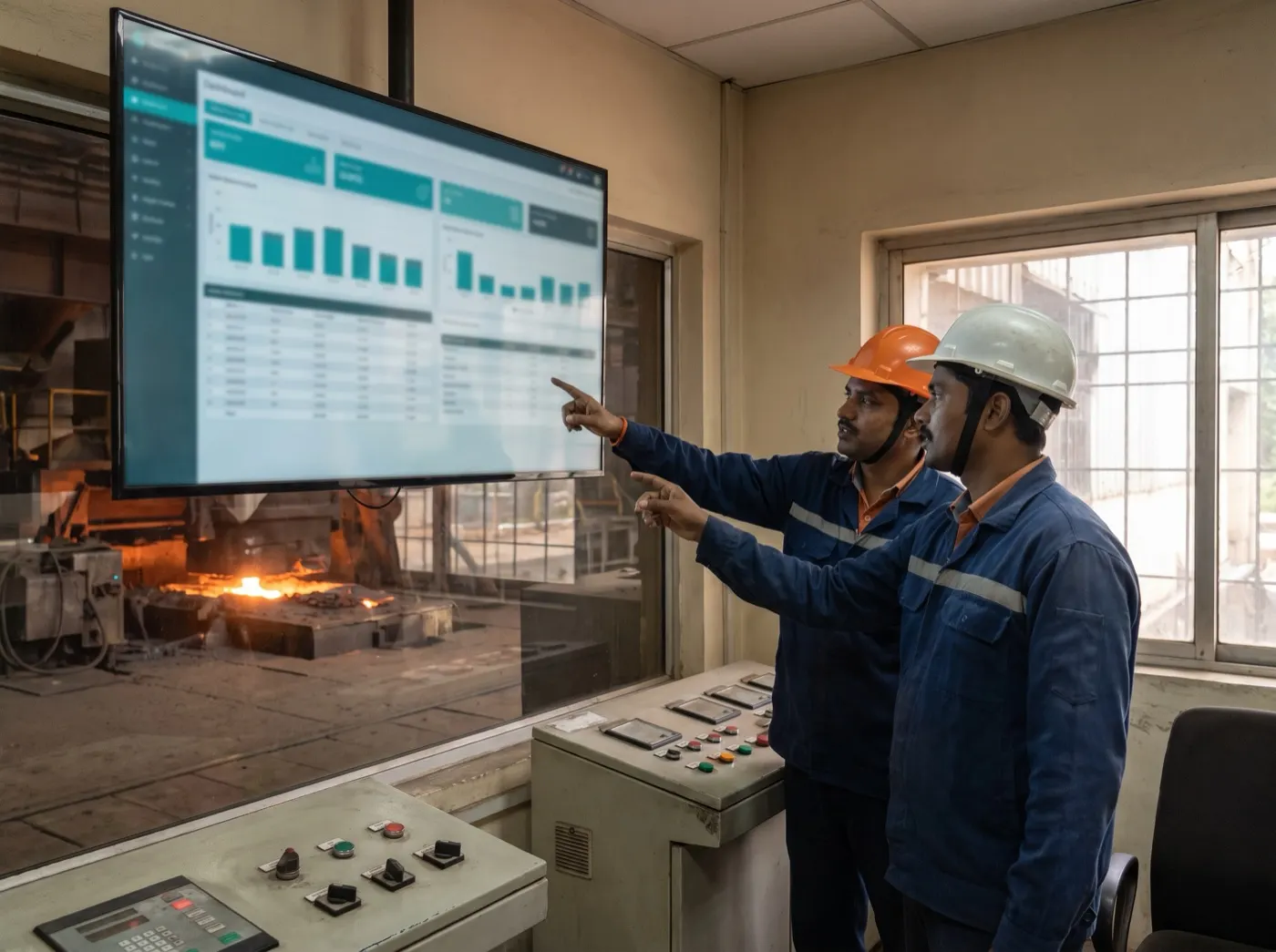
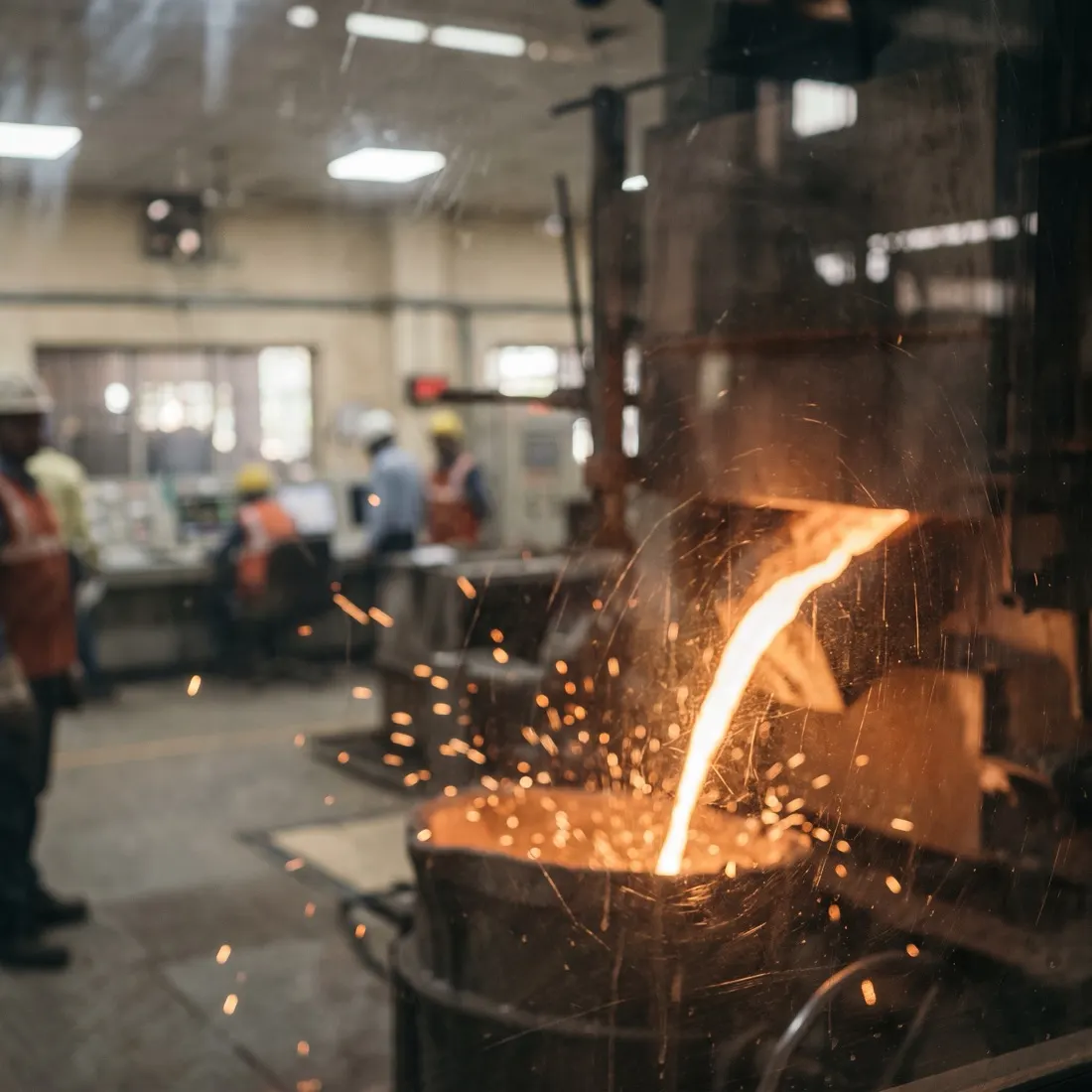
Photographs are illustrative — real customer sites are not shown.
01The screens
The live overview, the scenario engine, cited answers and voice shift intake.
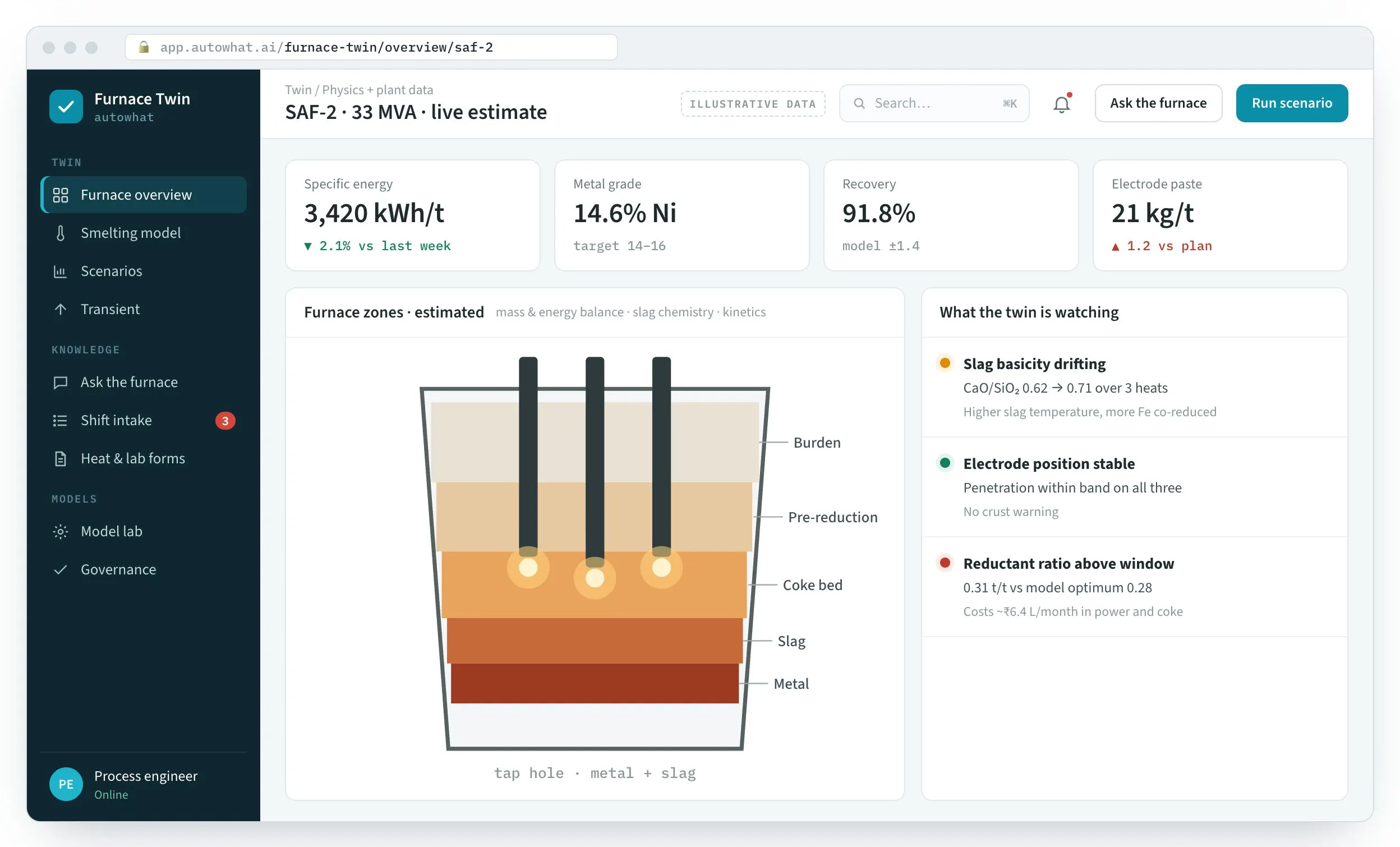
Live estimates of energy, grade and recovery, the furnace zones, and what the twin is watching.
Product screens with illustrative data — furnace, ore and heat figures are placeholders.
02Before and after
Less than one in twenty Indian furnaces has any digital optimisation. The twin turns every heat into evidence.
| Area | Today | With Furnace Twin |
|---|---|---|
| Energy | SEC tracked monthly, after the bill | Specific energy estimated every heat, with the cause of drift |
| Recipe | Reductant and slag set by habit | Scenarios priced on the model before a heat is risked |
| Knowledge | In senior operators’ heads and old reports | Cited answers anyone on shift can ask for |
| Shift handover | A notebook and a phone call | Guided voice intake that becomes structured data |
| Models | A one-off study that goes stale | Calibrated on every heat, versioned and audited |
03Physics first
Metallurgy builds the model; plant history corrects it. Generic machine learning alone cannot tell you why.
Heats · lab · power
Heat logs, lab assays, electrical data and shift notes collected per heat.
Physics
Every tonne of ore, reductant and flux traced to metal, slag and gas.
Physics
Electrical input against reactions, heating and losses — specific energy explained.
Thermodynamics
Basicity, viscosity and how much iron or chrome is co-reduced.
Hybrid model
Physics corrected with plant history so estimates match the furnace you actually run.
What-if
Reductant, basicity, temperature and feed changes compared before a trial.
Cited
Engineers ask in plain words; answers cite records, model runs and literature.
Model lab
New heats re-calibrate the model; every version is evaluated and logged.
04The platform
Start with one furnace; more furnaces and furnace types run on the same platform.
05How we deliver
Built with metallurgists and software engineers together, around your furnace and your ore.
FAQQuestions we get about Furnace Twin
Furnace Twin is a physics-based digital twin of the furnace — mass and energy balance, slag chemistry and kinetics — calibrated on every heat, with scenarios to try a change before the real furnace does, and cited answers for anyone on shift. Short, factual answers for buyers, procurement and the assistants people ask first.
In short. Furnace Twin is a physics-based digital twin of the furnace — mass and energy balance, slag chemistry and kinetics — calibrated on every heat, with scenarios to try a change before the real furnace does, and cited answers for anyone on shift. It is built for plant heads, process engineers and furnace operators. It exists to remove the problems those teams describe in almost every first conversation: specific energy seen monthly, after the money is spent; and reductant ratio and basicity set by habit, lost when the operator is away. With Furnace Twin, teams get energy, grade and recovery estimated every heat, and plain-language questions answered from records, the model and literature. It connects to Plant historian / PLC data, Thermodynamic model, Local LLM with citations and Scenario engine, is used by Process · operations · plant head, and runs on web. Like every Autowhat AI product, Furnace Twin goes live on one site, lane or process first, usually within weeks, on managed cloud, in your own VPC or on-premises, and shares one operational record with the other products, so the second deployment reuses the data and integrations of the first.
Plant heads, process engineers and furnace operators. A physics-based digital twin of the furnace — mass and energy balance, slag chemistry and kinetics — calibrated on every heat, with scenarios to try a change before the real furnace does, and cited answers for anyone on shift.
specific energy seen monthly, after the money is spent; reductant ratio and basicity set by habit, lost when the operator is away; good ideas never tried because every trial risks the furnace.
energy, grade and recovery estimated every heat; plain-language questions answered from records, the model and literature; reductant, basicity, temperature and feed compared side by side.
It connects to Plant historian / PLC data, Thermodynamic model, Local LLM with citations, Scenario engine. Users: Process · operations · plant head. Channel: Web.
With a 30-minute working session on your own data — an engineer from the relevant sector, not a sales queue. The first wave is scoped in that call; most products go live on one site, lane or process within weeks and then scale.
On managed cloud, in your own VPC (AWS, Azure or GCP) or on-premises, with your keys. SOC 2 Type II and ISO 27001 controls, India data residency when required, and local or open-weight models when policy demands it. The data stays yours.
06Briefing
A working session: your furnace modelled, the mass and energy balance closed, and the first scenarios priced.