

01Weekly reports
Clusters flagged against baseline, every day.
- Cases by block compared with the baseline for the season
- Each cluster arrives with an action and an owner
Seen in days, not weeks

OperationsHealthWatch · public-health command centre
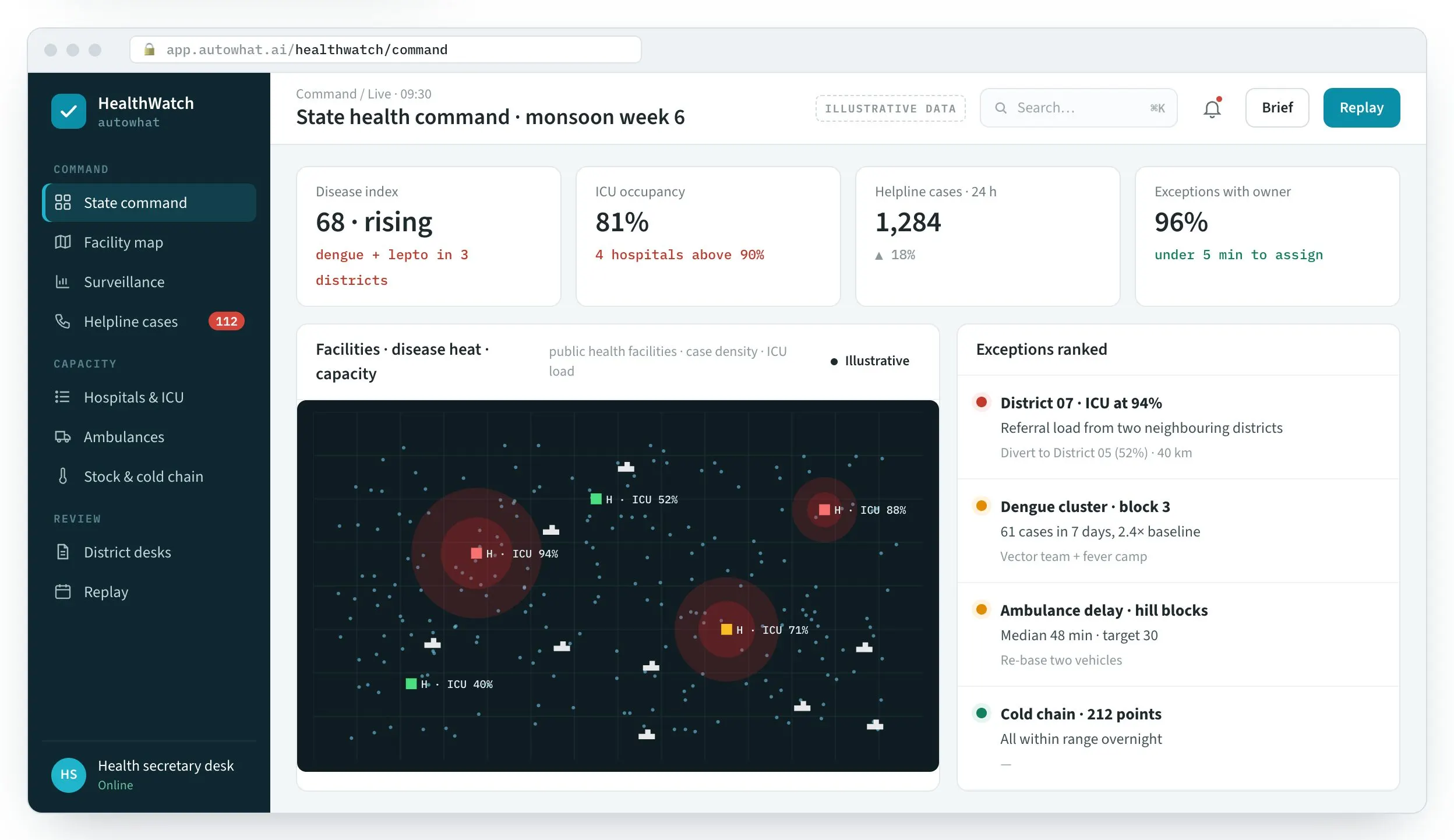
For health secretaries, mission directors and district health officers. Surveillance, hospital capacity, helpline cases, ambulances and stock on one verified picture — so outbreaks are seen in days, not weeks, and no patient is sent to a full ICU.
WhySound familiar?
From health secretaries, mission directors and district health officers. Composite quotes from discovery calls — the problems are real; the names are left out.

“We see the outbreak in the weekly report.”
Cases, lab results and helpline calls are in different systems, so a cluster is visible only after it has grown.
Mission directorOutbreaks seen a week late
“The ICU was full before anyone told us.”
Capacity is reported by phone, so ambulances arrive at hospitals that cannot admit.
District health officerPatients sent to full ICUs
“Every district has a different number.”
Reconciling systems by phone takes the hours that decisions need.
Health secretaryDecisions waiting on data
HowWhat changes with HealthWatch
Product screens with illustrative data. In a briefing we replay one of your peak weeks.
01Weekly reports
Seen in days, not weeks
02Full ICUs
Every patient to a bed that is free

03Numbers by phone
One verified picture

FieldHealthWatch in the field
The workplace it runs in, the person who uses it on a phone, the team at the desk and the detail it reads.
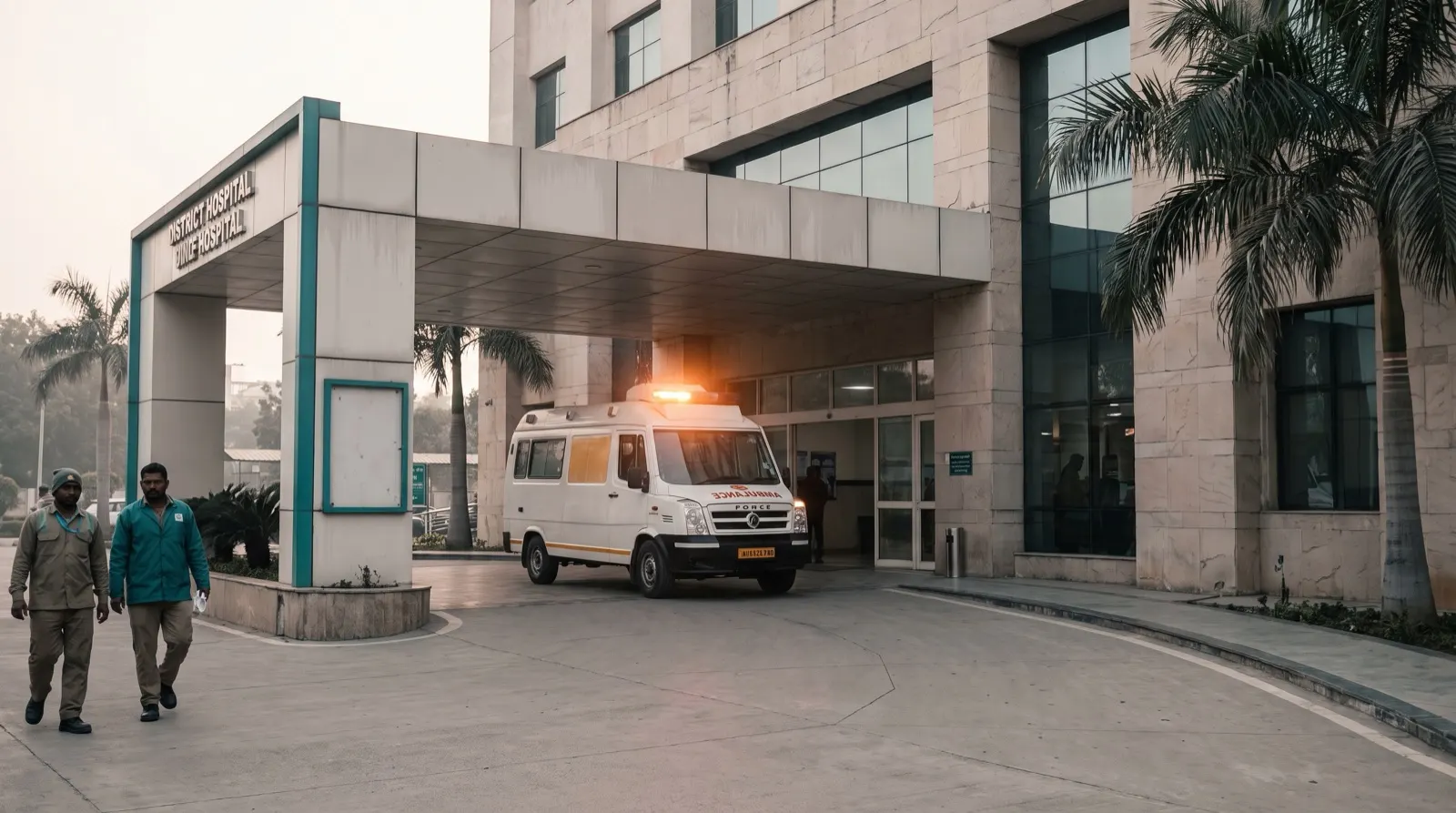
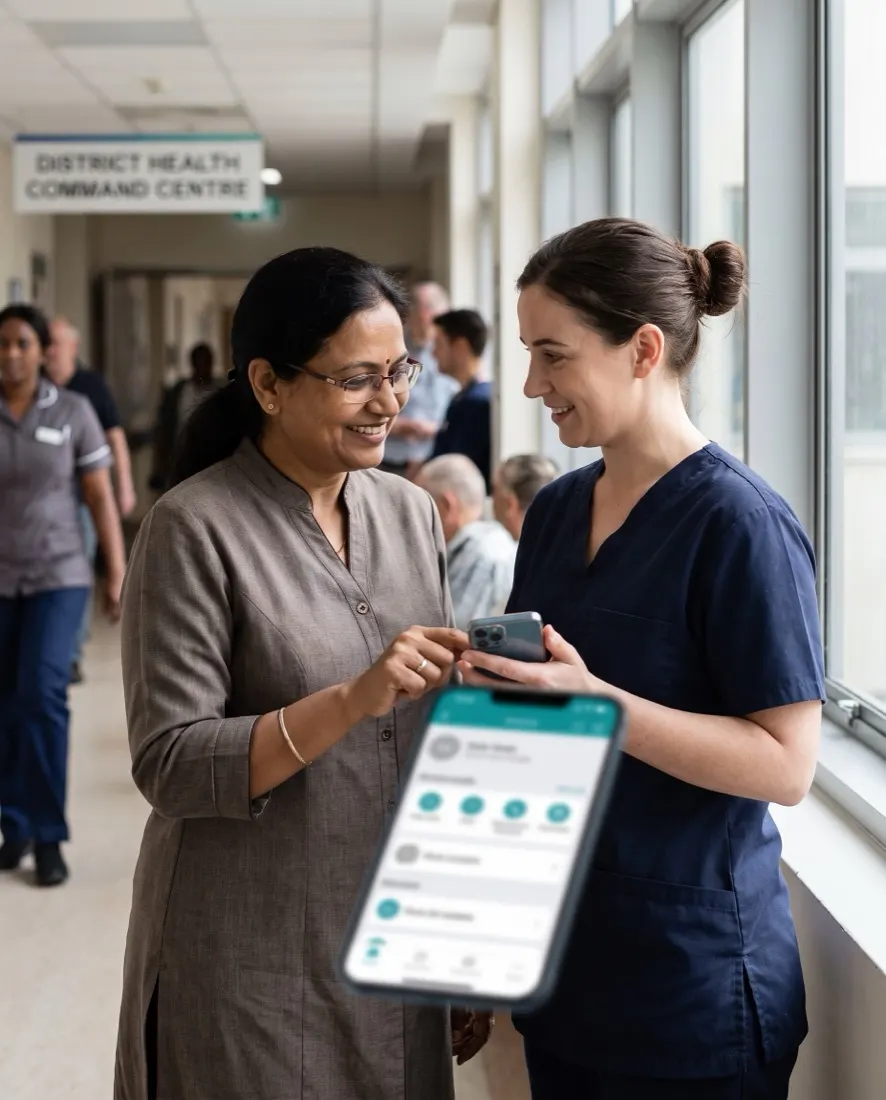
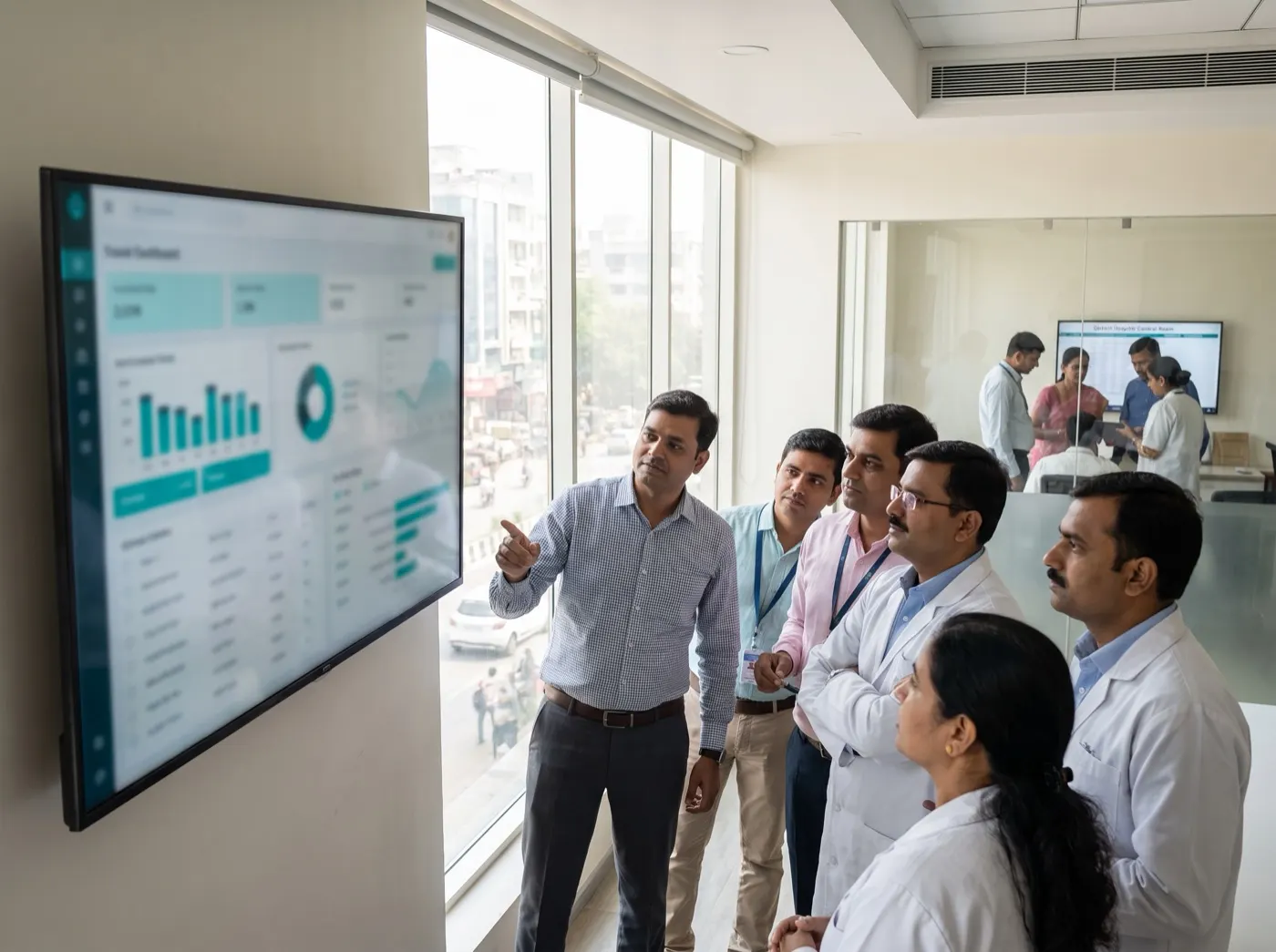
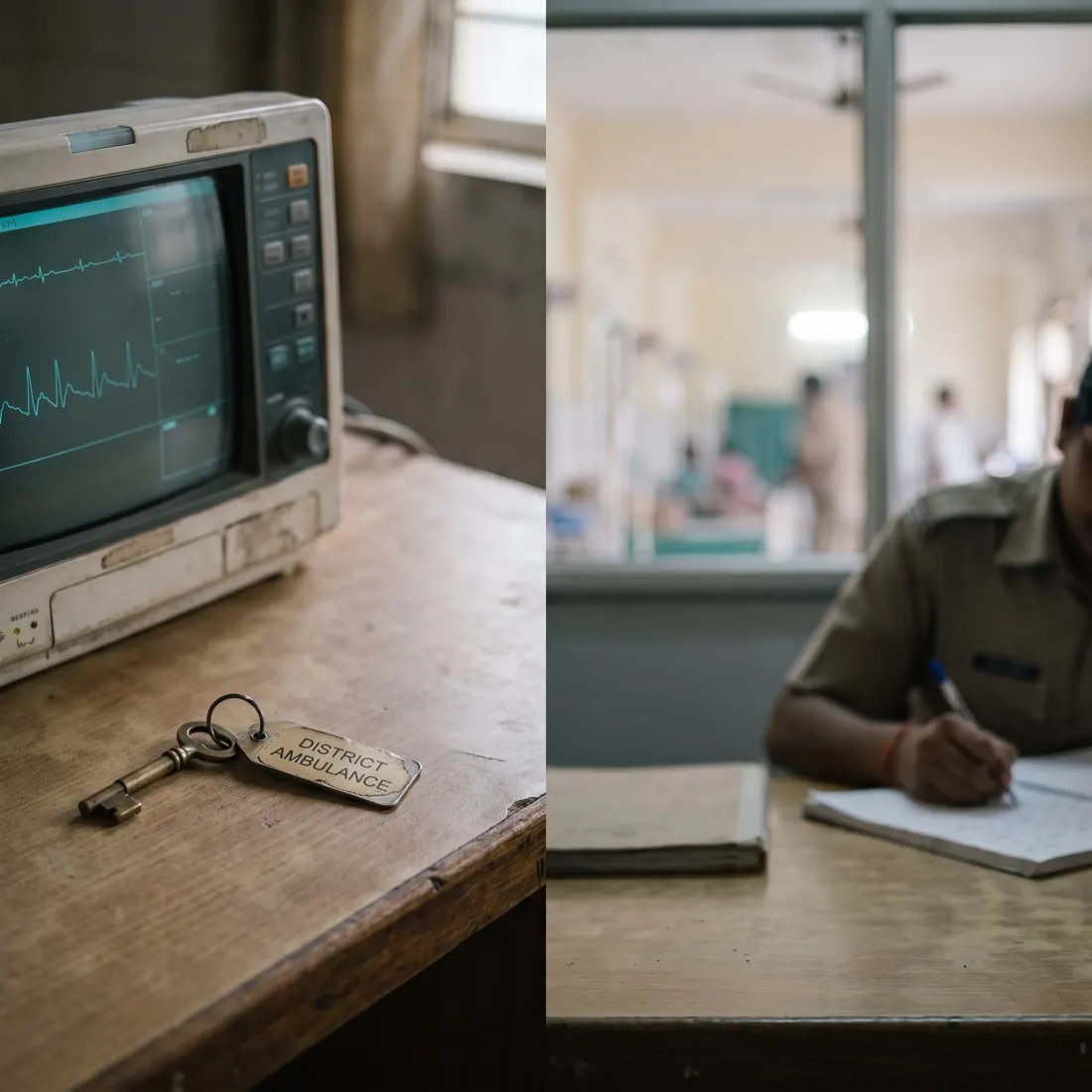
Photographs are illustrative — real customer sites are not shown.
01The screens
State command, hospital capacity, surveillance and the district brief.
Disease index, ICU load, helpline volume and the exceptions that need a decision.
Product screens with illustrative data — every name, place and figure is a placeholder.
02Before and after
Surveillance, hospital, helpline and ambulance systems already exist — reconciled by phone, after the fact.
| Area | Today | With HealthWatch |
|---|---|---|
| Outbreaks | Seen in weekly reports | Clusters flagged against baseline daily |
| ICU | Full before anyone knows | Diversion suggested hours ahead |
| Helpline & ambulance | Separate dashboards | On the same exception queue |
| Districts | Calls and spreadsheets | A morning brief with one-tap decisions |
| Review | Memory and minutes | Every exception with owner, time and closure |
03One verified picture
Every number keeps its source and timestamp, so the command centre never hides stale or estimated data.
Surveillance · HMIS
Cases, lab results and facility reports pulled per district.
Hospitals
ICU, oxygen and ventilator availability refreshed every 15 minutes.
Helpline · ambulance
Helpline cases and ambulance response joined to the same districts.
Clusters
Cases compared with baseline by block; clusters raised with evidence.
Exceptions
Capacity, clusters and delays ranked by risk to life.
Owners
Each exception assigned to a district or hospital owner in minutes.
Districts
A morning brief on WhatsApp with decisions that close in one tap.
Replay
Every exception with owner, time and closure for the weekly review.
04The platform
Monsoon season first; heat waves, vaccination drives and mass gatherings run on the same centre.
05How we deliver
Built on the health systems the state already runs.
FAQQuestions we get about HealthWatch
HealthWatch is a public-health command centre. Short, factual answers for buyers, procurement and the assistants people ask first.
In short. HealthWatch is a public-health command centre. It is built for health secretaries, mission directors and district health officers. It exists to remove the problems those teams describe in almost every first conversation: outbreaks seen in the weekly report; patients sent to ICUs that are already full; and district numbers reconciled by phone. With HealthWatch, teams get clusters flagged against baseline by block, daily, capacity every 15 minutes and a diversion plan before beds run out, and a morning WhatsApp brief per district with one-tap decisions. It connects to Surveillance & HMIS, Hospital systems, Helpline & ambulance and Cold chain, is used by State · districts · hospitals, and runs on web + whatsapp. Like every Autowhat AI product, HealthWatch goes live on one site, lane or process first, usually within weeks, on managed cloud, in your own VPC or on-premises, and shares one operational record with the other products, so the second deployment reuses the data and integrations of the first.
Health secretaries, mission directors and district health officers. A public-health command centre.
outbreaks seen in the weekly report; patients sent to ICUs that are already full; district numbers reconciled by phone.
clusters flagged against baseline by block, daily; capacity every 15 minutes and a diversion plan before beds run out; a morning WhatsApp brief per district with one-tap decisions.
It connects to Surveillance & HMIS, Hospital systems, Helpline & ambulance, Cold chain. Users: State · districts · hospitals. Channel: Web + WhatsApp.
With a 30-minute working session on your own data — an engineer from the relevant sector, not a sales queue. The first wave is scoped in that call; most products go live on one site, lane or process within weeks and then scale.
On managed cloud, in your own VPC (AWS, Azure or GCP) or on-premises, with your keys. SOC 2 Type II and ISO 27001 controls, India data residency when required, and local or open-weight models when policy demands it. The data stays yours.
06Briefing
A working session: your districts mapped, a past peak replayed, and the decisions it would have surfaced.