

01Late holds
Every hold with its options, cost and history.
- Re-treat or regrade, priced against the order it affects
- Similar past heats show what worked
Decisions in minutes, not meetings

EnterpriseSteel Twin · integrated steel plant digital twin
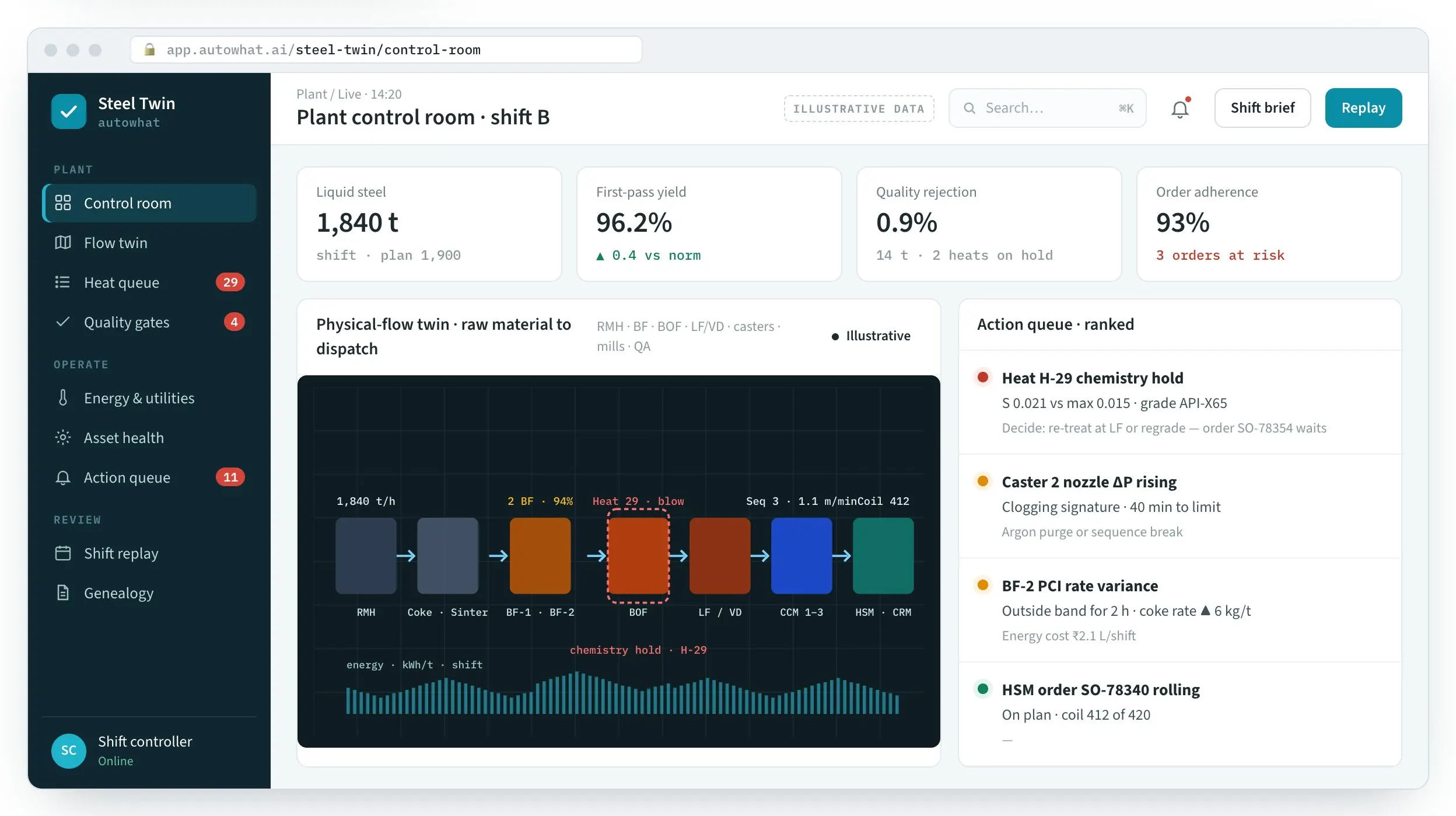
For plant heads and shift controllers in integrated steel plants. One live view of the physical flow — blast furnace, converter, ladle, caster and mills — with every heat linked to its grade, sales order, chemistry and product, and one ranked queue of what needs a decision.
WhySound familiar?
From plant heads, shift controllers and quality heads in integrated steel plants. Composite quotes from discovery calls — the problems are real; the names are left out.

“The hold was found at the gate, after the slab was cast.”
Chemistry, process and order data live in different systems, so a problem heat is discovered late.
Quality headHolds found too late
“Every shop optimises its own number.”
The converter hits its tap-to-tap while the caster breaks sequence and an order slips.
Plant headMargin lost between shops
“We learn about energy overruns the next day.”
Power, oxygen and gas against norm arrive in a morning report, after the shift has gone home.
Shift controllerNo chance to correct in the shift
HowWhat changes with Steel Twin
Product screens with illustrative data. In a briefing we trace one week of your heats.
01Late holds
Decisions in minutes, not meetings
02Shops in silos
One plant, one record

03Next-day reports
Corrected in the shift

FieldSteel Twin in the field
The workplace it runs in, the person who uses it on a phone, the team at the desk and the detail it reads.
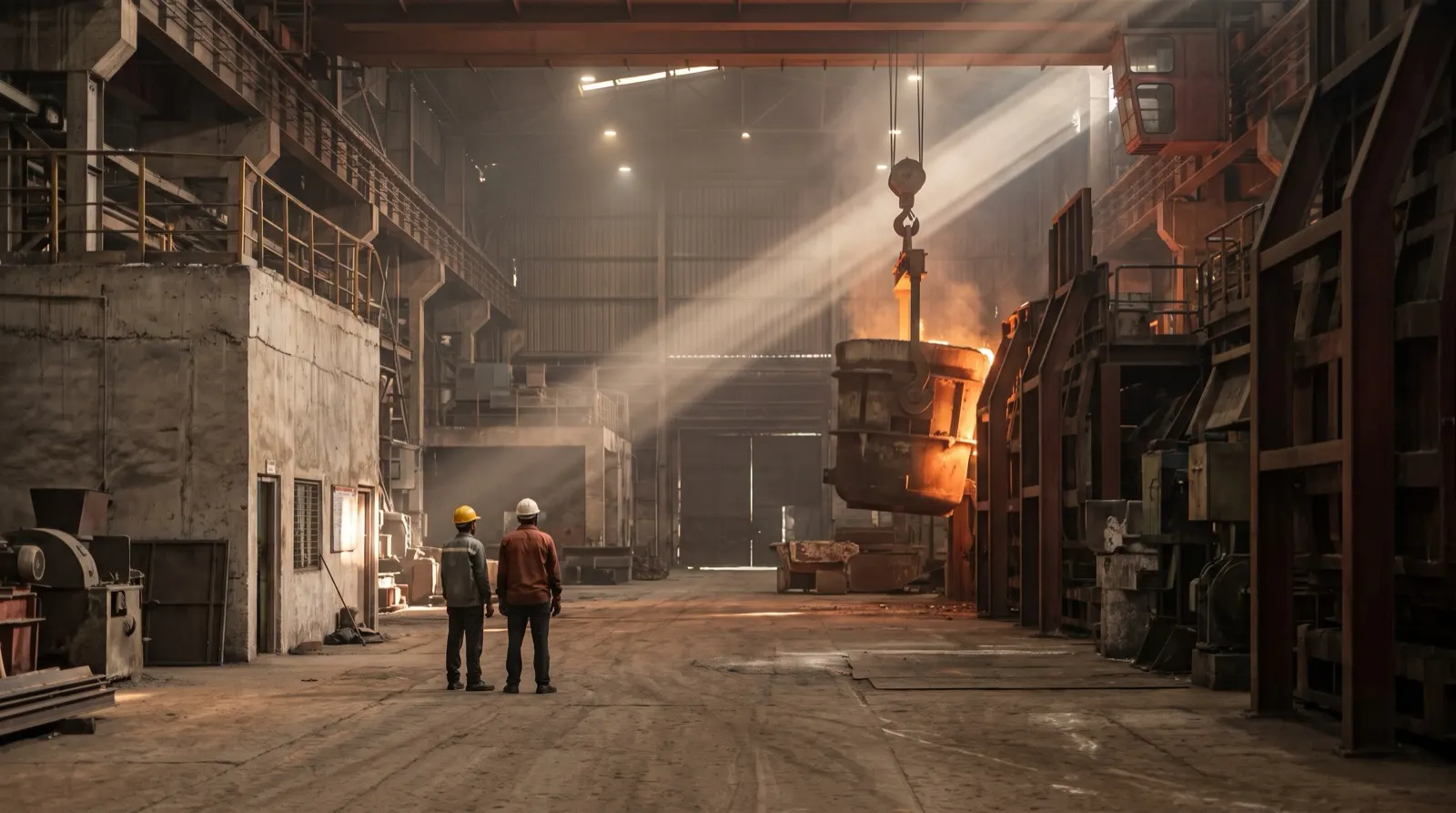
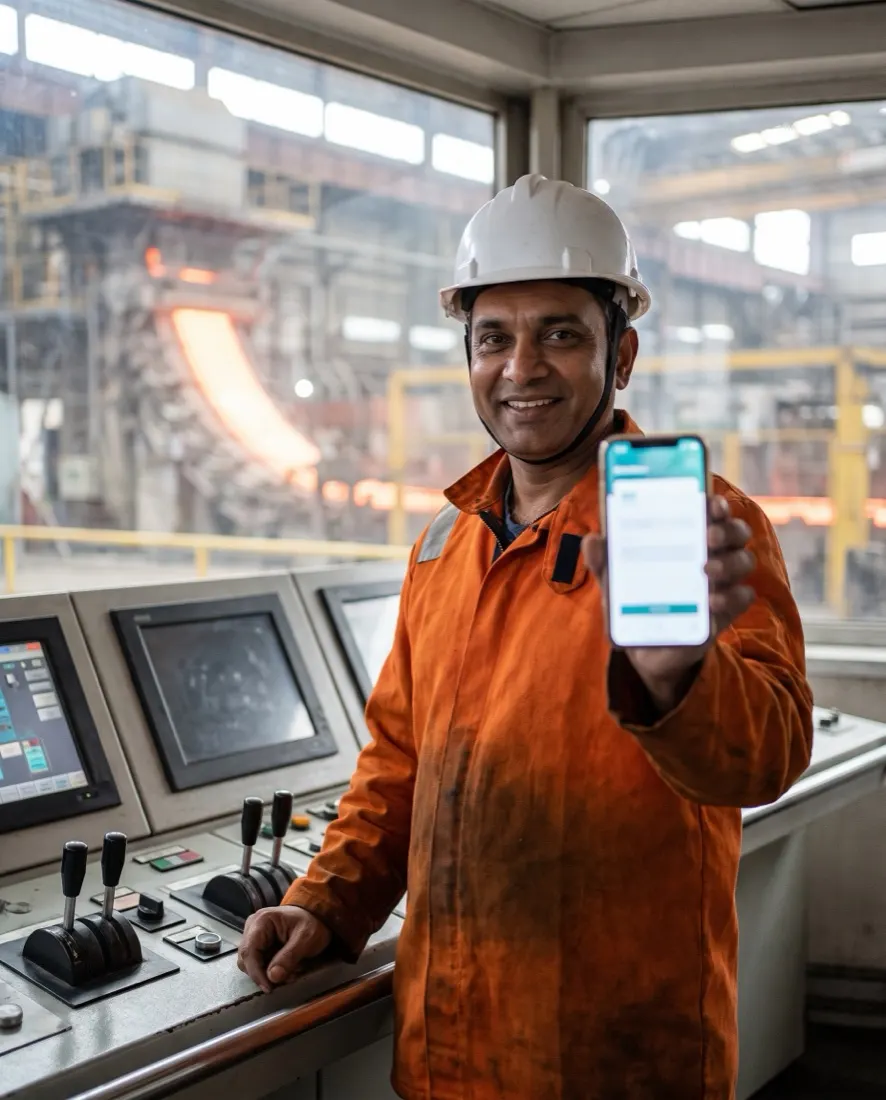
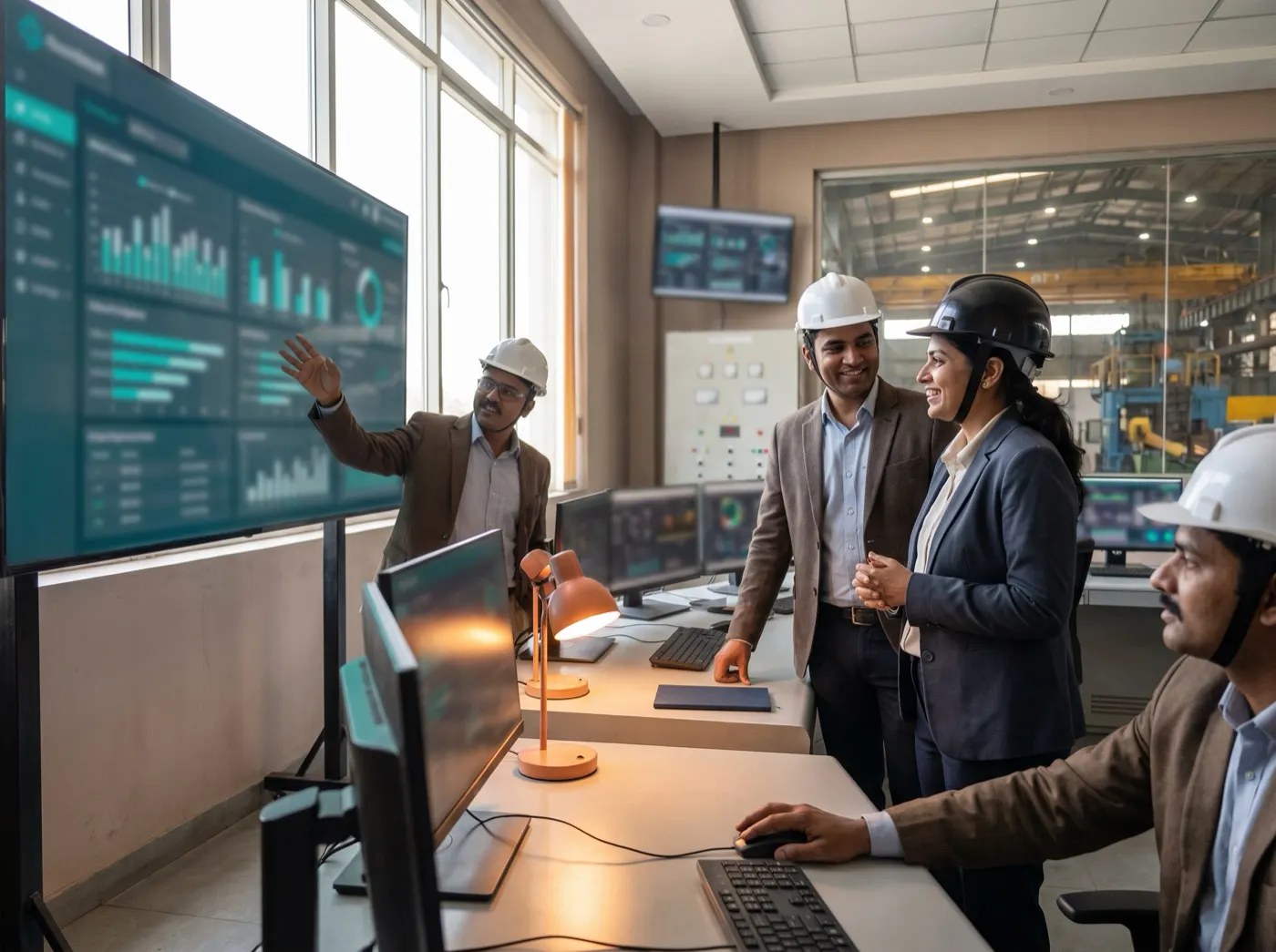
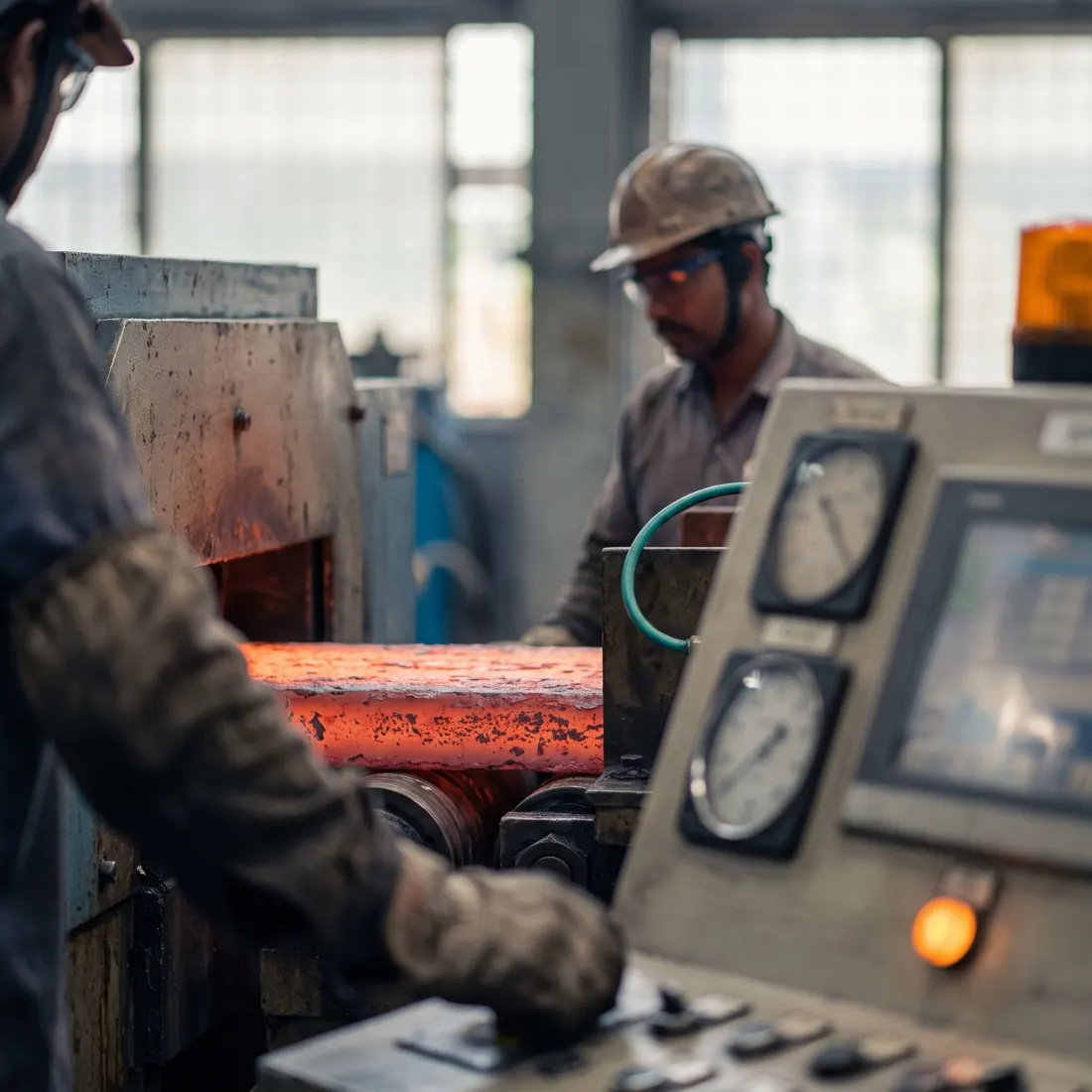
Photographs are illustrative — real customer sites are not shown.
01The screens
The control room, the heat queue, quality gates and shift alerts.
The physical flow from raw material to dispatch, and the ranked action queue.
Product screens with illustrative data — every name, place and figure is a placeholder.
02Before and after
Process, quality, orders and energy are already measured — in seven systems that do not share a clock.
| Area | Today | With Steel Twin |
|---|---|---|
| Heats | Tracked in the unit’s own system | One genealogy from charge to coil |
| Holds | Found at the gate, decided by phone | Options, cost and history on the hold |
| Energy | Reported next day | Against norm, by unit and shift |
| Assets | Fixed after the break | Health exceptions before the sequence breaks |
| Review | Shift log and memory | Replay with every event and source |
03One plant record
heat_id is the correlation key; every event keeps its source timestamp and quality flag, so stale data is never hidden.
PLC · SCADA
Temperatures, flows, speeds and equipment states stream from Level 1.
Historian
Process tags kept as time series for replay.
MES
Heat, ladle, sequence, slab and coil genealogy joined on heat_id.
LIMS · QMS
Chemistry, mechanical tests, defects and holds attached to each heat.
ERP
Grade demand, orders and dispatch linked to what is being made.
EAM
Asset health, work orders and spares beside the process.
Action queue
Holds, constraints and variances ranked by cost and urgency.
Shift review
Every shift replayed with the decisions taken and why.
04The platform
Start with steelmaking and casting; iron-making and mills join on the same record.
05How we deliver
Built with metallurgists and software engineers around your units and your systems.
FAQQuestions we get about Steel Twin
Steel Twin is a digital-twin control room for integrated steel plants: raw material to dispatch on one live flow, every heat linked to grade, sales order, route and chemistry, quality gates priced, energy against norm and one ranked action queue. Short, factual answers for buyers, procurement and the assistants people ask first.
In short. Steel Twin is a digital-twin control room for integrated steel plants: raw material to dispatch on one live flow, every heat linked to grade, sales order, route and chemistry, quality gates priced, energy against norm and one ranked action queue. It is built for plant heads, shift controllers and quality heads in steel. It exists to remove the problems those teams describe in almost every first conversation: holds discovered at the gate, after casting; and each shop optimising its own number. With Steel Twin, teams get a heat genealogy joined on heat_id across MES, LIMS, ERP and historian, and every hold with options, cost and history. It connects to PLC / SCADA & historian, MES · LIMS, ERP · EAM and Energy management, is used by Plant head · shift controllers · QA, and runs on web + mobile. Like every Autowhat AI product, Steel Twin goes live on one site, lane or process first, usually within weeks, on managed cloud, in your own VPC or on-premises, and shares one operational record with the other products, so the second deployment reuses the data and integrations of the first.
Plant heads, shift controllers and quality heads in steel. A digital-twin control room for integrated steel plants: raw material to dispatch on one live flow, every heat linked to grade, sales order, route and chemistry, quality gates priced, energy against norm and one ranked action queue.
holds discovered at the gate, after casting; each shop optimising its own number; energy overruns reported the next day.
a heat genealogy joined on heat_id across MES, LIMS, ERP and historian; every hold with options, cost and history; shift alerts with one-tap decisions and a replay.
It connects to PLC / SCADA & historian, MES · LIMS, ERP · EAM, Energy management. Users: Plant head · shift controllers · QA. Channel: Web + mobile.
With a 30-minute working session on your own data — an engineer from the relevant sector, not a sales queue. The first wave is scoped in that call; most products go live on one site, lane or process within weeks and then scale.
On managed cloud, in your own VPC (AWS, Azure or GCP) or on-premises, with your keys. SOC 2 Type II and ISO 27001 controls, India data residency when required, and local or open-weight models when policy demands it. The data stays yours.
06Briefing
A working session: your heats traced end to end, holds priced, and the first action queue built.