

Playbook
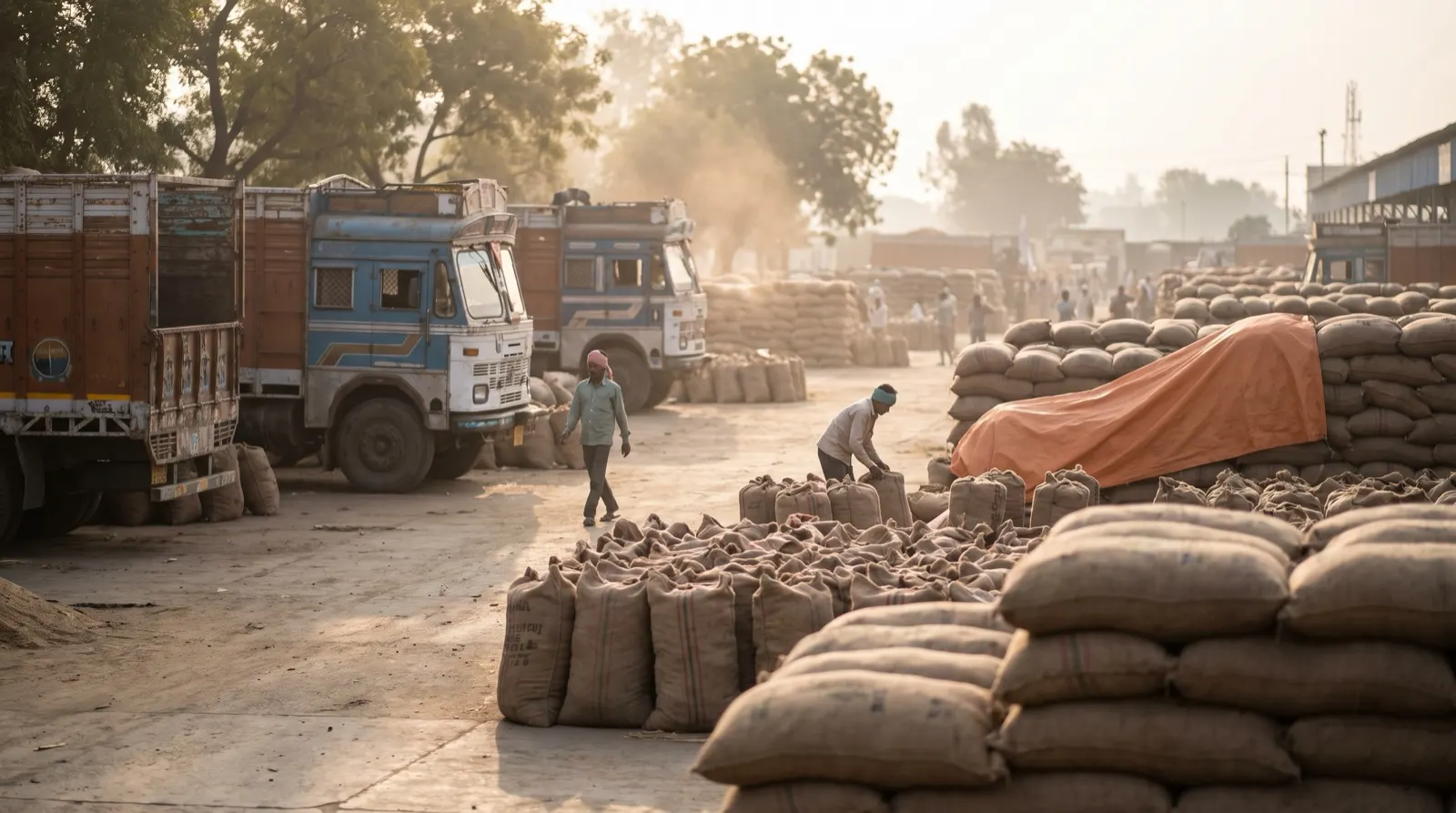
Wheat intake at the mill gate: grade faster, argue less, keep a history.
Trucks queue while samples go to the lab. Graders disagree. Results end up on paper slips nobody can trend.
Trucks queue while samples go to the lab. Graders disagree. Results end up on paper slips nobody can trend.
| Measure | Why |
|---|---|
| Time from truck arrival to decision | Gate queue |
| Lots disputed per week | Trust in the grade |
| Defect trend by source | Which suppliers are slipping |
| Fast check vs lab on borderline lots | Whether the fast check can be trusted |
See FCI FAQ explained and photo tips.
GrainGrade turns one phone photo of a wheat sample into a grain count, sizes in millimetres, defect percentages and the FCI FAQ grade, with a range on every number instead of a bare decimal. The camera coaches the shot first (level, a scale marker in frame, focus and light) and refuses a bad photo with a reason in Hindi or English rather than analysing it into a wrong answer. Seven defect classes are checked, grading rules are data so a mill’s or exporter’s own spec can sit beside FCI FAQ, and every sample is saved to its lot with a shareable PDF or WhatsApp report. GrainGrade is in development: counting is built and measured; the other figures on the product page are design targets. Moisture is not visible to a camera and is entered from a meter reading.
Use a fast, standardised check at the gate for most lots, with moisture from a meter, and send only borderline lots to the lab.
Write the spec down, fix the sampling method, standardise how samples are checked and share the numbers with the supplier at the gate.
See it on your own data. GrainGrade — Wheat graded from a photo. Book a 30-minute working session with an engineer.