

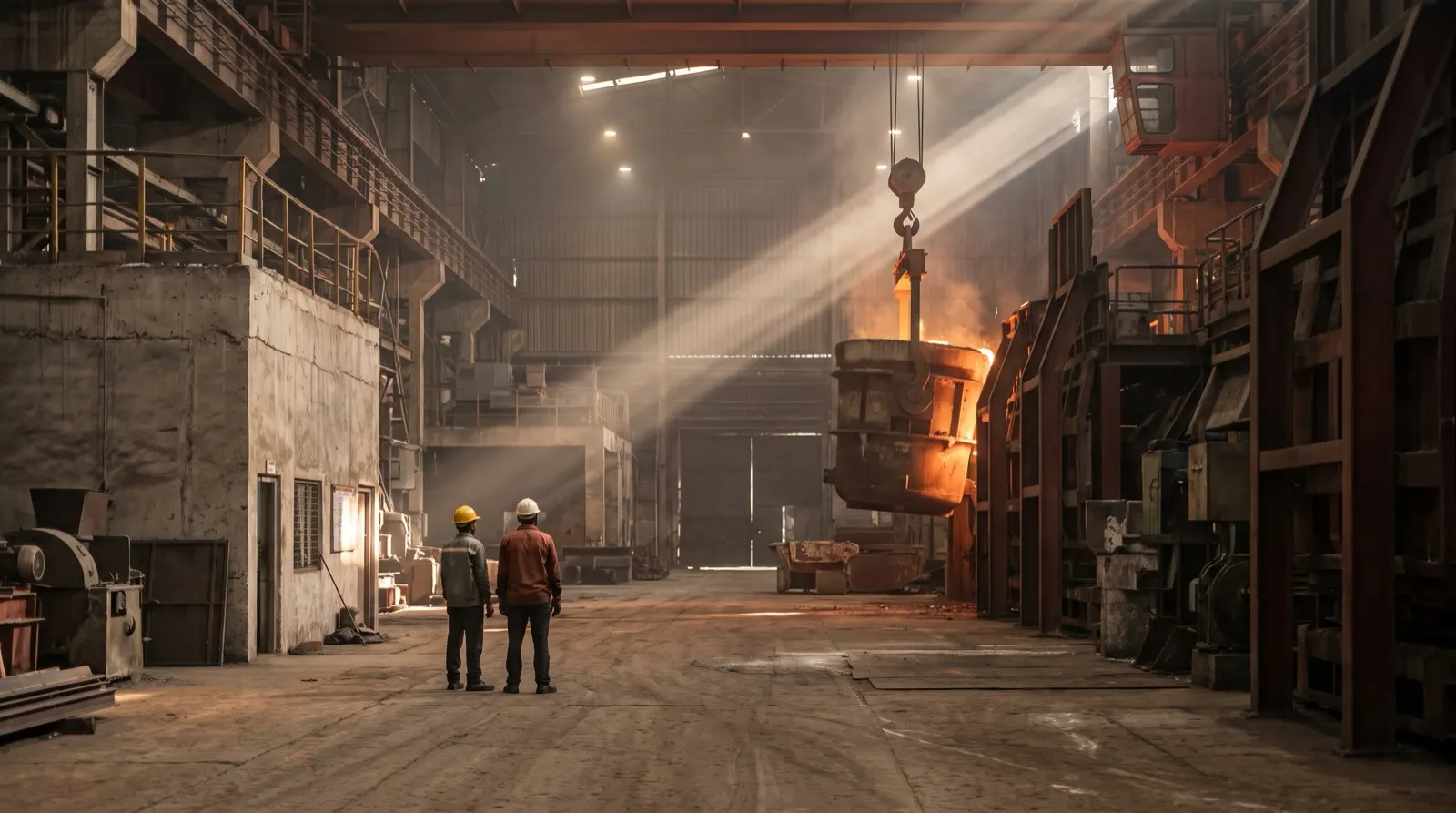
Guide · Traceability
Heat genealogy: tracing every steel heat from charge to coil.
Ask which coils came from a heat with a chemistry problem and many plants need a morning of phone calls and spreadsheets. Heat genealogy answers it in one query.
Ask which coils came from a heat with a chemistry problem and many plants need a morning of phone calls and spreadsheets. Heat genealogy answers it in one query.
Heat genealogy is the linked record of what happened to each heat of steel: the charge it was made from, the ladle and treatments it went through, the casting sequence and slabs or billets it became, and the coils or products shipped against a sales order.
| Stage | Typical record | Usually held in |
|---|---|---|
| Charge and iron-making | Hot metal, scrap and additions | Process systems, historian |
| Steelmaking | Heat, treatments, temperatures | MES, historian |
| Ladle and secondary metallurgy | Ladle, alloy additions, chemistry | MES, LIMS |
| Casting | Sequence, strand, slabs or billets | MES |
| Testing | Chemistry, mechanical tests, defects, holds | LIMS, QMS |
| Rolling and finishing | Coils or products | MES |
| Orders and dispatch | Grade demand, sales order, dispatch | ERP |
Genealogy works only when every system can be joined on a common key, usually the heat number, with each event carrying its own source timestamp. Without it, each shop tracks heats in its own system and the links are rebuilt by hand when something goes wrong.
For movement of finished steel after dispatch, see steel logistics control tower.
Steel Twin is a digital-twin control room for integrated steel plants. It joins PLC and SCADA, the historian, MES, LIMS, ERP, EAM and energy data on heat_id, so every heat is traced from charge to coil with its grade, sales order, route and chemistry. Every event keeps its source timestamp and a quality flag, so stale data is never hidden. Holds arrive with re-treat or regrade options priced against the order they affect and similar past heats; holds, sequence risks and energy variances against norm are pushed to the shift controller, and one tap logs the decision to the genealogy. A single action queue is ranked by cost and urgency, and any shift can be replayed with its sources. Delivery starts with steelmaking and casting on one shop, then adds energy, asset health, iron-making, mills and dispatch on the same record.
The linked record of each heat from charge through steelmaking, ladle treatment, casting, testing and rolling to the coil or product and its sales order.
Each stage is recorded in a different system (historian, MES, LIMS, ERP) that does not share a key or a clock, so links are rebuilt by hand.
Usually the heat number, joined across every system with each event’s source timestamp.
See it on your own data. Steel Twin — Every heat, traced to the coil. Book a 30-minute working session with an engineer.