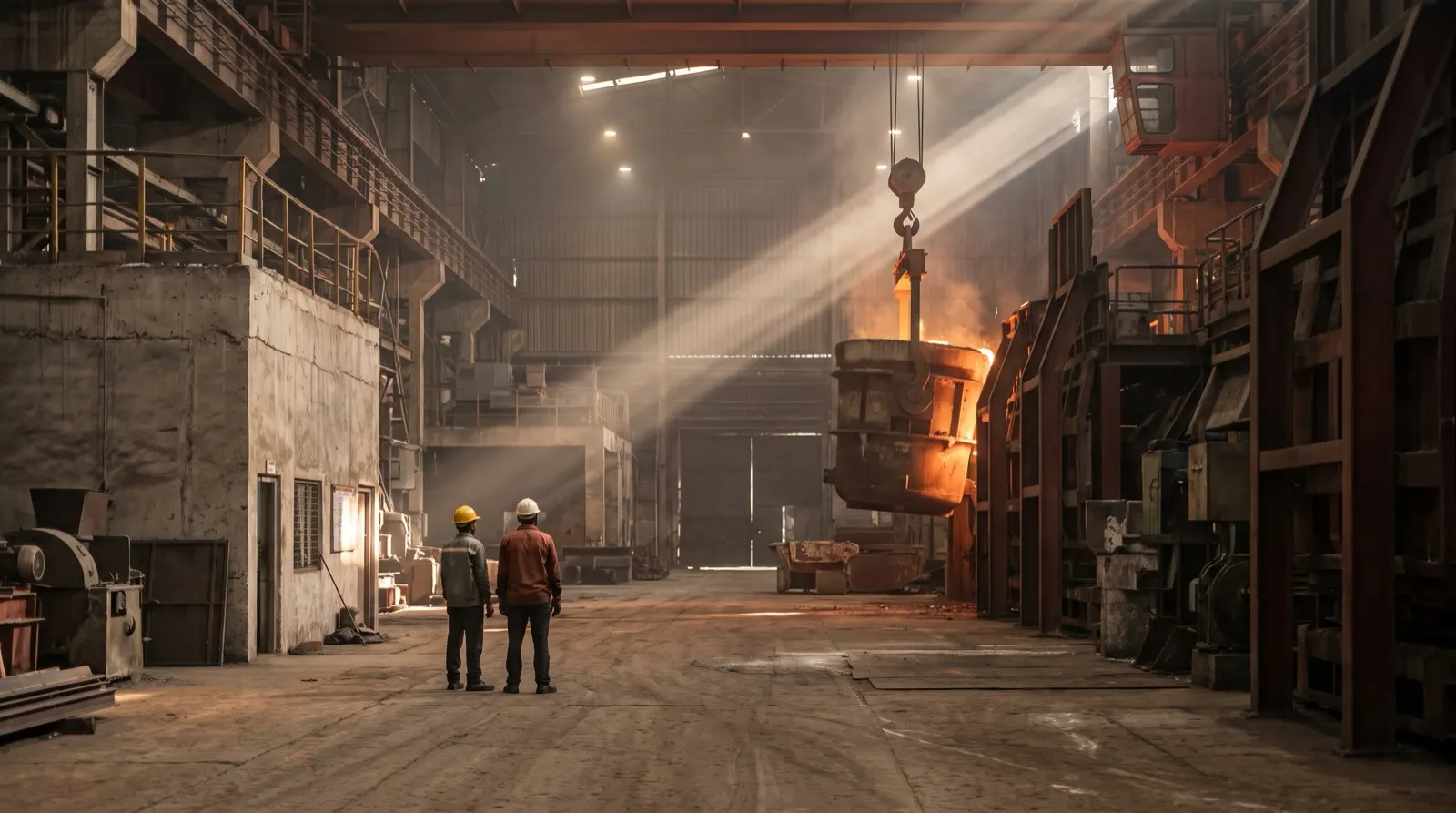
Energy against norm in a steel plant: why next-day reports are too late.
Power, oxygen and gas consumption are measured all day, but often compared with norm only in the next morning’s report, after the shift that could have acted has gone home.
An energy norm is the expected consumption of a utility (power, oxygen, fuel gas, steam, water) per tonne of output for a given unit and product. A variance is the difference between actual and norm.
What to track, and by what
Utility
Typical basis
Track by
Electrical power
Per tonne of output
Unit and shift
Oxygen
Per tonne or per heat
Unit and shift
Fuel gases
Per tonne of output
Unit and shift
Steam and water
Per tonne of output
Unit and day
Why shift-level matters
The causes of overrun, such as delays, restarts, sequence breaks or equipment problems, happen in the shift.
The people who can correct them are on that shift.
A daily total hides which unit and which hours drove the variance.
How to set it up
Agree norms per unit and product, and the basis for each.
Bring meter data from energy management and the historian against production from MES.
Compute variance by unit and shift as the shift runs.
Push significant variances to the shift controller with the likely context.
Record what was done, and review repeat variances weekly.
Data quality first
A variance is only as good as the meter behind it. Flag stale or missing readings openly rather than hiding them in a total.
How Steel Twin does it
Steel Twin is a digital-twin control room for integrated steel plants. It joins PLC and SCADA, the historian, MES, LIMS, ERP, EAM and energy data on heat_id, so every heat is traced from charge to coil with its grade, sales order, route and chemistry. Every event keeps its source timestamp and a quality flag, so stale data is never hidden. Holds arrive with re-treat or regrade options priced against the order they affect and similar past heats; holds, sequence risks and energy variances against norm are pushed to the shift controller, and one tap logs the decision to the genealogy. A single action queue is ranked by cost and urgency, and any shift can be replayed with its sources. Delivery starts with steelmaking and casting on one shop, then adds energy, asset health, iron-making, mills and dispatch on the same record.
Questions
What is an energy norm in a steel plant?
The expected consumption of a utility such as power, oxygen or fuel gas per tonne of output for a given unit and product.
Why track energy by shift instead of daily?
The causes of overruns happen in the shift and the people who can correct them are on it; a daily total arrives too late and hides the cause.
What data is needed to track energy against norm?
Meter readings from energy management or the historian, production from MES, and agreed norms per unit and product.