

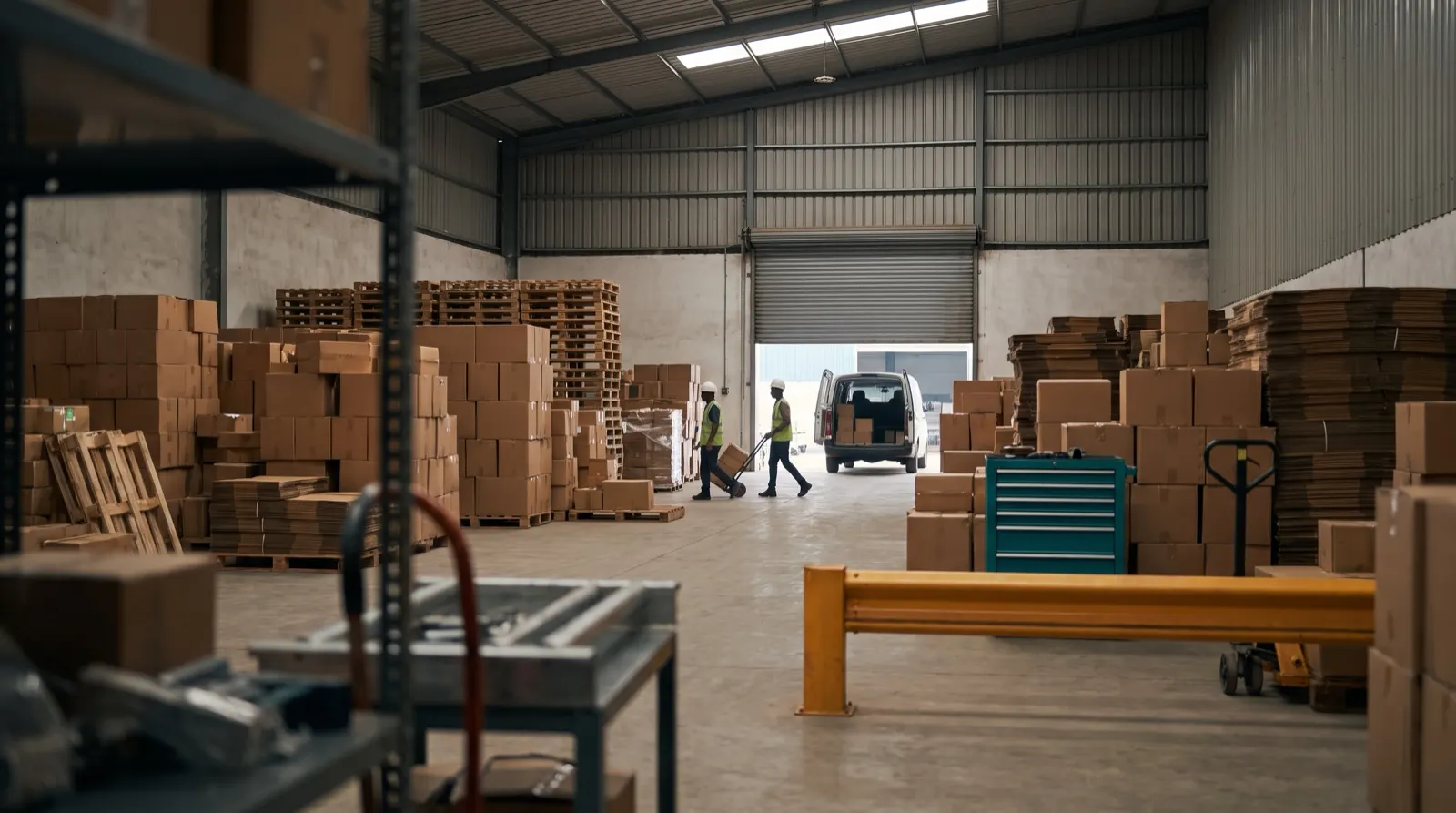
The distributor of a bakery-ingredients brand runs his business from a counter in a wholesale lane. His day is a stack of orders from the SR, calls from bakeries asking where their cream is, a godown boy loading a tempo and a ledger book that never quite matches. Head office has just told him to start using a new DMS. He nods, and for the next three months he keeps using the ledger book.
A distributor management system succeeds or fails on whether the distributor uses it every day, so every question you ask a vendor should be tested against his counter, not your dashboard.
The questions below are written for brands choosing a DMS for the first time or replacing one that nobody opens. They are fair to app-based systems, WhatsApp-first systems and ERP add-ons. None of them needs a technical team to ask.
Daily use by the distributor matters more than any feature list
Ask the vendor to show the distributor’s screen, not head office’s. How many taps does it take to mark an order dispatched? Does it need a laptop, an installed app or only a phone? Can the distributor work in Hindi or his own language? Can his staff use it without a training day?
Then ask for evidence of adoption, not promises: how do they measure whether distributors are actually entering data, and what do they do when one stops? A system with fifty screens that the distributor ignores gives you fifty screens of stale numbers. A simpler system he uses every evening gives you the truth.
An order should reach the distributor the same minute it is booked
Many secondary-sales problems begin with a lost order. The SR takes an order at a restaurant supply outlet, sends it as a photo or a call, and it reaches the distributor late or not at all. Ask how the SR’s order travels. Does it land on the distributor’s pending list immediately, outlet by outlet? Can the distributor see the oldest pending orders first?
Ask what happens when an order cannot go today. A good system makes the distributor give a reason, and sends that reason to the people who would otherwise phone him. Ask too how cancellations reach the SR who booked the order.
Stock figures are only as honest as the corrections behind them
Every DMS shows a stock number. Ask where it comes from. If it depends on the distributor counting his godown and typing a figure, it will be wrong most days. A sturdier approach derives stock from facts the system already has: what the distributor took at the gate, minus what he dispatched.
Here is an illustrative example, not a customer figure. Say a distributor takes 200 cartons of whipping cream at the gate. Over the week he marks 150 dispatched to bakeries and hotels. The system shows 200 − 150 = 50 in hand. On Saturday he reports 4 cartons leaked. With a correction and a reason, stock becomes 50 − 4 = 46, and the leak is on record. Without one, head office sees 50, plans on 50, and the next shortfall becomes an argument.
A stock correction with a reason is information. A stock figure with no history is an opinion.
Ask the vendor whether corrections need a reason, whether they stay in an audit trail and whether head office sees the time of the last update. Our guide on distributor stock visibility explains why freshness matters as much as the number.
The invoice and the retailer’s ledger should move with the dispatch
Ask whether dispatch raises the GST invoice, or whether the distributor must key it again in a separate billing tool. Double entry is where mismatches breed. Ask how payments are applied to a retailer’s dues, and whether the distributor and the ASE see the same balance.
For a bakery supply business, where small outlets buy on short credit, this is not a detail. A distributor who cannot see which bakery owes for which invoice will either chase the wrong outlet or stop extending credit to a good one.
The ASE’s phone calls are the cost nobody puts in the business case
Ask how the area sales executive learns what happened today. If the honest answer is “he calls each distributor”, the DMS has not removed the work. Try the arithmetic for your own team. In an illustrative case, an ASE with 10 distributors who makes 2 follow-up calls to each, at 6 minutes a call, spends 10 × 2 × 6 = 120 minutes a day asking questions a system could have answered.
Ask whether dispatches, pending reasons and cancellations are pushed to the ASE as they happen, and whether there is an end-of-day check that names what is still open.
The case for a full app-based DMS
A fair counterpoint: large distributors with billing staff, many SKUs and their own accounting teams may want a full desktop or app-based DMS with deep inventory and accounting features. A chat-first approach can feel too light for them, and some brands already have an ERP that does much of the job. Our comparison of WhatsApp DMS and app-based DMS sets out where each fits.
We think the deciding question is who does the daily entry. If it is a trained billing clerk, depth wins. If it is the owner on his phone between customers, the lightest path to a true record wins.
How we built ours around these questions
Our Distributor Management System is WhatsApp-first. The SR’s order reaches the distributor the same minute; one tap marks an outlet dispatched and raises a GST invoice; stock is gate pass minus dispatches, with corrections and reasons kept in the audit trail. Each distributor has a WhatsApp group that posts dispatches and pending reasons as they happen, with a 10 pm alert for loose ends. It works in Hindi and English, with OTP login and nothing to install. The DMS guides cover each piece.
What to do this week
- Sit with one distributor for an evening and note every place an order, a dispatch or a payment is written down.
- Ask your ASEs to log their follow-up calls for two days, with the reason for each.
- Compare one distributor’s claimed stock of a single SKU with gate quantities minus dispatches.
- Take these questions to every vendor and ask for a demo from the distributor’s phone.
The DMS that wins is rarely the one with the best boardroom demo. It is the one the distributor opens without being asked.