

The sales head of a bakery brand in Indore has three vendor decks open on her laptop. All three say DMS on the cover. One is about delivery routes and warehouse slots. One is about vehicle servicing for car dealers. The third talks about retailers, pending orders and distributor stock. She needs one of them, and the acronym is not helping.
Our view is simple: a distribution management system tracks goods while the brand still owns them, and a distributor management system tracks them after they belong to someone else. If your problem starts at the distributor’s counter, you are shopping for the second kind, such as a WhatsApp distributor management system for FMCG brands, and the first kind will not answer your questions. For the plain definition, our guide on what a distributor management system does covers the six jobs. This post is about telling the look-alikes apart.
DMS has four common full forms, and only two concern your distributors
The same three letters are used in very different trades. Before any comparison, settle which one the person across the table means.
| DMS full form | Who usually buys it | What it records |
|---|---|---|
| Distributor management system | FMCG and food brands selling through distributors | Retailer orders, distributor dispatch, invoices, distributor stock, retailer dues |
| Distribution management system | Companies running their own warehouses and fleets, and power utilities | Warehouse stock, delivery routes, vehicles and delivery proof; for utilities, the electricity network |
| Dealer management system | Automobile and equipment dealers | Vehicle stock, bookings, service jobs and spare parts |
| Document management system | Any office | Files, versions and approvals |
In an Indian FMCG sales team, “what is DMS in sales” almost always points to the first row. A job post for a DMS executive in that setting usually means the person who keeps distributor orders, stock and claims clean in that system. The power-grid meaning explains why searches for “distribution management system” often return pages about feeders and substations. That is a different industry, so skip those results.
Distribution management follows your trucks; distributor management follows someone else’s counter
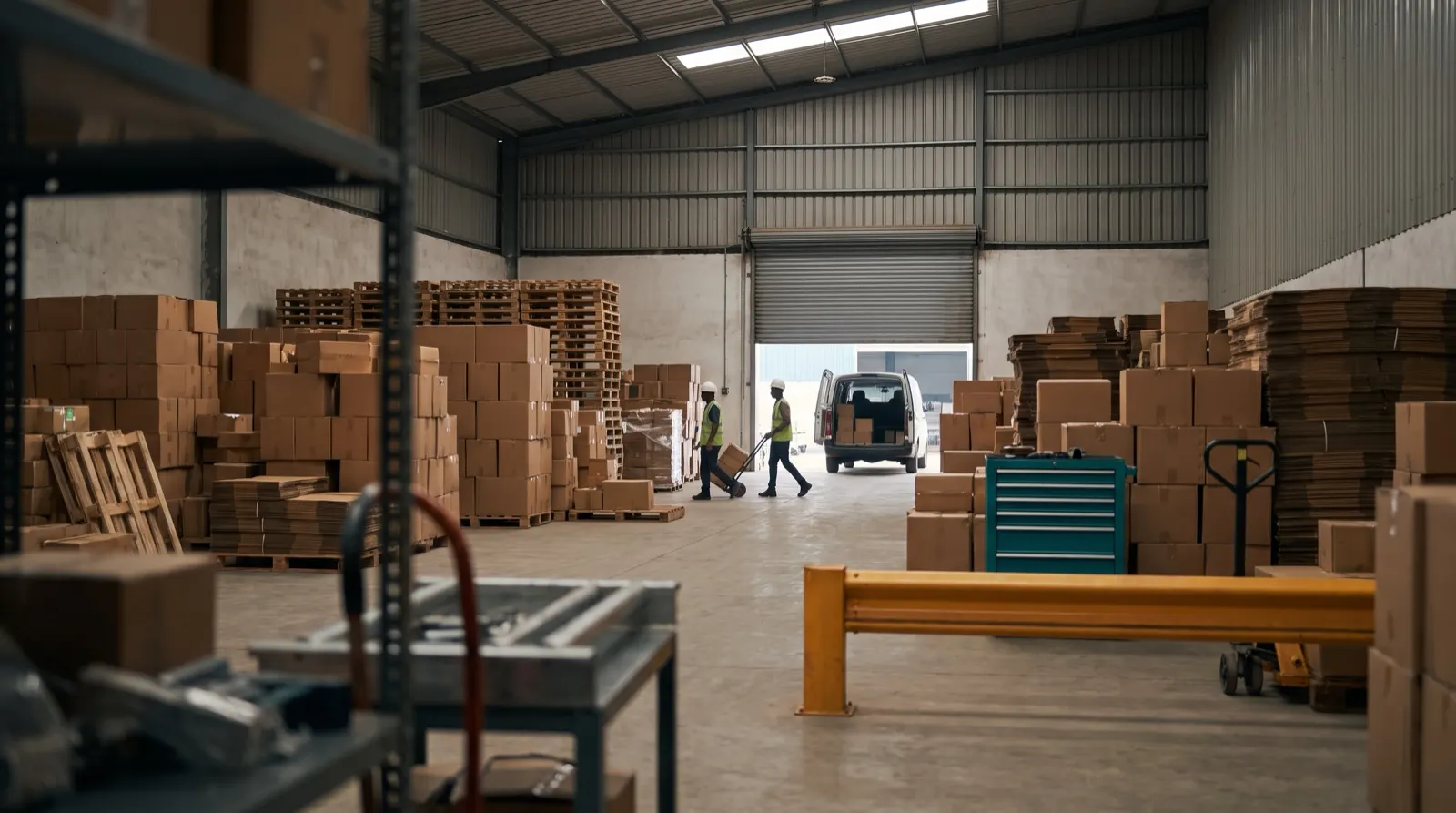
A distribution system answers questions about movement the brand controls. Which warehouse ships which order, on which vehicle, by which route, and did it arrive? That is primary distribution, from plant or depot to the distributor or a large customer.
A distributor system answers questions about a business the brand does not run. What did the sales rep book at each outlet? What has the distributor dispatched, what is still pending and why? How much stock is in that godown today, and what does each retailer owe? That is secondary sales, from the distributor to the shop.
The two meet at one moment: the gate. Goods leave the brand’s depot on a gate pass and enter the distributor’s stock. Everything before that line belongs to distribution. Everything after it belongs to distributor management.
The dividing line is who owns the stock when you ask the question
| Question | Distribution management system | Distributor management system |
|---|---|---|
| Whose stock is it? | The brand’s, in its own warehouses or vehicles | The distributor’s, after it leaves the brand’s gate |
| Main users | Warehouse, transport and planning teams | Distributors, sales reps, area sales executives, sales head |
| Typical record | Shipment, route, delivery proof | Outlet order, dispatch, invoice, retailer ledger |
| Hardest part | Vehicle use and on-time delivery | Getting a busy distributor to record what happened |
| Who has to adopt it | The brand’s own staff | Independent businesses the brand cannot instruct |
If the stock belongs to someone else at the moment you ask about it, you need a distributor management system, not a distribution one.
The last row matters most. A brand can tell its own warehouse staff to use a system. It can only persuade a distributor. That is why a distributor system has to fit the distributor’s day, in the language they type and on the phone already in their hand.
A worked example shows where each system goes quiet
Say a bakery brand sends one distributor 600 cartons of rusk in a week. This example is illustrative, with round numbers.
- The distribution system records the truck leaving the depot and arriving at the distributor. Delivered: 600 cartons. Its job is done.
- Over the week, sales reps book 40 outlets at an average of 12 cartons each. That is 40 × 12 = 480 cartons ordered.
- The distributor dispatches 35 outlets, or 35 × 12 = 420 cartons. Five outlets, 60 cartons, are still pending.
- Four cartons are damaged in the godown and reported with a reason.
- Stock in hand is 600 − 420 − 4 = 176 cartons, of which 60 are already promised to the five pending outlets.
The distribution system has nothing to say about steps two to five. It cannot tell the sales head that 116 cartons are actually free to sell, or why five shops are still waiting. Those are the numbers that decide whether the next truck should carry more rusk or less. A distributor system keeps them as gate pass minus dispatches plus corrections with a reason, which our guide on distributor stock visibility without physical counts walks through in detail.
“Dealer distributor management system” is mostly a naming choice in FMCG
Some brands call their channel partners dealers, some say distributors, some say stockists or super stockists. In packaged food, paints, building products and similar trades, a dealer distributor management system usually means the same thing: software for secondary sales through independent partners.
The automobile dealer management system is the real outlier. It is built around vehicle bookings, service jobs and spare parts, not outlet orders and retailer dues. So check the screens, not the label. If the demo starts with a workshop job card, it is the wrong DMS for a biscuit brand.
The strongest objection: why not one system for everything?
A fair point. Many brands already run an ERP that handles the depot, invoicing to distributors and transport. Adding a separate tool for distributors can look like one more silo, one more login and one more number that does not match.
We take that seriously, and we agree the records should join up. Where the single-system idea often runs into trouble is adoption at the distributor’s counter. A screen designed for a brand’s finance team rarely suits a distributor’s staff on a busy evening. If they skip it, the ERP shows clean primary sales and an empty secondary picture. That is why we built our DMS to work from WhatsApp in Hindi or English, with one tap to mark an outlet dispatched and raise the GST invoice, and to connect to the brand’s field app, ERP and gate system. The point is one record, fed from two very different places.
So the useful test is not one system or two. It is whether the people who own the stock after the gate will record what happens to it.
What to do this week
- Write down the three questions you most often ask about distributors. Check whether each one is about stock before the gate or after it.
- Ask every vendor which DMS full form they mean, and to open the screen a distributor would use first.
- Pick one distributor and trace last week’s cartons from gate pass to outlet, the way the example above does.
- Note where the trail goes quiet. That gap is the job your next system has to do.
The acronym will keep confusing people, and that is fine. Once you know which side of the gate your problem sits on, the right shortlist gets short quickly. More on running distributors day to day is in our DMS guides.