

Glossary · Logistics & transport
Demurrage meaning
Demurrage is a charge for holding a wagon, container or vessel beyond the free time allowed. See how it differs from detention and wharfage, with an example.
Demurrage is a charge for holding a wagon, container or vessel beyond the free time allowed. See how it differs from detention and wharfage, with an example.
Every carrier gives the customer some free time to load or unload. Once that time runs out, the carrier's equipment is earning nothing while it waits, and demurrage is the charge for that wait. The Railways Act, 1989 defines demurrage as the charge levied for the detention of rolling stock after the expiry of free time, and lets the Central Government fix demurrage and wharfage rates and the conditions for applying them.
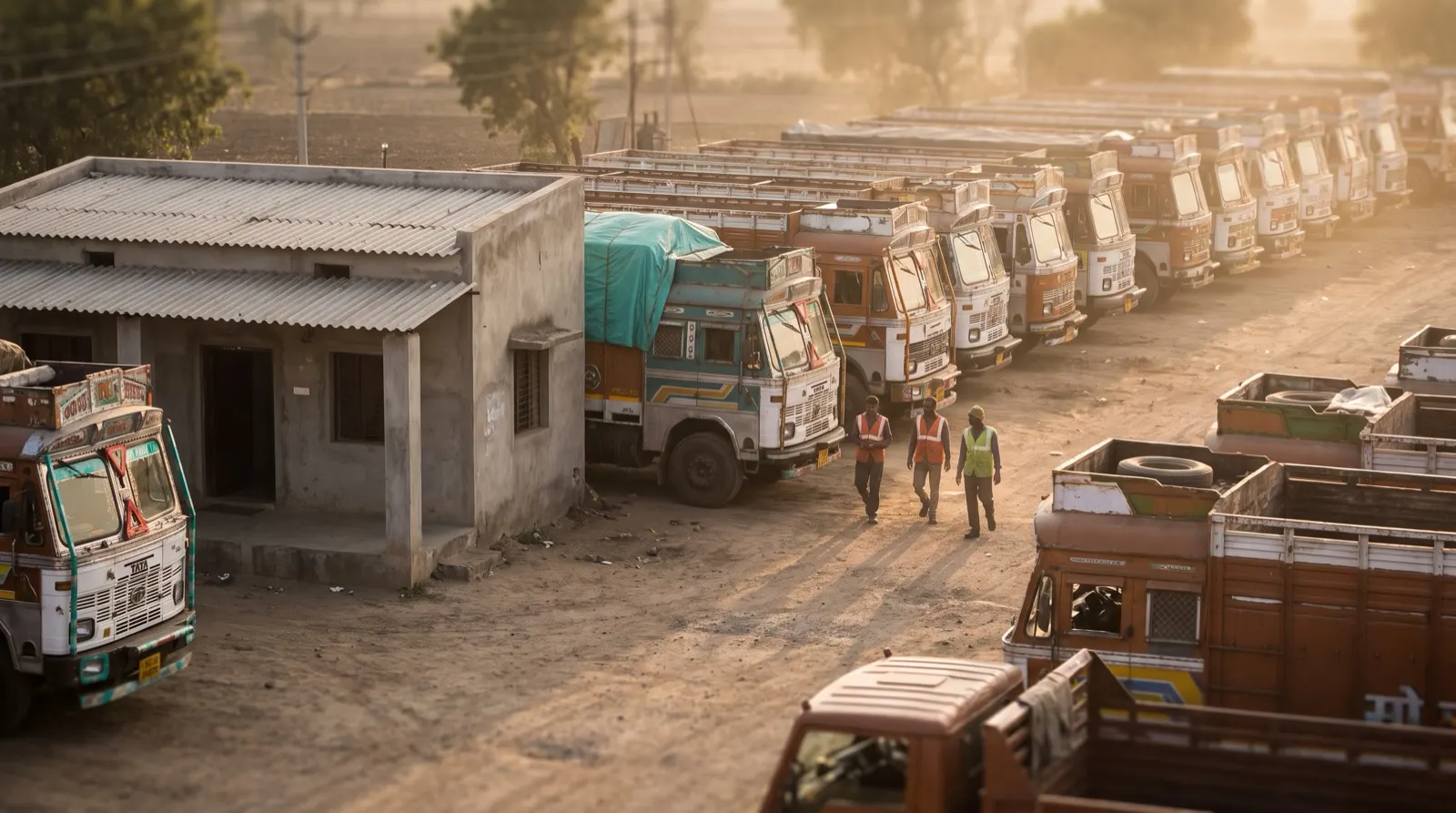
On the road, Indian transporters and their customers usually call this detention rather than demurrage. The claim only holds if the waiting time is on record. In transport management software for transporters such as Autowhat's SCM for Transporter, detention risk is flagged from geofence arrival and unloading milestones, and the claim can be raised with the timestamps.
| Charge | What it is for |
|---|---|
| Demurrage (rail) | Rolling stock held after free time |
| Wharfage (rail) | Goods not removed from railway premises after free time |
| Demurrage (container) | Container kept inside the terminal after free days |
| Detention (container) | Container kept outside the terminal, with the importer or exporter, after free days |
| Detention (truck) | Truck kept waiting at the loading or unloading point beyond the agreed free time |
For how to prove and bill truck waiting, see detention charges: proving and claiming them.
Illustrative only. The figures below are not real rates. A transporter's contract gives 24 hours of free time at the consignee and an agreed charge of ₹1,500 per day after that, with part days counted as full days.
| Event | Time |
|---|---|
| Truck enters the consignee geofence | Monday 10:00 |
| Free time ends | Tuesday 10:00 |
| Unloading complete, POD signed | Wednesday 16:00 |
| Time beyond free time | 30 hours, so 2 chargeable days |
| Claim | 2 × ₹1,500 = ₹3,000 |
Whether part days round up, and when the clock starts, depend entirely on the contract. Try your own numbers in the detention charges calculator.
Where this shows up in our work. SCM for Transporter: Multi-tenant transport SCM: LR/CN, trips, billing, fleet, e-way bill on NIC, WhatsApp desk and CFO analytics. Book a 30-minute working session with an engineer.
Demurrage is the charge you pay when you keep a carrier's wagon, container or ship longer than the free time allowed for loading or unloading. The longer it waits, the more you pay.
In container shipping, demurrage applies while the container sits inside the terminal beyond free days, and detention applies once it is outside with the importer or exporter. In Indian trucking, detention usually means a truck kept waiting at loading or unloading.
Under the Railways Act, 1989, demurrage is the charge for detaining rolling stock, such as wagons, after the free time expires. Wharfage is a separate charge for goods not removed from railway premises in time.