

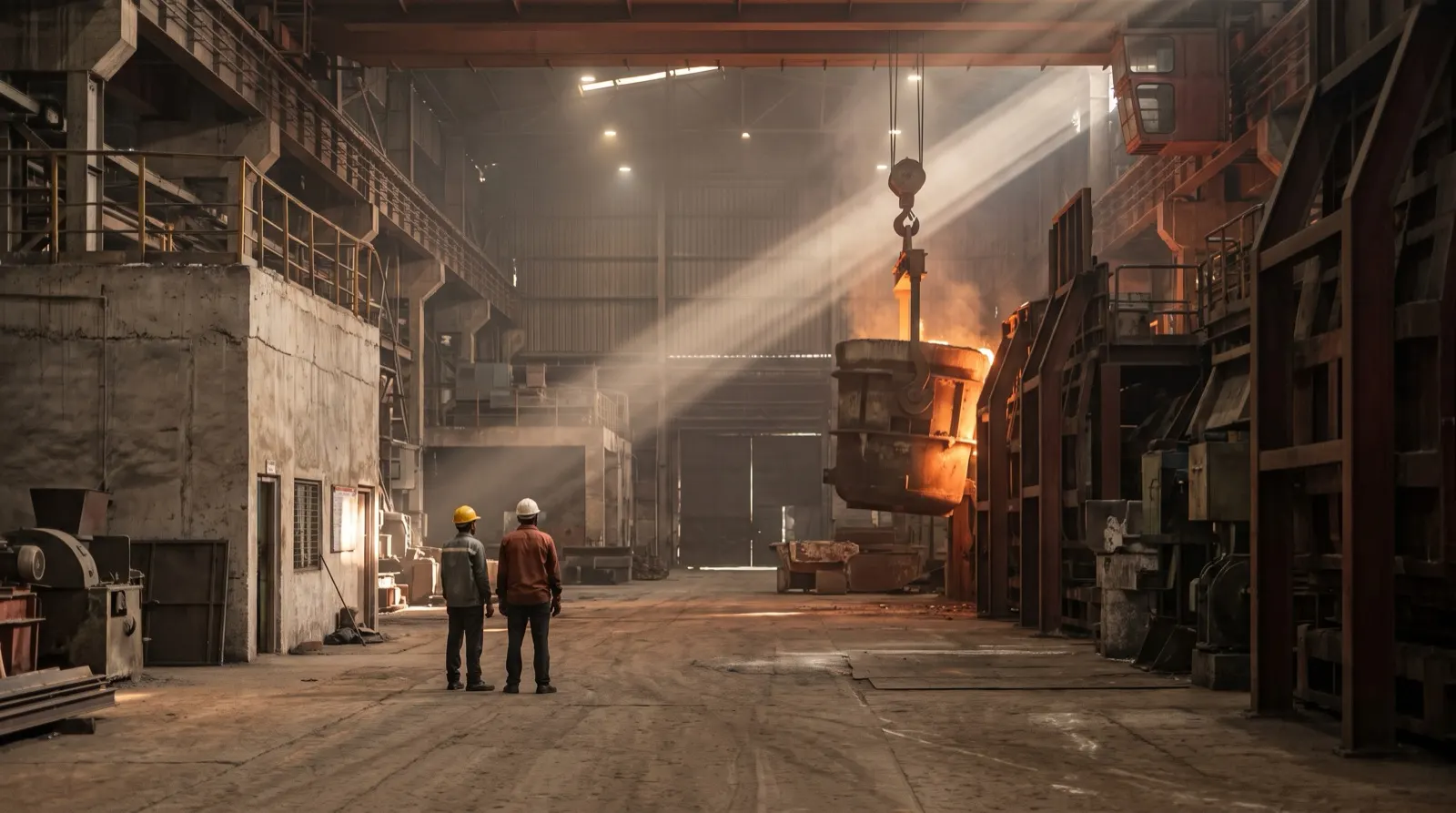
The shift engineer has three screens open at 4 am. The DCS shows reactor R-2 holding temperature. The historian trend says the last batch took longer to cool. A WhatsApp message from dispatch asks whether the tanker booked for 9 am will have product, and the answer sits in a lab register on the next floor.
Digital twin software for a chemical plant is a live model of the site that reads the control system, historian, lab, stock and dispatch records, and shows them on one model with alerts to the people who act. It sits beside the DCS and the safety system and never replaces them. Use the evaluation questions on our page on digital twin software for plants as your starting checklist, and read what follows as a buyer guide, not a case study: there is no chemical plant among the industry twins we show today.
A chemical plant twin reads many systems and controls none of them
Our hub separates three things. A digital model is updated by hand. A digital shadow follows the plant's readings automatically. A full digital twin also writes back to plant systems by itself. Our twins are operational: data comes in automatically, and decisions are routed to the people who act rather than written back to plant control. For a chemical plant, that line is the right one to draw, and you should ask any vendor where they draw it.
Here is, in general terms, what a twin of a process plant would read, and what stays where it is:
| Part of the plant | What a twin would typically read | What stays in the DCS, SIS or with people |
|---|---|---|
| Process units: reactors, columns, dryers | Historian tags, batch or run status, cycle times, energy meters | Control loops, setpoints, recipes running in the DCS |
| Tank farm and raw material store | Tank levels, receipts, ERP stock, days of cover | Overfill protection and level trips |
| Utilities: steam, cooling water, nitrogen, compressed air, chillers | Meter readings and running status, trended against norms | Utility control and boiler safety systems |
| QC lab | LIMS or lab register results, release status, hold reasons | Sampling plans and release decisions by QC |
| Gate, weighbridge and tankers | Gate passes, weighbridge slips, dispatch plan | Loading safety checks done by trained people |
| Safety instrumented systems and interlocks | At most, a read-only status where the site allows it | Everything: trips, interlocks, permits, relief |
The last row is the one to say out loud in every meeting. A twin can show that a trip happened and who was told. It must never be the thing that decides whether a trip happens.
Batch and continuous plants need different questions
A batch plant, such as a specialty chemicals or intermediates unit, lives by the batch number. The useful twin view is vessel occupancy: which reactor holds which batch, what step it is on, and what it is waiting for. Genealogy matters too, so a lab result can be tied to the raw material lots that went in.
A continuous plant lives by rates. The useful view is throughput, yield and energy per tonne against norm, by shift, and what happens to stock and dispatch when a unit runs slow. Grade changeovers sit in between, and both kinds of plant care about utilities, since a steam shortfall shows up everywhere at once. Before scoping, decide which of these your plant is, unit by unit. Many sites are both.
A worked example: the hours a lab wait costs
The numbers here are illustrative, not from any plant. Say a batch site runs 4 reactors, each completing 2 batches a day. After each batch, the reactor waits an average of 1.5 hours for the lab to release the sample before it can discharge.
- Waiting time per day: 4 reactors × 2 batches × 1.5 hours = 12 reactor-hours.
- Over a 30-day month: 12 × 30 = 360 reactor-hours.
- If a batch cycle is 12 hours, that is 360 ÷ 12 = 30 batches' worth of reactor time spent waiting.
- Cutting the average wait to 1 hour saves 4 × 2 × 0.5 × 30 = 120 reactor-hours, or 10 batches' worth.
Nothing in that arithmetic needs a new sensor. It needs the batch end time from the historian and the release time from the lab register on the same record. That is the kind of question a twin of a process plant should answer first.
The first job of a chemical plant twin is not to show the reactor. It is to show what the reactor is waiting for.
The evaluation checklist, applied to a process plant
These are the questions from our hub, with what each means on a chemical site:
- Where does it start? From records you already keep, such as the historian, ERP or Tally, weighbridge, gate passes and lab registers, or with a sensor project first.
- How much of the site is in one model? One reactor, or the site from tank farm to tanker. These answer different questions.
- Can every number be traced? Each figure should show its system and time, and a stale feed should show as stale.
- Who hears about a problem, and how? The shift engineer, the lab or dispatch, with the next step, during the shift.
- Does it look back and ahead? A replay of past shifts for reviews, and a forecast of stock and queues.
- Who can use it? Plant heads, shift engineers, stores and dispatch, in a browser, without engineering training.
- Can you see your industry working first? Ask for a live sample of a comparable plant before scoping. If there is none, say so and judge the method.
- Which systems will it read, and who owns the data? A written list, how each is read, where data is hosted and who owns it.
Add one question of your own for a chemical site: is every connection to the control network read-only, and has your control and IT team approved how it is made?
Build it in the order the hub describes
The five steps on our hub carry over to a process plant without much change. Draw the site from a drawing or satellite view and confirm it on site. Connect the systems you run. Model flows, capacities and norms with your plant team, with every rule showing its source. Route each alert to the person who can act, on WhatsApp, with the next step. Then review shifts and weeks on the replay and tune what was missed.
Our guide on how to build a plant digital twin covers these steps in more depth. On a chemical site, the model step deserves the most time, because norms for yield, energy and cycle time differ by product and grade.
"We already have a DCS, a historian and an MES"
This is the strongest objection, and it is often right. If the costly problems in your plant are inside one unit, the DCS and historian already hold the answer, and better trends may be all you need.
The case for a twin is narrower. It is for the questions that cross systems: a batch waiting for the lab, a tanker booked against stock that is still on hold, a utility running over norm on one shift. Those live in three or four systems and on WhatsApp. Our comparison of digital twin vs SCADA vs MES sets out what each layer does. If none of your painful questions cross systems, do not buy a twin.
For a neutral view of the kinds of provider, read our guide to digital twin companies in India.
What to do this week
- List five questions your plant head asked last month that took more than one system to answer.
- Mark each unit as batch, continuous or both, and note the measure that matters for each.
- Write down the systems that hold those answers, and who owns each.
- Agree with your control and safety team, in writing, that any twin reads only and never writes to the DCS or SIS.
- Take the eight checklist questions into your first vendor meeting.
A good twin of a process plant is quiet about the reactor and loud about the wait. The control room keeps running the plant, the safety system keeps guarding it, and the twin tells the right person what is stuck and what to do next.