

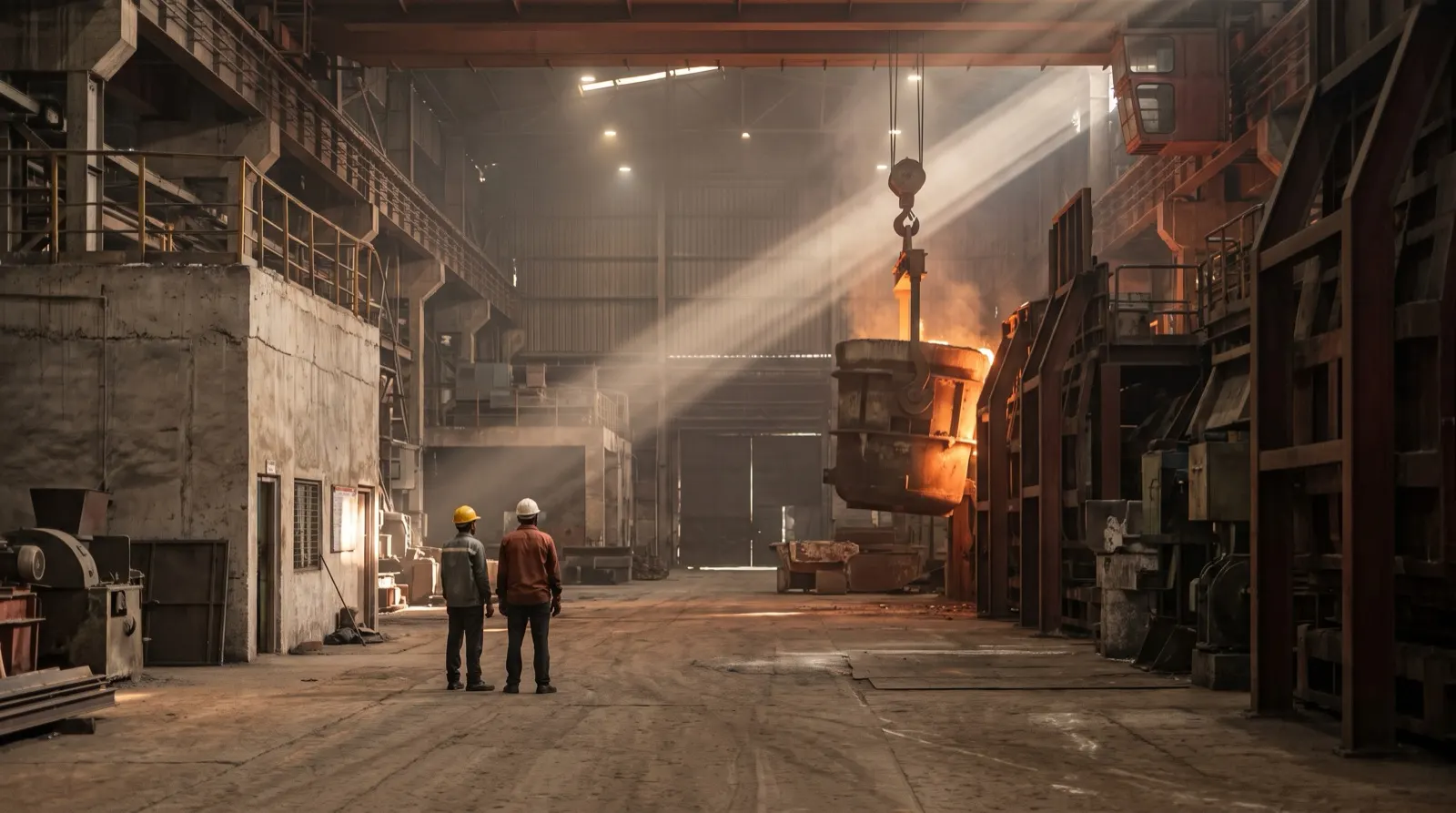
The slab inspector chalks a heat number on the third slab and waves the crane towards the hold bay. The lab result came through twenty minutes ago: sulphur above the order’s limit. By then the heat had already run through the tundish and become ninety tonnes of slab. The test was right. It simply arrived after the step it was meant to protect.
Our view is plain: steel quality control fails less from missing tests than from tests that land after the next stage has already acted, so every check should be a gate that can stop the next step.
This post is a stage-by-stage steel quality control checklist for an integrated plant, from ladle to coil. Each stage lists what to check, where the record sits and what the check can still stop. It is how we think about quality gates in a steel plant digital twin with heat traceability, but the checklist works on paper too.
A test that lands after the next step is a record, not a control
Quality assurance in steel is usually described as a list of tests: chemistry, temperature, surface, dimensions, mechanical properties. Plants are good at running them. The weak point is timing. A chemistry result that reaches the caster after casting has started cannot stop anything. It can only explain what went wrong.
So the useful question for each check is not “do we test this?” It is “what can this result still stop, and who is told in time to stop it?” A check with no answer to that question is documentation. Documentation matters for claims and audits, but it is not control.
One gate per stage, from ladle to coil
Here is the checklist we would start from. Every plant’s routes and grades differ, so treat it as a frame to fill in, not a standard to copy.
| Stage | What to check | Record usually in | What the gate should stop |
|---|---|---|---|
| Hot metal and charge | Hot metal chemistry, scrap and additions | Historian, process systems | A charge plan that cannot reach the grade |
| Converter and tap | Tap chemistry and temperature against the grade | MES, LIMS, historian | A heat sent on without a re-treat plan |
| Ladle and secondary metallurgy | Chemistry against the order’s limits, temperature before casting | LIMS, MES | The heat going to the caster out of range |
| Casting | Sequence, mould-level events, strand behaviour | MES, historian | Suspect slabs moving on without inspection |
| Slab inspection | Surface defects, dimensions, events flagged at the caster | QMS, MES | Slabs charged to the mill before a decision |
| Rolling and finishing | Coiling temperature per coil, dimensions, delays with cause | MES, historian | Coils released before tests are back |
| Testing and release | Mechanical tests and final chemistry against the order | LIMS, QMS | Release of any coil still on hold |
| Coil yard and dispatch | Status: cooling, released or on hold | MES, ERP | A held coil being loaded on a truck or rake |
The last column is the one most plants leave blank. Filling it in forces a decision about who owns each gate and how fast the result must reach them.
Check against the order, not only the grade
A heat can be inside the grade’s published range and still be wrong for the order it was made for. Customers often specify tighter limits on one or two elements. If the gate checks only the grade, those heats pass the plant and fail at the customer.
That means each heat needs its sales order attached from the start, not looked up at dispatch. It is the reason we put so much weight on heat genealogy from charge to coil: once heat, ladle, slab and coil are joined on one heat number with the order attached, a gate can compare chemistry with what this customer actually asked for.
A sulphur hold shows where the money goes
Here is an illustrative example with round numbers. It is not plant data or a customer result.
Say a 90-tonne heat is made for an order with a tight sulphur limit, and the ladle sample comes back above it. There are two ways the night can go.
In the first, the result reaches the caster late. The heat is cast, and the slabs are held at inspection. The best option left is to regrade to an order that accepts the chemistry. At an illustrative price gap of ₹3,000 a tonne, that is 90 × 3,000 = ₹2.7 lakh. The original order still needs steel, so another heat has to be planned for it.
In the second, the heat is held the moment the lab reads it, while it is still at the ladle furnace. A re-treat takes extra time, additions and energy. Say that costs ₹40,000 in all. The caster is told, the sequence is adjusted, and the heat goes to its own order.
The difference is ₹2.7 lakh minus ₹40,000, or ₹2.3 lakh, on one heat. Nothing about the test changed. Only the moment it could still stop something.
The same test is worth lakhs before casting and almost nothing after it.
Picture the second night as the normal one. The quality head sees the hold on the phone with re-treat and regrade priced side by side. The caster in-charge already knows. The decision is logged against the heat, and the morning meeting discusses causes instead of blame.
In India, a coil out of spec costs more than its regrade
A test certificate says a coil passed. A claim asks how it was made, and answering that needs the history behind the coil. Many steel products also fall under the government’s steel Quality Control Orders, which require BIS certification against the relevant Indian Standard. That raises the stakes on anything that leaves the yard out of spec. Confirm exactly what applies to your products with your compliance adviser.
The practical effect is the same either way. A plant needs to answer a claim quickly, with the heat’s full record: chemistry, route, process data and every decision made on it. If that record has to be rebuilt by hand from four systems, the answer takes days and is easy to dispute.
The case against more gates
The strongest objection comes from production. Every gate is a chance to stop the line. Casters live on sequence length, and a quality team that holds heats freely can break sequences and cost more than the defects it prevents. Some plants have learned to fear the hold button for good reason.
We take that seriously. The answer is that a gate should stop the heat, not the plant. On the twin, the rule holds a heat automatically when its chemistry is outside the order, and a person decides what happens next. The decision comes with options priced against the order, so the trade-off between sequence and quality is made with numbers. Gates that only inform, such as a mould-level event sent to slab inspection, do not stop anything at all.
The weekly Pareto shows which gate to move earlier
Once holds and their decisions are linked to heats, a weekly Pareto by cause, grade and route shows which few causes produce most holds. The useful question for each big bar is simple: which stage could have caught this earlier?
That is how a checklist improves without growing longer. A cause found at slab inspection every week is a case for a check at the ladle. Our guide on re-treat, regrade or divert decisions for quality holds covers the choices once a hold is raised.
What to do this week
- Copy the checklist table and fill in the last column for your own plant: what each check can still stop.
- Pick last month’s five most expensive holds and note the stage where each was found and the stage where it could have been found.
- Check whether the sales order’s limits are attached to the heat before casting, or only looked up at dispatch.
- Time how long a ladle chemistry result takes to reach the caster in-charge, end to end.
More playbooks and calculators are on the Steel Twin guides page. Good quality control is not more testing. It is the right result, in the right hands, while it can still change the steel.