

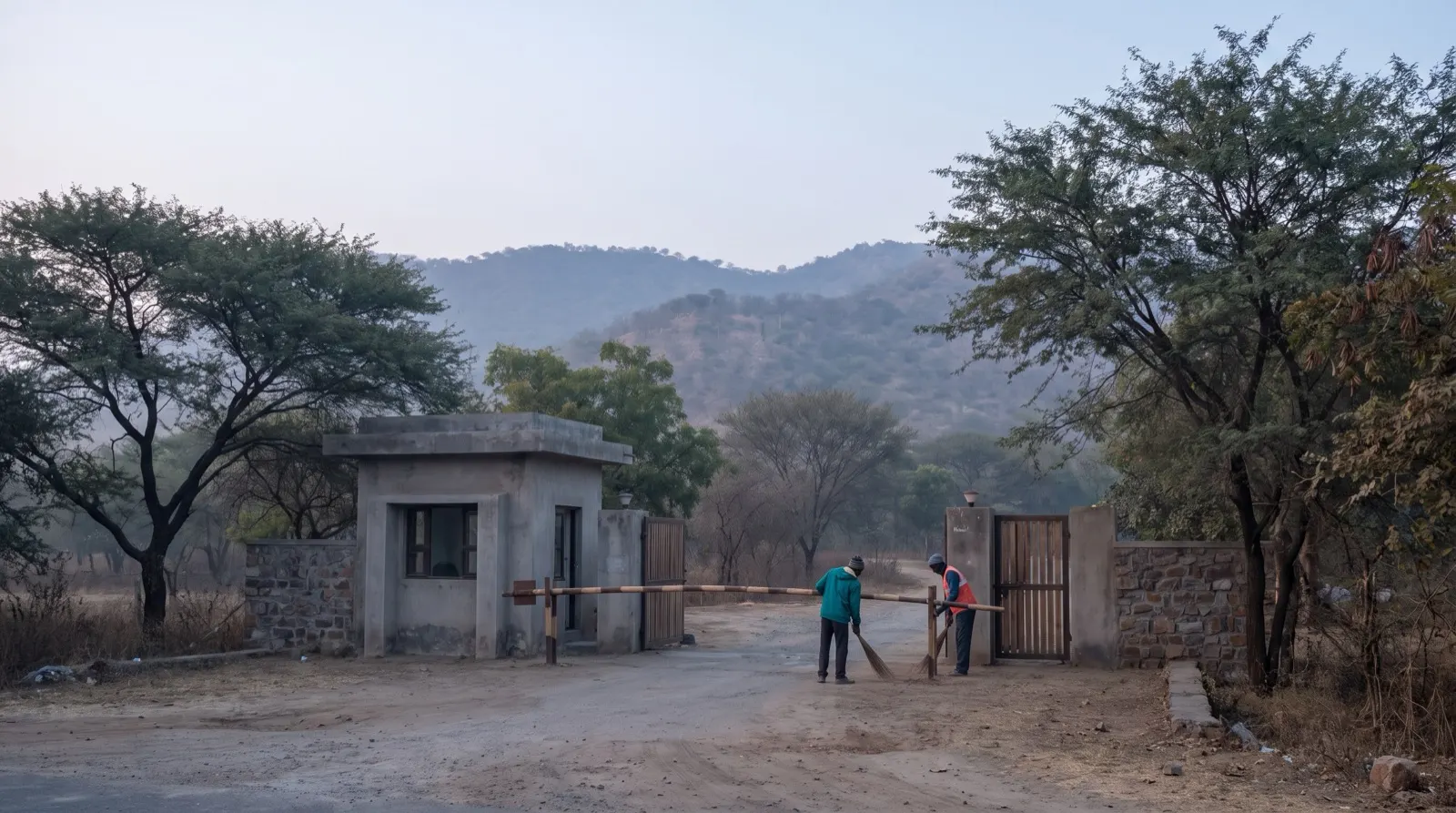
At 7:40 am, ten minutes after shift change, the gate at a press-shop plant outside Pune has a queue. A six-man contractor crew is here for a boiler repair. A supplier's quality engineer has a 9 am meeting. The guard holds a register and a phone, and he is calling the maintenance engineer, who is on the shop floor and not picking up.
Nobody in that queue is a security problem; they are an ownership problem. Our view is that a visitor management system for a factory works only when each step of a visit has one named owner, and the software's main job is to make that ownership visible before the visitor reaches the gate.
This post answers one narrow question: who should be responsible for what. It assumes you know what the system must do at the gate. If not, start with our guide to what visitor management must cover at plants, mines and townships.
The host owns the reason for the visit, not the gate
The host is the employee who invited the visitor: the purchase manager meeting a supplier, or the maintenance engineer who called in a contractor. The host owns three facts: who is coming, why, and when. Only the host can vouch for the reason.
In many plants, the host's job ends with a verbal "I'm expecting someone". The guard then has to rebuild the visit at the booth, by phone, during shift change. One rule fixes this. No name reaches the gate unless a host has raised it in advance, by email, form or WhatsApp, whichever they already use.
The host also owns the visitor while they are inside. If a supplier wanders into the paint shop, that is the host's call to correct, not the guard's.
Safety owns plant access, separately from the host's yes
A host can invite someone to a meeting room. A host cannot, on their own authority, send a contractor into a confined space or onto a running line. That decision belongs to the safety officer, and it should be a separate approval, recorded separately.
This matters most for contractors. A crew for a boiler repair may need an induction, a work permit and an escort. Each of those is a safety decision. When safety approval is folded into the host's request, the guard ends up deciding at 7:40 am whether six people can enter a hazardous area. Guards should never carry that call.
We are not giving legal or compliance advice here. Which rules apply to your plant is for your safety head and adviser to confirm.
Security owns identity and the clock, and nothing else
The guard's job is narrow and important. Check that the person at the gate is the person on the list. Record when they came in and when they left. Raise the alarm if someone is not on the list.
Notice what is missing: deciding whether a visit should happen at all. A guard who is asked to approve visits becomes a bottleneck and, when something goes wrong, a scapegoat. With a digital expect list, the guard scans a QR code, matches the ID and the host is told. The judgement was already made upstream, by the people who own it.
Exit times matter as much as entry times. During an evacuation drill, the only question is who is still inside, and only an honest exit log can answer it.
Admin owns the whole record, around the clock
Someone must see the full picture: today's visits, pending approvals, and who is overdue to leave. In a factory that is usually the head of admin, sometimes the security in-charge. This role does not approve individual visits. It watches the flow and chases the step that is stuck.
The role grows when visitors stay overnight. An auditor from head office needs a guest house room, a station pickup and meals. Rooms, travel and transport then own their own parts of the visit. Admin's job is to make sure none of them hears about it last.
| Role | Owns | Approves | Should never decide |
|---|---|---|---|
| Host | Who, why and when; the visitor while inside | The visit request | Plant or hazardous-area access |
| Safety officer | Induction, permit, escort | Plant access for that visit | Whether the meeting happens |
| Gate security | ID check, entry and exit time | Nothing; verifies against the list | Entry for anyone not on the list |
| Head of admin | The full record and stuck steps | Escalations | Individual visit approvals |
| Rooms, travel, transport | Stay, ticket, pickup | Their own part of the request | Anything outside that part |
A named owner turns gate phone calls into scans
Here are illustrative numbers, not data from any plant. Say a factory sees 40 visitors a day: suppliers, contractors, auditors and job candidates. Assume half reach the gate unannounced, so 20 visits. Each needs about 2 calls to find the host and 1 to reach safety. That is 20 × 3 = 60 calls. At 3 minutes a call, 60 × 3 = 180 minutes, or 3 hours of the guard's day on the phone, much of it during shift change.
Now give each step an owner. Hosts raise visits in advance and safety clears plant access before arrival. Say 4 of the 40 visits still arrive unannounced. That is 4 × 3 = 12 calls, or 12 × 3 = 36 minutes. The guard gets back more than two hours, and the 7:40 am queue is four people holding QR codes, not a crew waiting for a callback.
Your numbers will differ. The shape will not: phone calls at the gate measure how many decisions were left for the guard.
Each call the guard makes at shift change is a decision someone else should have made yesterday.
Picture the same gate once the roles hold. The guard scans, matches and waves people through. The maintenance engineer gets an alert that his crew is verified. The safety officer already knows which contractors are cleared for which job. The admin head looks at one screen instead of returning missed calls.
The case for leaving it all to the guard
The strongest objection comes from smaller plants. The guard has been at the gate for twelve years. He knows every supplier by face and every contractor by name. Adding hosts, safety approvals and a system feels like paperwork that slows down a gate that already works.
We take that seriously. If a plant has a handful of visitors a day, no overnight stays and no hazardous areas, a register and a sharp guard may be enough. Our comparison of a paper visitor register and a digital system says so plainly.
The trouble starts when that guard is on leave, the night shift has a new face, or a contractor brings someone nobody has met. Knowledge held in one person's head goes home with him at shift change. Named roles do not replace the experienced guard. They protect the plant on the days he is not there.
Software should carry your roles, not invent them
No system can decide who owns plant access in your factory. It can make that decision visible and enforce the order in which things happen. In Sampark, a request from email, a form or WhatsApp is read once by AI and checked by a person. Safety and the gate approve their parts of the same request. The visitor appears on the gate's expect list with a QR code, and every approval and hand-off stays on the record in a control tower that runs 24x7.
Before any demo, write your own roles table. A vendor, including us, should be able to show where each row lives on screen. If they cannot, the work will drift back to the guard. There is more on running site desks in our site operations guides.
What to do this week
- Pick five visits from last week and write down who actually approved each one.
- Fill in the roles table above for your plant, with names rather than job titles.
- Ask your safety head which visits need their approval and how they hear about them today.
- Count the calls your gate makes during one morning shift change.
- Agree one rule: no name reaches the gate unless a host raised it first.
A factory gate gets calm when the guard stops making other people's decisions. Name the owners first, and the software only has to keep them honest.