

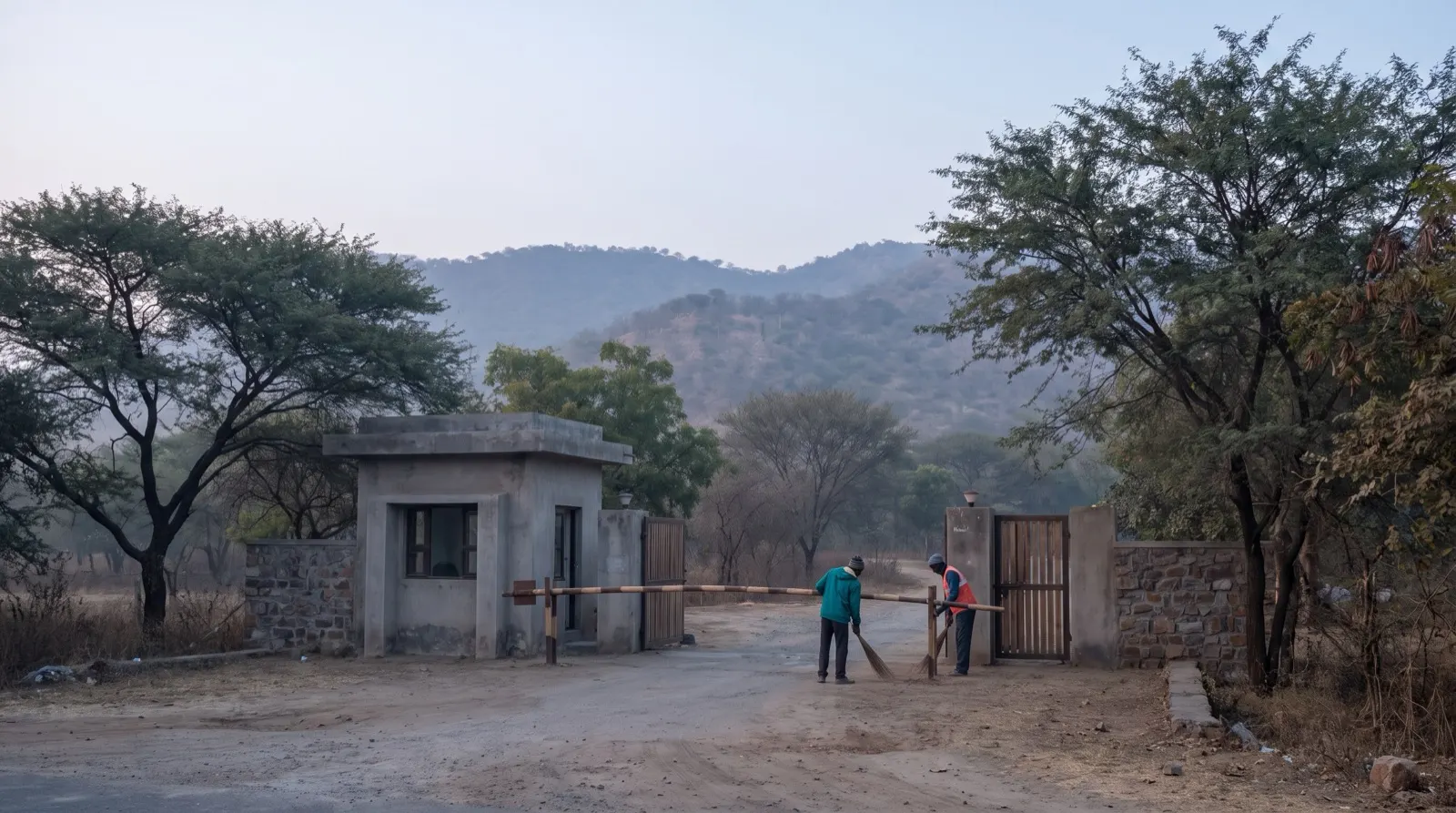
At 1:15 am, the security supervisor at a mine gate flips through a pocket diary. In it are the names of contractors he lets through without calling anyone, because the official list is always a day late. Behind him, a guest from a delayed flight waits in a car. Her host is asleep, and the guest house thinks she arrived at six. None of this appears in any procedure.
Our view is that site software fails in the hand-offs nobody wrote down, and the only reliable way to find them is to stand on the night shift where they happen.
The SOP describes the site on a good day
Every large site has a procedure for receiving a visitor. Very few say what happens when the flight lands after midnight, the host is on leave, the guest house block is full because of a shutdown and the security shift changed at ten. At a site that runs three shifts, seven days a week, that is not an edge case. It is an ordinary Tuesday.
The real process lives in workarounds. A supervisor keeps a private list. A housekeeping lead walks the block before handover because the register cannot be trusted. A driver gets a direct call because the pool booking never reaches him. Software that ignores these does not remove them. Staff keep the workarounds, and the software becomes one more place to type the same thing.
A workshop sees a sliver of the week
Here is the arithmetic, with illustrative numbers. Three shifts a day for seven days gives 3 × 7 = 21 distinct shift slots in a week. A requirements workshop held over two weekday afternoons sees 2 of them, under 10 percent, and only the calmest ones. Nobody in that room is the night supervisor.
Now count the hand-offs. Take six desks: gate, rooms, travel, transport, housekeeping and safety. Each pair can pass work to the other, so there are 6 × 5 ÷ 2 = 15 possible hand-offs. A typical SOP folder might document five or six. The other nine or ten are where guests wait, rooms sit dirty and the gate learns about a visitor when the car arrives. Eight weeks on site covers 8 × 21 = 168 shift slots, including the ugly ones.
People in a conference room describe what should happen. On the night shift, you see what does.
What we look for on those shifts
For Sampark, developers are stationed at the site for 1.5 to 2 months before the build, shadowing real shifts. We are not there to admire the operation. We look for specific things: where a request is retyped and by whom, which desk learns about a guest last, who owns a vendor-run kitchen or vehicle pool, how night rosters change who can approve what, and what breaks during a VIP visit, when the normal flow is bypassed.
Each of these becomes a design decision. A desk that learns last needs an alert, not a report. A vendor-owner needs a role, not a shared login. A night roster needs approvals that follow the shift, not the org chart.
We also write down the things that work. Some workarounds are better than the official process, and the software should copy them rather than replace them. The housekeeping lead who walks the block before handover is doing a real check. The job is to give her a board she can trust, so the walk becomes a confirmation rather than a search.
A template flattens what makes the site work
A packaged visitor or guest house tool makes reasonable assumptions: one approver, one gate, rooms run by one team. Industrial sites break these routinely. Facilities may be run by vendor-owners with their own staff. Plant access may need a safety approval separate from the host’s. A township may have several guest houses with different housekeeping contractors.
When software flattens that into a template, the site does one of two things. It bends its process to the tool and loses something that mattered. Or it runs the old process beside the tool and gains nothing. For what this looks like at the gate specifically, see our guide to visitor management for plants, mines and townships.
The case for skipping the site visit
The objection is fair, and we hear it often. Eight weeks on site costs time and money before anything goes live. The site may already have mapped its processes for an audit. A head of admin under pressure wants a working gate, not a study.
Our answer is that shadowing decides what goes first, rather than delaying everything. The first wave is the visitor spine: AI intake, gate, rooms, travel, transport and housekeeping, because it fails most visibly. Facility tickets with SLAs, vehicle booking, vendor-owners and drivers follow, then events, catering, safety, health, onboarding and ERP integration, then hypercare. A wrong first build is the more expensive path. It costs the same weeks again, plus the goodwill of staff who were told this time would be different.
Ask any vendor where they will stand at 2 am
The quickest test of a site software vendor, including us, is to ask where their people will be on the night shift. If the answer is “we will run a workshop”, expect software that works on a good day. The night queue at the gate is usually the whole site failing upstream, and it is covered in our playbook for clearing the night queue at the site gate.
What to do this week
- Spend one night shift at your own gate, and write down every phone call the supervisor makes.
- List your desks and mark which hand-offs between them are written in an SOP.
- Find the private lists, diaries and WhatsApp groups people use to work around the register.
- Note what changed the last time a VIP visited, and who was told last.
- Ask any vendor you are evaluating who will sit through those shifts before building.
The hand-offs no one wrote down are where a site loses its nights. Find them first, and the software has something real to fix. More in our site operations guides.