OperationsUltraCold · ultra-cold chain control

Ultra cold chain monitoring for −80 °C pharma shipments −80 °C, all the way. Signed off at every step.

UltraCold is ultra cold chain monitoring software for pharma and biotech shipments that cannot warm up: every dispatch dual-signed, every degree logged, every handoff sealed — and every excursion escalated until someone acts.

  • 2 loggers on every shipment
  • 15 min to acknowledge an alert
  • 5 years of audit records
TowerTransitAlerts
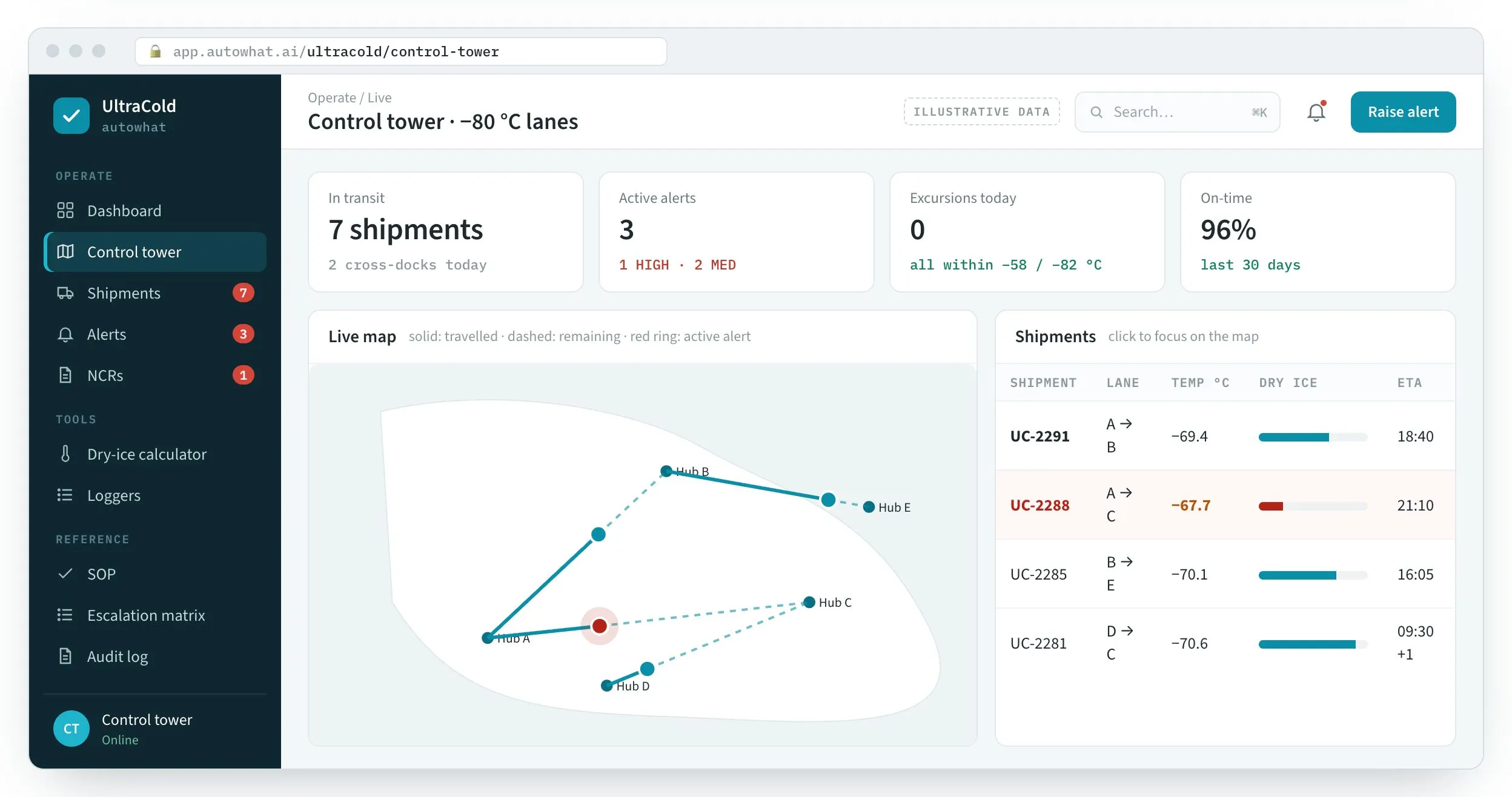
UltraCold: Every −80 °C shipment on one map with temperature, dry-ice cover and ETA.
Product screen with illustrative data.

WhySound familiar?

Three things we hear in every first conversation.

From QA heads, cold-chain managers and logistics leads moving −60 °C and −80 °C product. Composite quotes from discovery calls — the problems are real; the names are left out.

UltraCold: The problem, before UltraCold
Product that is worthless above −58 °C
  1. “We found the excursion when we downloaded the logger.”

    By then the shipment is already accepted, and the investigation starts with no live evidence.

    Head of QAExcursions found too late

  2. “The checklist was signed — by the same person twice.”

    Paper dispatch checks make it easy to release a shipment with a gap nobody independently verified.

    Quality managerReleases without real verification

  3. “The dry ice ran out two hours before the hub.”

    Ice is packed by habit, not by lane, and nobody is warned until the temperature climbs.

    Logistics managerShipments lost in transit

HowWhat changes with UltraCold

The same three problems, on the screens that solve them.

Product screens with illustrative data. In a briefing we load one of your ultra-cold lanes and its SOP.

01Logger read at the end

Two loggers live against the band and the hard limits.

  • Drift beyond ±2 °C raises an alert; beyond −58 / −82 °C for 30 minutes it becomes an NCR
  • Every top-up and cross-dock handoff on the same trace

Act while the product is still cold

UltraCold screen: Two loggers live against the band and the hard limits.

02Single-signature release

A release gate two different people must pass.

  • 22 dispatch controls; any FAIL holds the shipment
  • QA and warehouse sign independently — the system refuses the same person twice

Every release independently verified

UltraCold screen: A release gate two different people must pass.

03Silent alerts

An escalation ladder that keeps climbing.

  • 15 minutes to acknowledge, then logistics, QA, customer QA and senior management
  • Dry-ice exhaustion risk flagged at two hours of cover

No alert waits for the morning

UltraCold screen: An escalation ladder that keeps climbing.

FieldUltraCold in the field

The people, the phone, the place.

The workplace it runs in, the person who uses it on a phone, the team at the desk and the detail it reads.

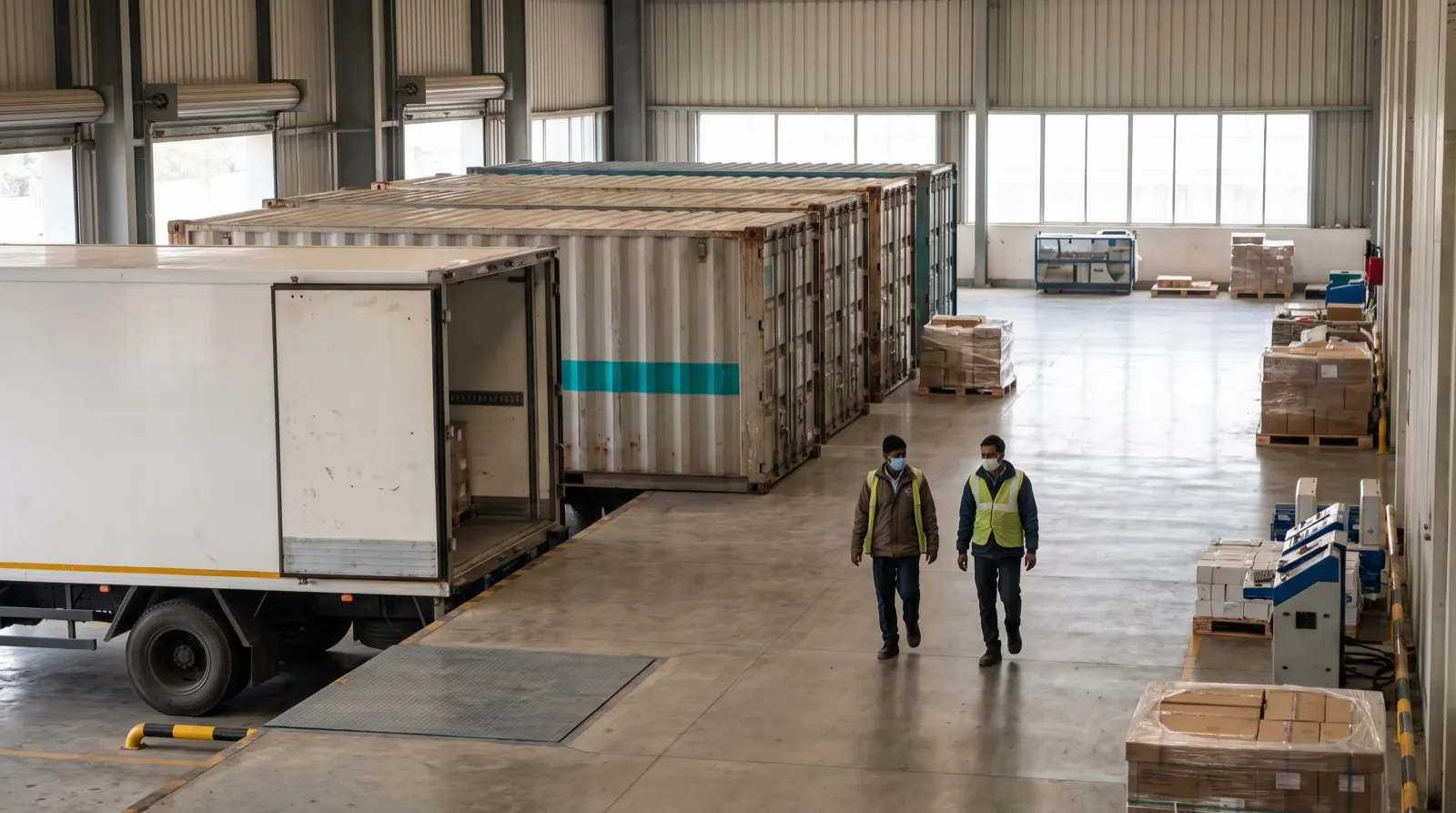
UltraCold: Where UltraCold runs
Where UltraCold runs
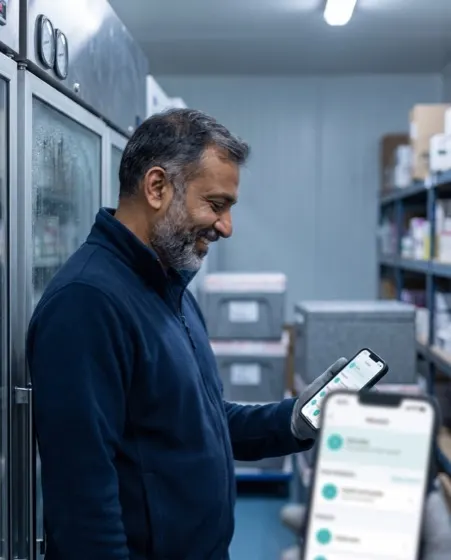
UltraCold: On the phone, where the work happens
On the phone, where the work happens
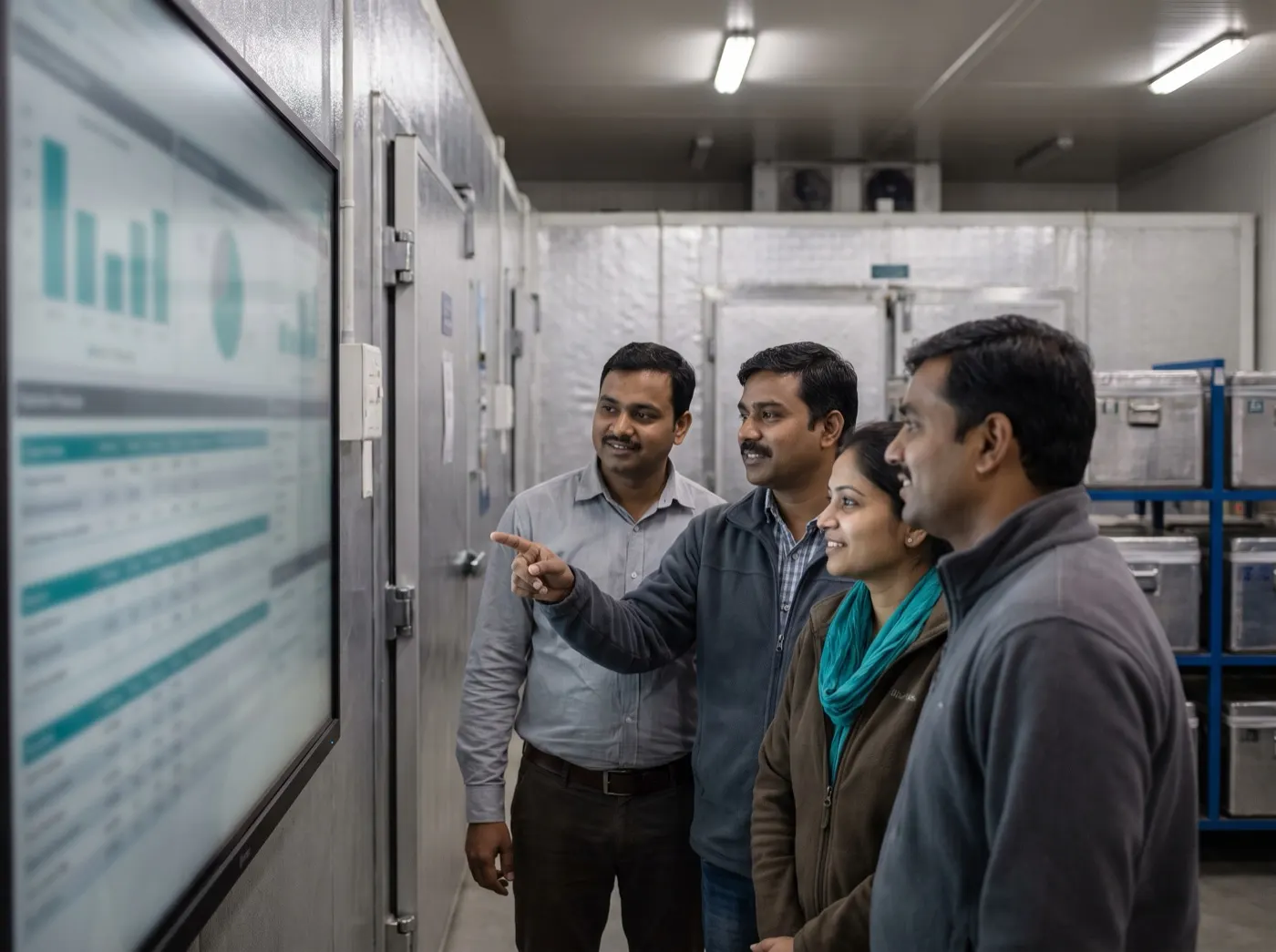
UltraCold: The team at the UltraCold desk
The team at the UltraCold desk
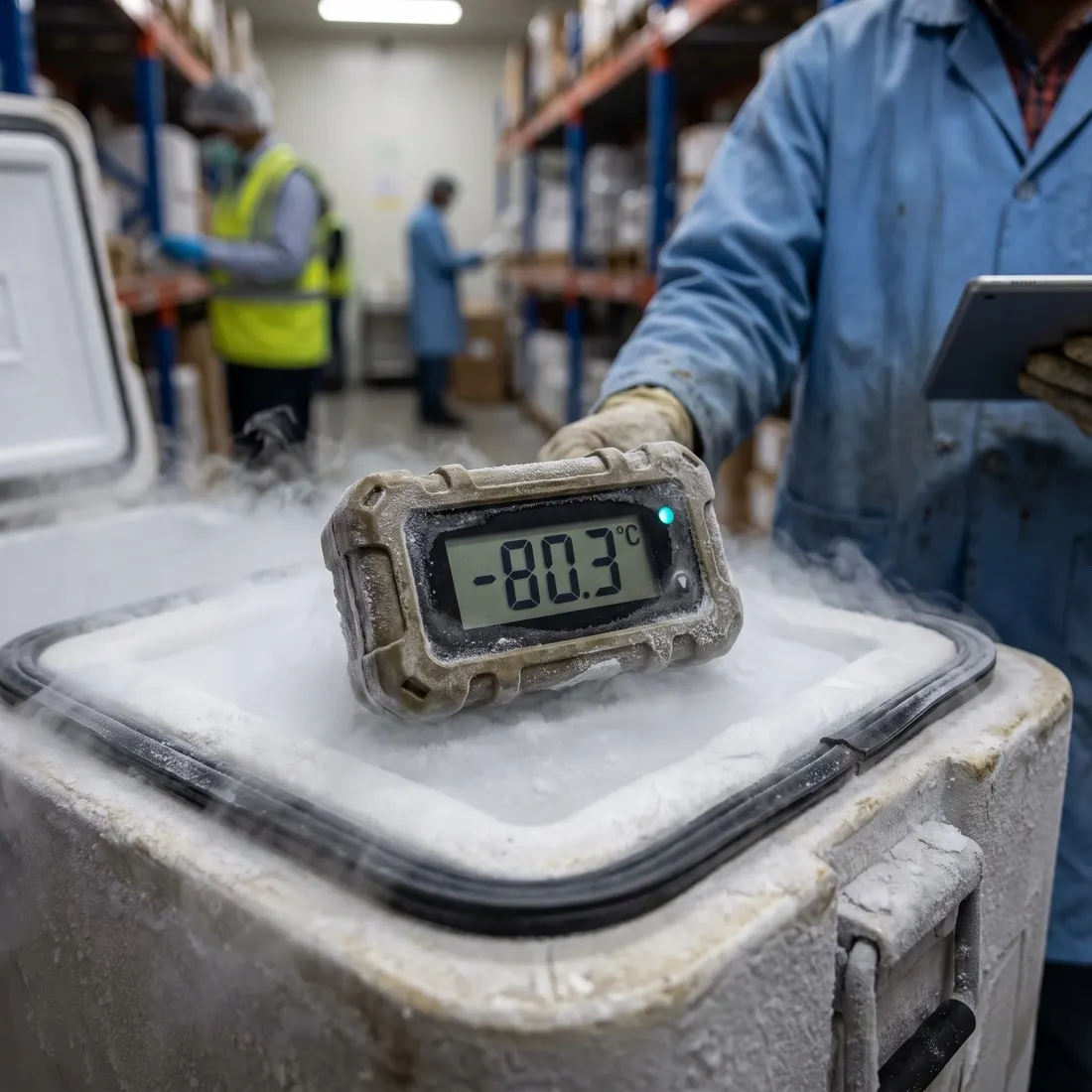
UltraCold: The detail UltraCold reads
The detail UltraCold reads

Photographs are illustrative — real customer sites are not shown.

  • 22 + 22 + 24Controlsdispatch · transit · delivery
  • Dual sign-offRelease gateQA and warehouse — two different people
  • ±2 °CDrift alertaround target, from both loggers
  • 12 triggersEscalationT+0 to T+4 h, until someone acts
  • 4 hNCR deadlinewith QA disposition
  • 3 languagesInterfaceEnglish · Hindi · Spanish

01The screens

From the freezer at dispatch to the freezer at delivery.

The control tower, transit, the dispatch gate, alerts, the dry-ice calculator and the delivery gate.

autowhat · UltraCold / Control tower Illustrative data
UltraCold screen

Every −80 °C shipment on one map with temperature, dry-ice cover and ETA.

Product screens with illustrative data — every name, place and figure is a placeholder.

02Before and after

One warm hour can cost the whole shipment.

At −80 °C there is no margin for a missed alert, an unsigned checklist or a logger nobody read until after acceptance.

AreaTodayWith UltraCold
DispatchA paper checklist, one signature22 controls; a FAIL blocks release; two independent sign-offs
TemperatureLogger read at the destinationTwo loggers live against the band and the hard limits
Dry icePacked by habitCalculated per lane; exhaustion risk alerted at 2 h of cover
HandoffsVerbal, unrecordedChain of custody with seal and dwell time at every cross-dock
AlertsAn SMS someone may seeA ladder from T+0 to T+4 h, until acknowledged
RecordsFolders and emailEvery change in a five-year, inspection-ready audit log

03Dispatch, transit, delivery

Eight steps, from freezer to freezer.

Each phase has its own controls; nothing moves to the next phase until the last one is closed.

  1. 01

    Plan

    Dry-ice calculator

    Ice at dispatch and each hub, from lane time and ambient profile.

  2. 02

    Check

    Dispatch controls

    Container, loggers, loading time, DG documents, vehicle and driver.

  3. 03

    Release

    Dual sign-off

    QA and warehouse sign independently; any FAIL holds the shipment.

  4. 04

    Monitor

    Two loggers

    Every reading against ±2 °C and the −58 / −82 °C limits.

  5. 05

    Hand off

    Chain of custody

    Seal checked and dwell timed at every cross-dock.

  6. 06

    Escalate

    Alert ladder

    12 triggers; the clock climbs from control tower to senior management.

  7. 07

    Accept

    Delivery gate

    Both loggers downloaded first; a 10-minute clock into the freezer.

  8. 08

    Close

    NCR & audit

    Excursions go to QA disposition within 4 hours; everything is kept five years.

04The platform

Operate, plan, escalate and prove.

Built on a written operating brief — every control in the app maps to a line in the SOP.

Operate · 4

  • Control tower map
  • Shipments: dispatch · transit · delivery
  • Logger monitoring
  • Evidence and milestones

Plan · 4

  • Dry-ice calculator
  • Lane presets
  • Process flow
  • SOP by phase

Escalate · 4

  • 12-trigger alert engine
  • Time-based ladder
  • NCRs with 4-hour deadline
  • SLA tracking

Prove · 4

  • Five-year audit log
  • Shipment report and print
  • Customer share links
  • Roles and sign-off rules

05How we deliver

Your SOP, turned into the system.

We start from your operating brief and your lanes, then connect your loggers and GPS.

  1. Weeks 1–2 · MapYour SOP, lanes, roles and escalation contacts loaded.
  2. Weeks 2–4 · ConnectLoggers and vehicle GPS feeding the control tower.
  3. Month 2 · PilotOne lane run end to end with dual sign-off and live alerts.
  4. Then · ScaleEvery ultra-cold lane, customer share links and audit reports.

OverviewUltraCold · ultra cold chain monitoring

Ultra cold chain monitoring: how UltraCold runs a −80 °C shipment

Ultra cold chain monitoring is the control of pharma and biotech shipments that must stay around −60 °C or −80 °C from the freezer at dispatch to the freezer at delivery. In practice, many teams in India still learn about an excursion only when the logger is downloaded at the destination, release on a paper checklist signed once, and pack dry ice by habit rather than by lane.

UltraCold turns your SOP into a system. Each dispatch passes 22 controls and a release gate that QA and warehouse must sign as two different people. Two loggers are tracked live against a ±2 °C band and the −58 / −82 °C limits; dry ice is calculated per lane with an alert at two hours of cover; seals and dwell are recorded at every handoff; and a 12-trigger ladder escalates alerts until someone acts.

−80 °C shipment monitoring with two live loggers

Both loggers are read against the ±2 °C band and the −58 / −82 °C hard limits; drift raises an alert and 30 minutes beyond a limit becomes an NCR.

Dual sign-off release gate for ultra-cold dispatch

22 dispatch controls cover container, loggers, loading time, DG documents, vehicle and driver; any FAIL holds the shipment and the system refuses the same person signing twice.

Dry ice shipment planning and exhaustion alerts

A dry-ice calculator sets ice at dispatch and each hub from lane time and ambient profile, and flags exhaustion risk at two hours of cover.

Pharma cold chain chain of custody

Seals are checked and dwell time recorded at every cross-dock, so every handoff sits on the same trace as the temperatures.

Cold chain excursion alert escalation ladder

Twelve triggers from T+0 to T+4 h: 15 minutes to acknowledge, then logistics, QA, customer QA and senior management, until someone acts.

Delivery gate, NCRs and a five-year audit log

Both loggers are downloaded before acceptance with a 10-minute clock into the freezer; excursions go to QA disposition within 4 hours and every change is kept for five years.

Who it is for

  • Heads of QA in pharma and biotech who need every ultra-cold release independently verified and every excursion dispositioned on time.
  • Cold-chain managers who need live temperatures, dry-ice cover and ETA for every −80 °C shipment on one control-tower map.
  • Logistics leads and drivers handling handoffs, who need clear seal, dwell and top-up steps on a phone in English, Hindi or Spanish.

Read next

UltraCold compared

Manual / spreadsheetsGeneric softwareUltraCold
Dispatch releasePaper checklist, one signatureChecklist without a hard gate22 controls; any FAIL blocks; two independent sign-offs
Temperature in transitLogger read at destinationLive readings, single deviceTwo loggers live against ±2 °C and −58 / −82 °C limits
Dry icePacked by habitNot plannedCalculated per lane; exhaustion risk alerted at 2 h of cover
AlertsAn SMS someone may seeNotification to a fixed list12-trigger ladder from T+0 to T+4 h until acknowledged
RecordsFolders and emailPer-shipment reportsChain of custody, NCRs with 4-hour deadline, five-year audit log

FAQQuestions we get about UltraCold

Straight answers, before the call.

UltraCold is an Autowhat AI product for QA heads, cold-chain managers and logistics leads in pharma and biotech. Short, factual answers for buyers, procurement and the assistants people ask first.

In short. UltraCold is an Autowhat AI product for QA heads, cold-chain managers and logistics leads in pharma and biotech. It exists to remove the problems those teams describe in almost every first conversation: excursions discovered only when the logger is downloaded; releases signed twice by the same person; and dry ice that runs out before the next hub. With UltraCold, teams get live dual-logger traces with drift and excursion alerts; a release gate two different people must pass, where any FAIL holds the shipment; a dry-ice calculator per lane; custody seals; an escalation ladder; and a five-year audit log. It connects to temperature loggers and vehicle GPS, escalates by email and SMS, is used by QA, warehouse, control-tower teams and drivers, and runs on web and mobile. Like every Autowhat AI product, UltraCold goes live on one site, lane or process first, usually within weeks, on managed cloud, in your own VPC or on-premises, and shares one operational record with the other products, so the second deployment reuses the data and integrations of the first.

What is ultra cold chain monitoring?

It is the control of shipments that must stay around −60 °C or −80 °C, covering dispatch checks, live temperature, dry ice, handoffs and acceptance. UltraCold runs all of these as one controlled process with an audit log.

What is pharma cold chain logistics?

Pharma cold chain logistics is moving medicines and biological samples from dispatch to delivery inside a set temperature range, with records that prove it. For −60 °C and −80 °C shipments, UltraCold runs it as one process: a dual sign-off release, two live loggers, dry ice planned per lane, sealed handoffs and an escalation ladder.

How do you monitor a −80 °C shipment in transit?

UltraCold tracks two loggers on every shipment live against a ±2 °C band and the −58 / −82 °C limits, alongside vehicle GPS. Drift raises an alert, and 30 minutes beyond a limit creates an NCR for QA.

Live temperature tracking vs logger download: which is better?

A logger download only shows an excursion after the shipment arrives, when the product may already be accepted. Live tracking lets the team act while the product is still cold, which is how UltraCold is designed.

How much dry ice does an ultra-cold shipment need?

It depends on lane time and ambient profile. UltraCold's dry-ice calculator sets the quantity at dispatch and at each hub per lane and alerts when cover falls to two hours.

What are the dry ice requirements for an ultra-cold pharma shipment?

In UltraCold, dry ice is calculated per lane from lane time and ambient profile, set at dispatch and at each hub. Release is blocked until 22 dispatch controls pass, including container, loggers, loading time, DG documents, vehicle and driver, and QA and warehouse sign off as two different people.

What happens if dry ice runs low during transit?

UltraCold tracks remaining dry-ice cover on every shipment and flags exhaustion risk when cover falls to two hours, so a top-up can be arranged at the next hub. Drivers see clear seal, dwell and top-up steps on a phone, and unacknowledged alerts climb the escalation ladder.

Is UltraCold suitable for pharma cold chains in India?

Yes. It is built for pharma and biotech QA, warehouse and logistics teams, runs on web and mobile in English, Hindi or Spanish, and can be hosted on managed cloud, your own VPC or on-premises with India data residency.

How much does ultra cold chain monitoring software cost?

UltraCold is priced per deployment after a 30-minute working session on your own data; there is no public list price. The first wave is scoped in that call.

Who is UltraCold for?

QA heads, cold-chain managers and logistics leads in pharma and biotech. Ultra-cold chain control for −60 °C and −80 °C shipments: 22 dispatch controls with a dual sign-off release gate, two live loggers against the band and hard limits, dry-ice planning and top-ups, sealed chain of custody at every handoff, a 12-trigger escalation ladder and NCRs with a 4-hour deadline.

What problems does UltraCold remove?

Excursions discovered only when the logger is downloaded; releases signed twice by the same person; dry ice that runs out before the next hub.

What do we get with UltraCold?

Dual-logger traces with drift and excursion alerts, live; a release gate two different people must pass; any FAIL holds it; dry-ice calculator per lane, custody seals, escalation ladder and five-year audit log.

What does UltraCold connect to, and who uses it?

It connects to your temperature loggers and vehicle GPS, escalates alerts by email and SMS, and keeps an audit log with shipment reports. QA, warehouse, control-tower teams and drivers use it on web and mobile.

How do we start with UltraCold?

With a 30-minute working session on your own data — an engineer from the relevant sector, not a sales queue. The first wave is scoped in that call; most products go live on one site, lane or process within weeks and then scale.

Where does UltraCold run, and who owns the data?

On managed cloud, in your own VPC (AWS, Azure or GCP) or on-premises, with your keys. SOC 2 Type II and ISO 27001 controls, India data residency when required, and local or open-weight models when policy demands it. The data stays yours.

06Briefing

Bring your SOP for one ultra-cold lane. We’ll show it running as a system.

A working session: your lane, your controls and your escalation matrix — set up and walked through.