01A missed warning
The alert is proposed while there is still time.
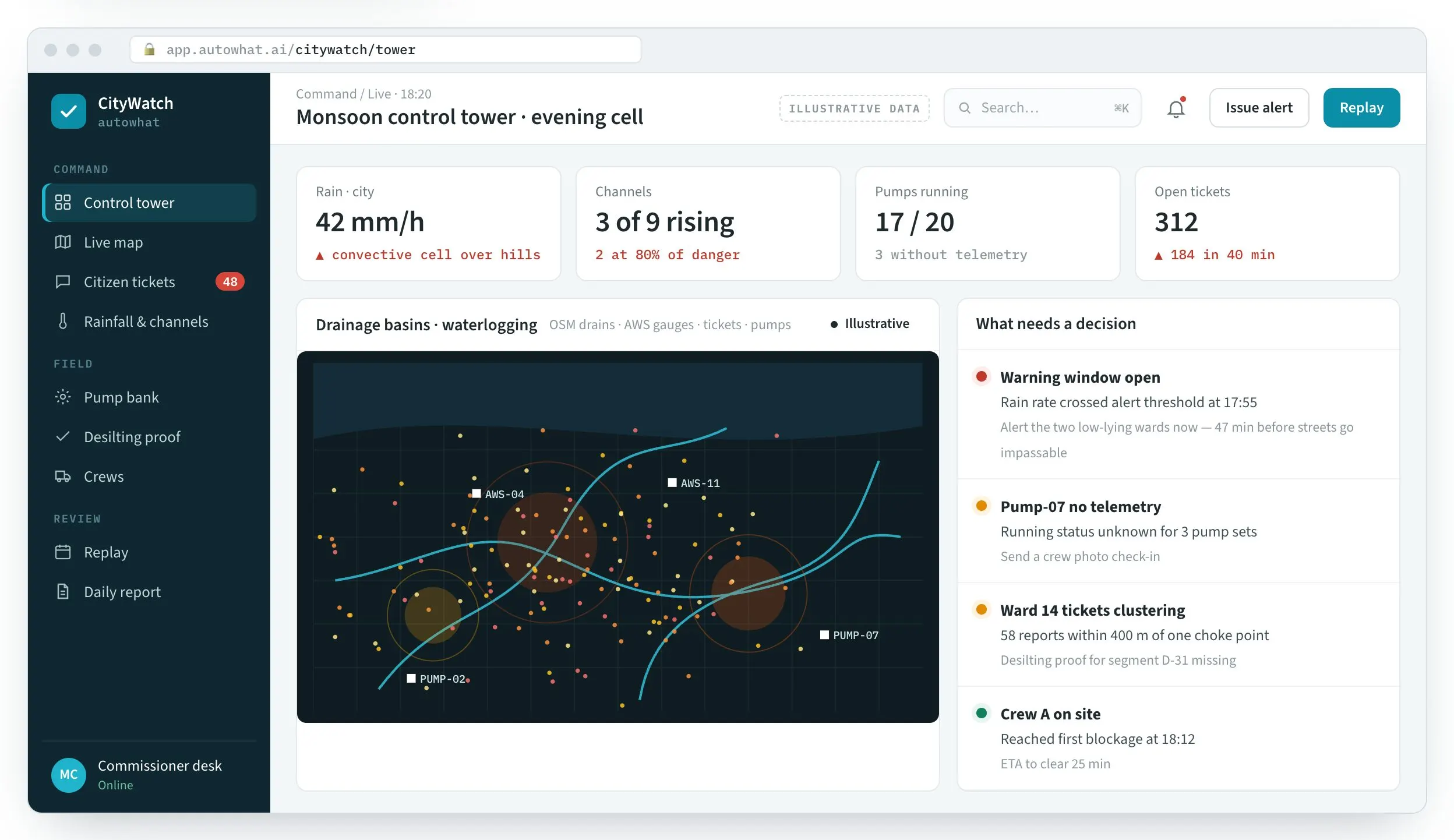
- Rain rate and channel trend crossing the threshold, with the wards at risk
- Pumps shown as running, offline or “no telemetry” — never assumed
Minutes of warning, used

OperationsCityWatch · monsoon & city operations control tower
Autowhat CityWatch is an urban flood early warning system for municipal corporations, built for commissioners, city engineers and ward officers. Rain gauges, drain channels, pump sets, citizen complaints and crews on one live map — so the alert goes out while there is still time, every ticket has an owner, and every claim of work done comes with proof.
WhySound familiar?
From municipal commissioners, city engineers and ward officers. Composite quotes from discovery calls — the problems are real; the names are left out.

“The rain was on the gauges an hour before the street flooded.”
The signal existed; nobody was watching it against the channel levels, so the warning window passed unused.
Municipal commissionerWarnings that never go out
“Complaints come on paper and take days to reach anyone.”
Citizens call, write and post photos; by the time a ticket exists, the water has gone — and so has their trust.
Ward officerDays to acknowledge
“The register says the drain was cleaned. The water says otherwise.”
Desilting and pump runs are claimed, not proven, so every flood becomes an argument.
City engineerNo proof of work
HowWhat changes with CityWatch
Product screens with illustrative data. In a briefing we load your drains, wards and one past storm.
01A missed warning
Minutes of warning, used
02Paper complaints
Acknowledged in minutes

03Claims without proof
The review is a replay, not an argument

FieldCityWatch in the field
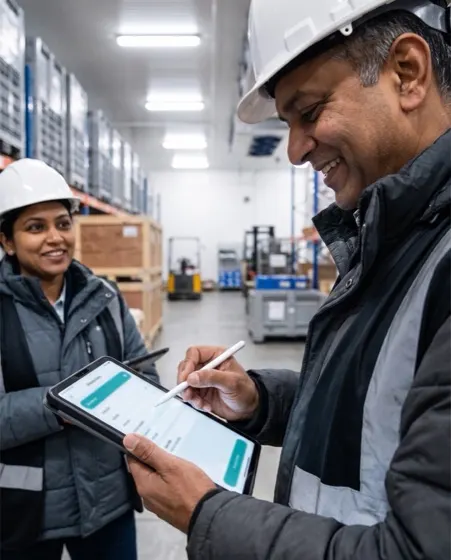
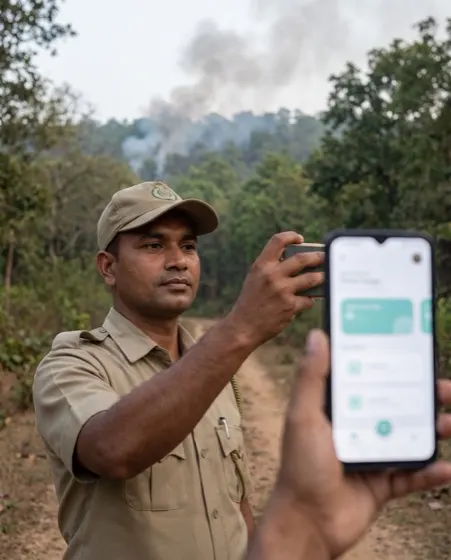
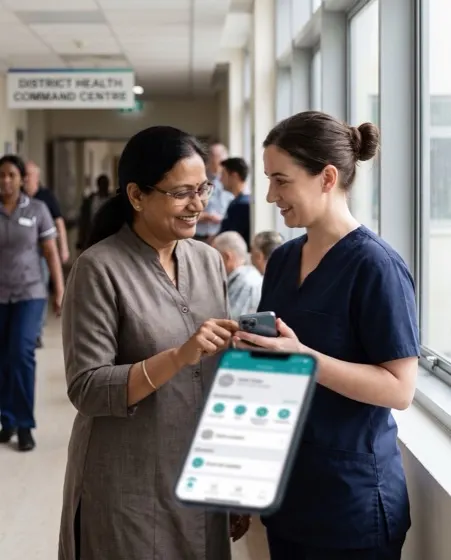
The workplace it runs in, the person who uses it on a phone, the team at the desk and the detail it reads.
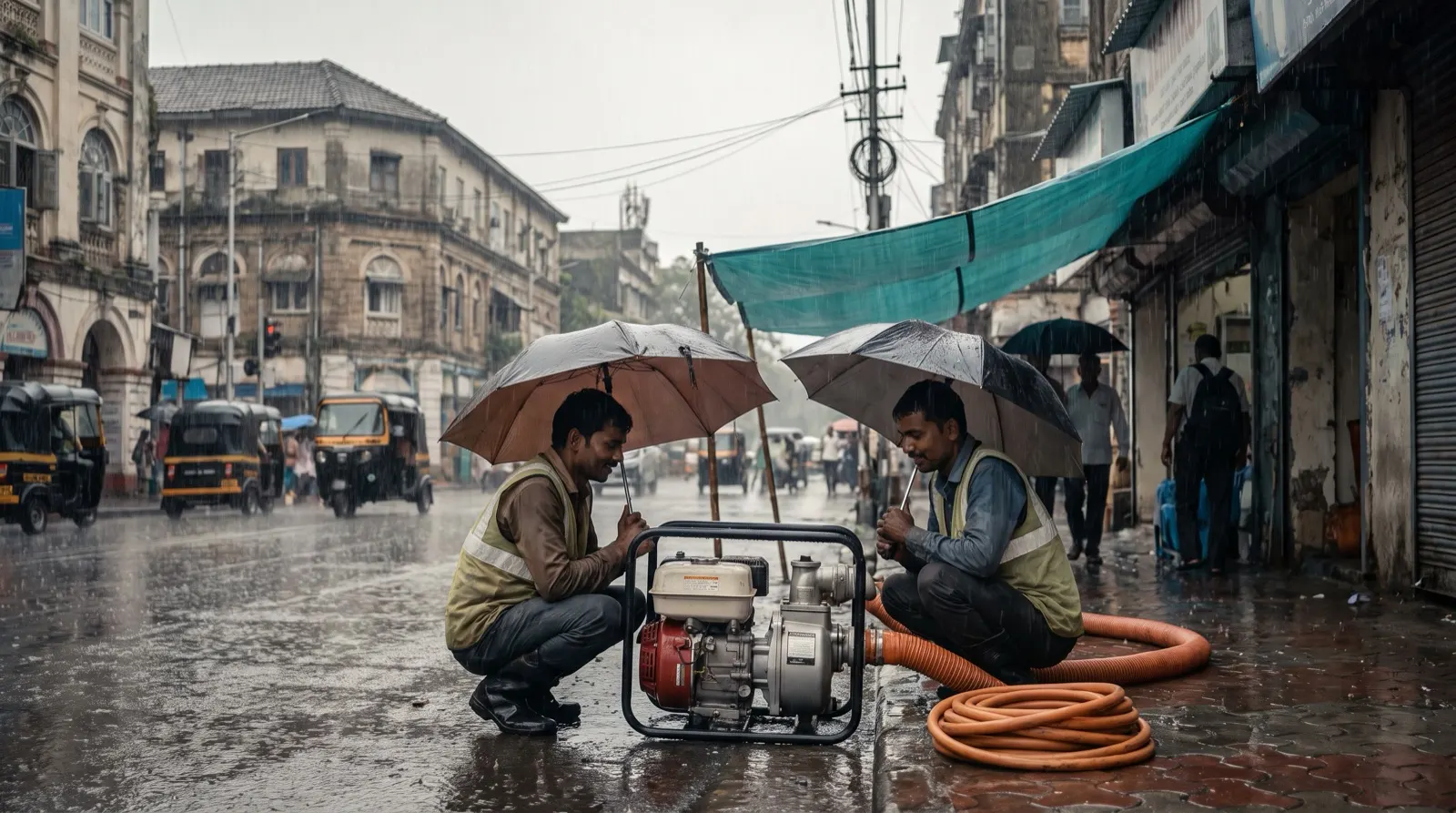
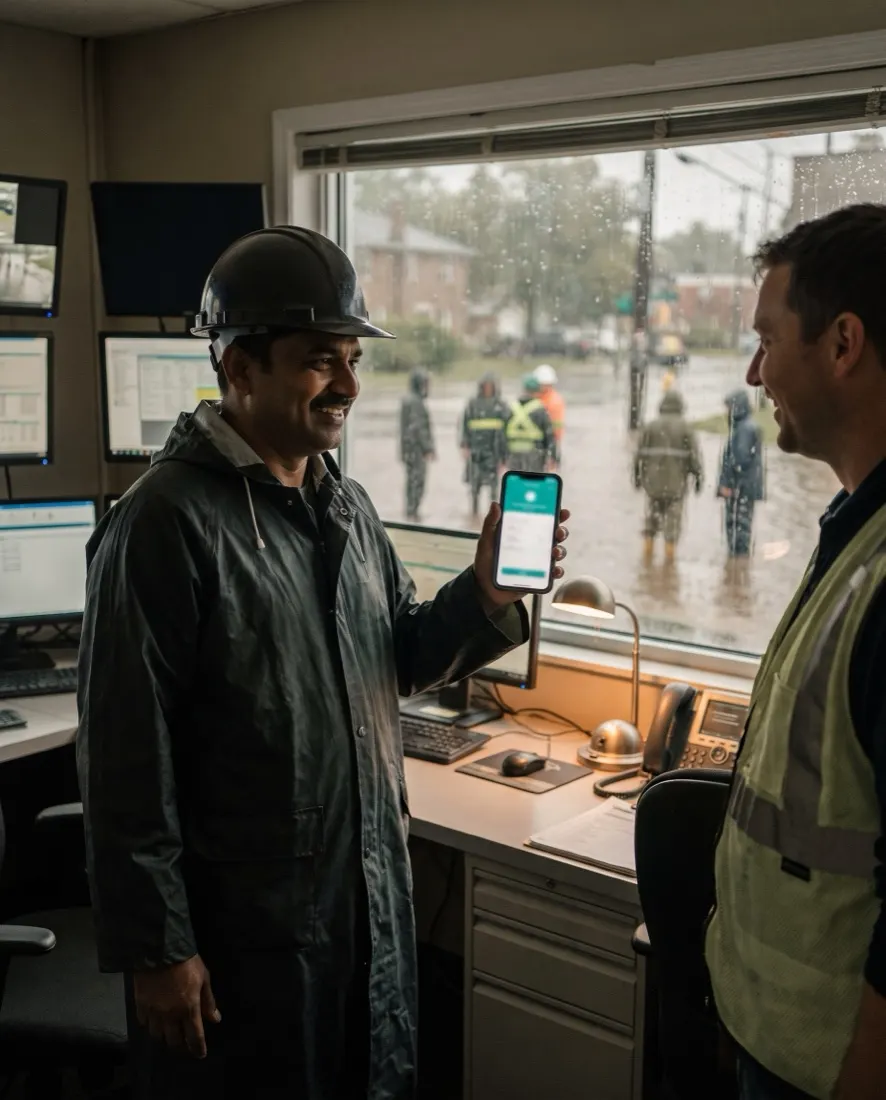
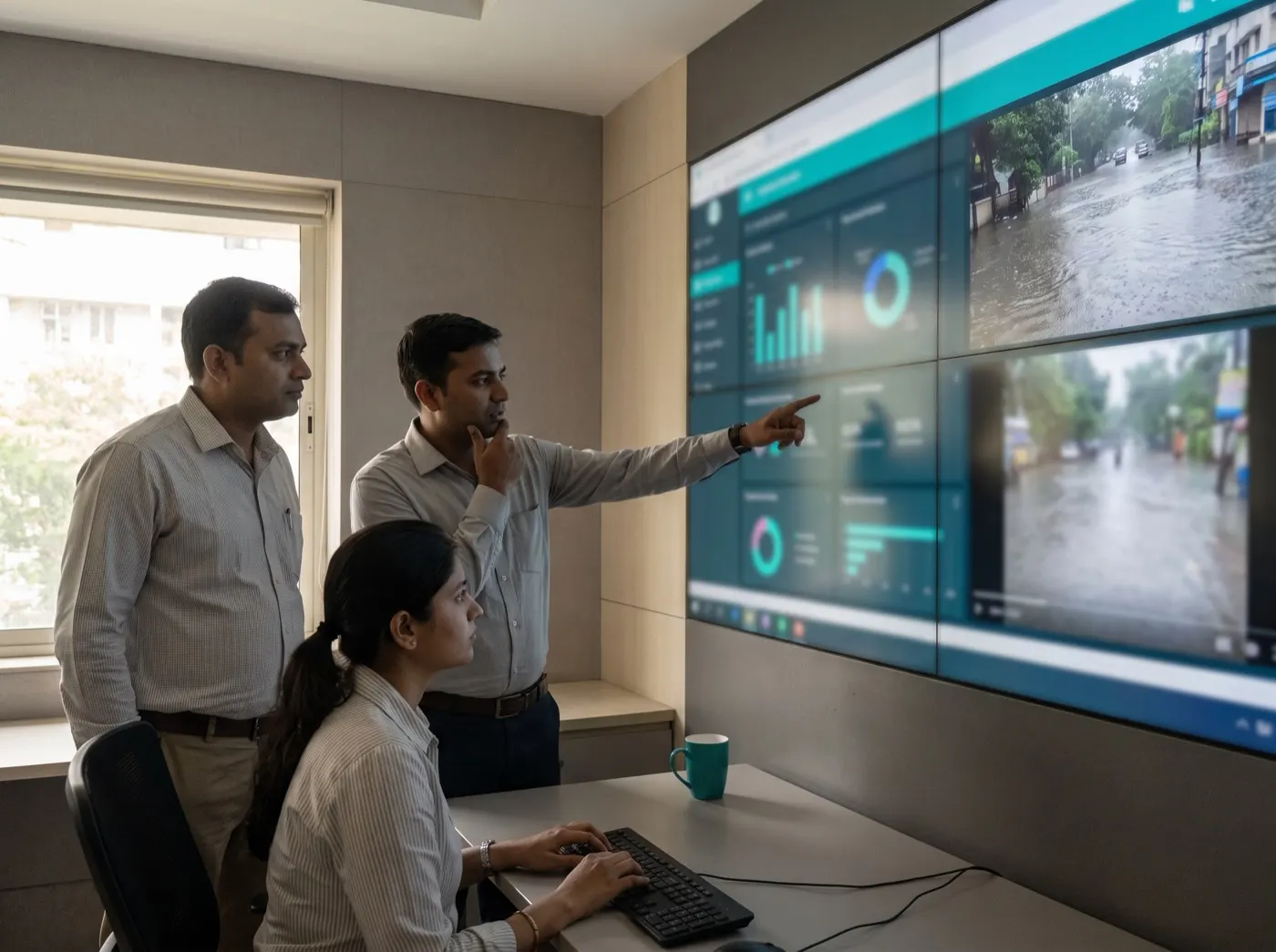
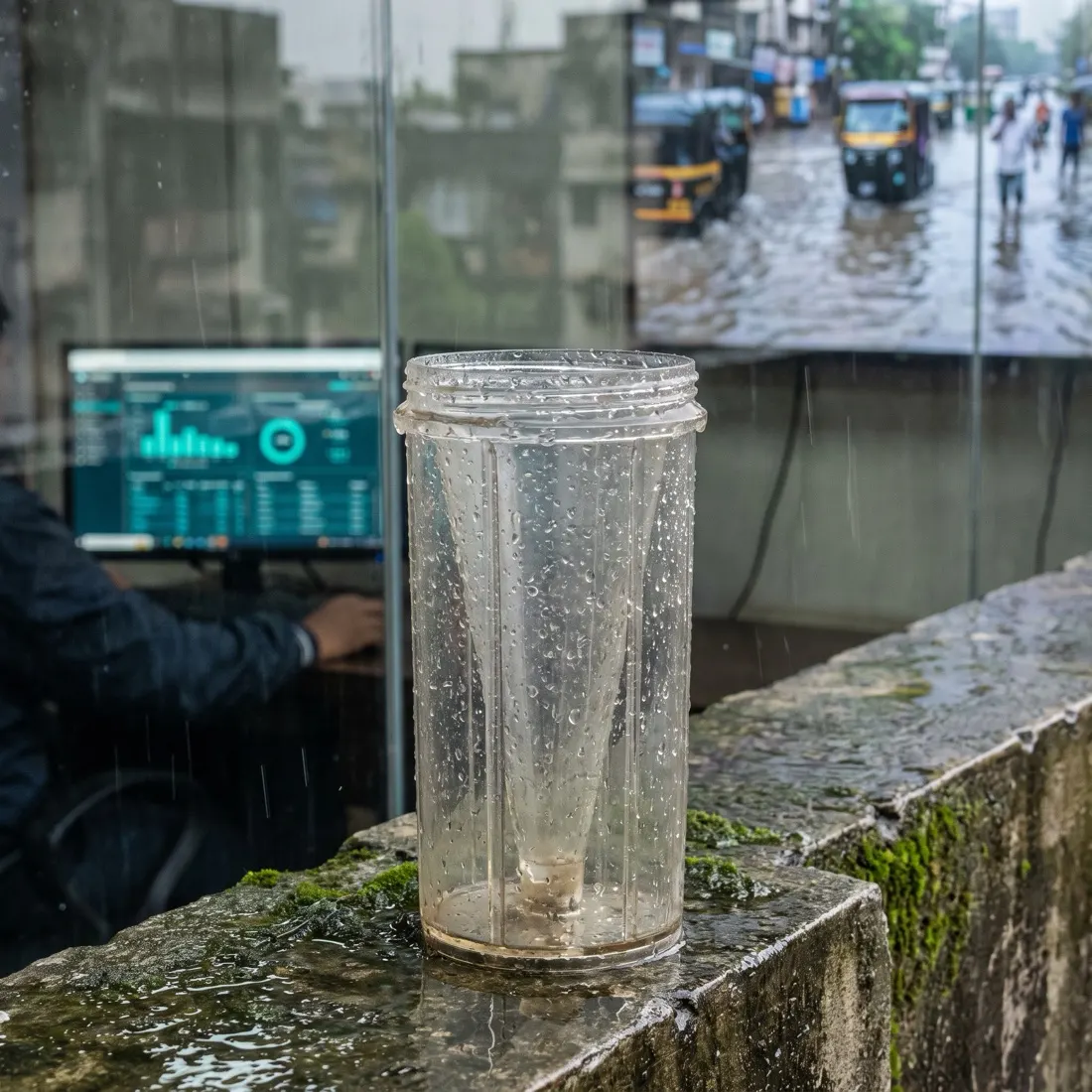
Photographs are illustrative — real customer sites are not shown.
47 minutes and 5 → 0 days are illustrative of a typical city before and after; they are not results from a live deployment.
01The screens
The live tower, the ward queue, the replay and the citizen desk on WhatsApp.
Rain, channels, pumps and citizen tickets on one map — and what needs a decision now.
Product screens with illustrative data — every name, place and figure is a placeholder.
02Before and after
Gauges, pumps, complaints and crews already report — to different people, at different times. The tower puts them on one clock.
| Area | Today | With CityWatch |
|---|---|---|
| Warning | Seen after streets flood | Alert when rain rate and channel trend cross the threshold |
| Complaints | Paper or phone · days to acknowledge | WhatsApp tickets, located and acknowledged in minutes |
| Pumps | Assumed running | Running, offline or “no telemetry” — never assumed |
| Desilting | Claimed in a register | Geotagged before/after photos per drain segment |
| Review | Reconstructed from memory | A replay and a report with every source linked |
03One clock
Every event carries a source, a timestamp and an owner — so the after-action review is a replay, not an argument.
Gauges · channels · pumps
Rain gauges, channel levels and pump telemetry stream in; silent sensors are flagged.
Citizen desk
Complaints on WhatsApp, the helpline and the web become located tickets.
Drainage basins
Tickets, rain and assets drawn on the drainage network and low-lying wards.
Alert rules
Rain rate plus channel trend crosses the threshold — the alert is proposed with the wards it covers.
Crews
Nearest crew with the right equipment assigned; ETA shared with citizens.
Proof-of-work
Before/after photos with GPS close the ticket and the drain segment.
After-action
The whole event replayed minute by minute, with who knew what, when.
Daily pack
The morning report and any court or audit annexure drafted from the record.
04The platform
Start with the monsoon; the same tower runs waste collection, roads and water supply.
05How we deliver
Built around the drains, pumps and wards you already have.
MoreRelated Operations products
OverviewCityWatch · urban flood early warning system
An urban flood early warning system watches rainfall, drain and channel levels and pump status together, and alerts the people who can act before a street or ward floods. In many Indian cities the rain is on the gauges well before the street goes under, but nobody is watching it against channel levels, complaints arrive on paper and take days to reach anyone, and desilting is claimed in a register rather than proven.
CityWatch puts rain gauges, drain channels, pump sets, citizen complaints and crews on one live map for municipal commissioners, city engineers and ward officers. When rain rate and channel trend cross a threshold, it proposes an alert with the wards at risk. Pumps show as running, offline or no telemetry, never assumed. A photo on WhatsApp becomes a located ticket with an owner, desilting closes with geotagged before and after photos, and every event can be replayed.
When rain rate and channel trend cross the threshold, an alert is proposed with the wards it covers, so the warning goes out while there is still time.
Each pump set shows as running, offline or no telemetry, and silent sensors are flagged rather than treated as fine.
Waterlogging complaints on WhatsApp, the helpline or the web become tickets located to the drain segment, with duplicates grouped; the citizen gets the crew’s ETA and a closing photo.
The nearest crew with the right equipment is assigned and its ETA tracked on the field app.
Each drain segment closes with geotagged before and after photos, shown by ward so gaps are visible before the rain.
Every event is replayed minute by minute with who knew what and when, and the morning report and any court or audit annexure are drafted from the record with sources.
| Manual / spreadsheets | Generic software | CityWatch | |
|---|---|---|---|
| Warning | Seen after streets flood | Rainfall readings on a separate portal | Alert proposed when rain rate and channel trend cross the threshold |
| Complaints | Paper or phone, days to acknowledge | Grievance portal not linked to drains | WhatsApp tickets located to the drain segment, with owner and ETA |
| Pumps | Assumed running | Status only where telemetry exists | Running, offline or no telemetry, never assumed |
| Desilting | Claimed in a register | Progress reported as length | Geotagged before and after photos per drain segment |
| Review | Reconstructed from memory | Static reports | Minute-by-minute replay and a report with every source linked |
LearnCityWatch guides and tools
8 pages on the problems CityWatch solves. See them all on one page →
FAQQuestions we get about CityWatch
CityWatch is a city operations control tower for the monsoon and beyond. Short, factual answers for buyers, procurement and the assistants people ask first.
In short. CityWatch is an urban flood early warning system and city operations control tower for the monsoon and beyond. It is built for municipal commissioners, city engineers and ward officers. It exists to remove the problems those teams describe in almost every first conversation: warnings that never go out while the gauges already show the rain; complaints on paper that take days to acknowledge; and desilting and pump runs claimed, never proven. With CityWatch, teams get alerts proposed when rain rate and channel trend cross the threshold, WhatsApp tickets located to the drain segment, crews routed, closing photos, and every ward ranked; replay and an auto-drafted daily report. It connects to rain gauges, pump telemetry, a WhatsApp citizen desk and GIS drainage layers, is used by the commissioner, city engineers, ward officers and citizens, and runs on the web, WhatsApp and a field app. Like every Autowhat AI product, CityWatch goes live on one site, lane or process first, usually within weeks, on managed cloud, in your own VPC or on-premises, and shares one operational record with the other products, so the second deployment reuses the data and integrations of the first.
It watches rain gauges, drain and channel levels, pump status and citizen complaints together, and alerts named owners before a street or ward floods. CityWatch proposes the alert when rain rate and channel trend cross a threshold, with the wards at risk.
Gauges, channel levels and pump telemetry stream in and are drawn on the drainage network and low-lying wards. Alert rules combine rain rate with channel trend, and the alert goes to the people who can send crews, while complaints show where water is already standing.
Yes. In CityWatch a photo on WhatsApp becomes a ticket located to the drain segment, duplicates are grouped, a crew is assigned, and the citizen gets the ETA and a closing photo.
They are shown as no telemetry rather than assumed to be working, so the team knows where to send someone to check.
First the drainage network, wards, gauges and pumps are mapped and the citizen desk number goes live. Then gauges and pump telemetry are connected, crews move to the field app and desilting proof starts, so the team is ready to operate alerts and daily reports through the monsoon.
Rain gauges, channel and drain levels, pump telemetry and citizen complaints, drawn on the drainage basins and wards. In CityWatch each pump shows as running, offline or no telemetry, silent sensors are flagged rather than treated as fine, and an alert is proposed when rain rate and channel trend cross a threshold.
Before the rain, each drain segment closes with geotagged before and after photos, shown by ward, so desilting gaps are visible early. Wards, gauges and pumps are mapped and the WhatsApp citizen desk is live. Through the monsoon the team runs live alerts, routed crews and an auto-drafted daily report.
It is priced per deployment after a 30-minute working session on your own data; there is no public list price. The first wave is scoped in that call.
A flood alert means flooding is possible, so prepare; a flood warning means flooding is expected, so act now. Many agencies add a third, more severe level for danger to life, and IMD uses yellow, orange and red colour codes. In CityWatch, an alert is proposed when rain rate and channel trend cross a threshold, with the wards it covers.
Yes, for drainage and waterlogging complaints first. Complaints on WhatsApp, the helpline and the web become tickets located to the drain segment, duplicates are grouped, the nearest crew with the right equipment is assigned, and the citizen gets the ETA and a closing photo. After the monsoon, the same tower extends to waste, roads and water supply.
Alerts proposed when rain rate and channel trend cross the threshold; WhatsApp tickets located to the drain segment, crews routed, closing photos; every ward ranked; replay and an auto-drafted daily report.
It connects to rain gauges, pump telemetry, a WhatsApp citizen desk and GIS drainage layers. The commissioner, city engineers, ward officers and citizens use it, on the web, on WhatsApp and through a field app for crews.
With a 30-minute working session on your own data — an engineer from the relevant sector, not a sales queue. The first wave is scoped in that call; most products go live on one site, lane or process within weeks and then scale.
On managed cloud, in your own VPC (AWS, Azure or GCP) or on-premises, with your keys. SOC 2 Type II and ISO 27001 controls, India data residency when required, and local or open-weight models when policy demands it. The data stays yours.
06Briefing
A working session: your drains and wards mapped, one past event replayed, and the warning window you had measured.