

Glossary · Cold chain & pharma
Cold chain meaning
A cold chain keeps temperature-sensitive goods such as vaccines, insulin and dairy within a set range from factory to use. See how it works and where it breaks.
A cold chain keeps temperature-sensitive goods such as vaccines, insulin and dairy within a set range from factory to use. See how it works and where it breaks.
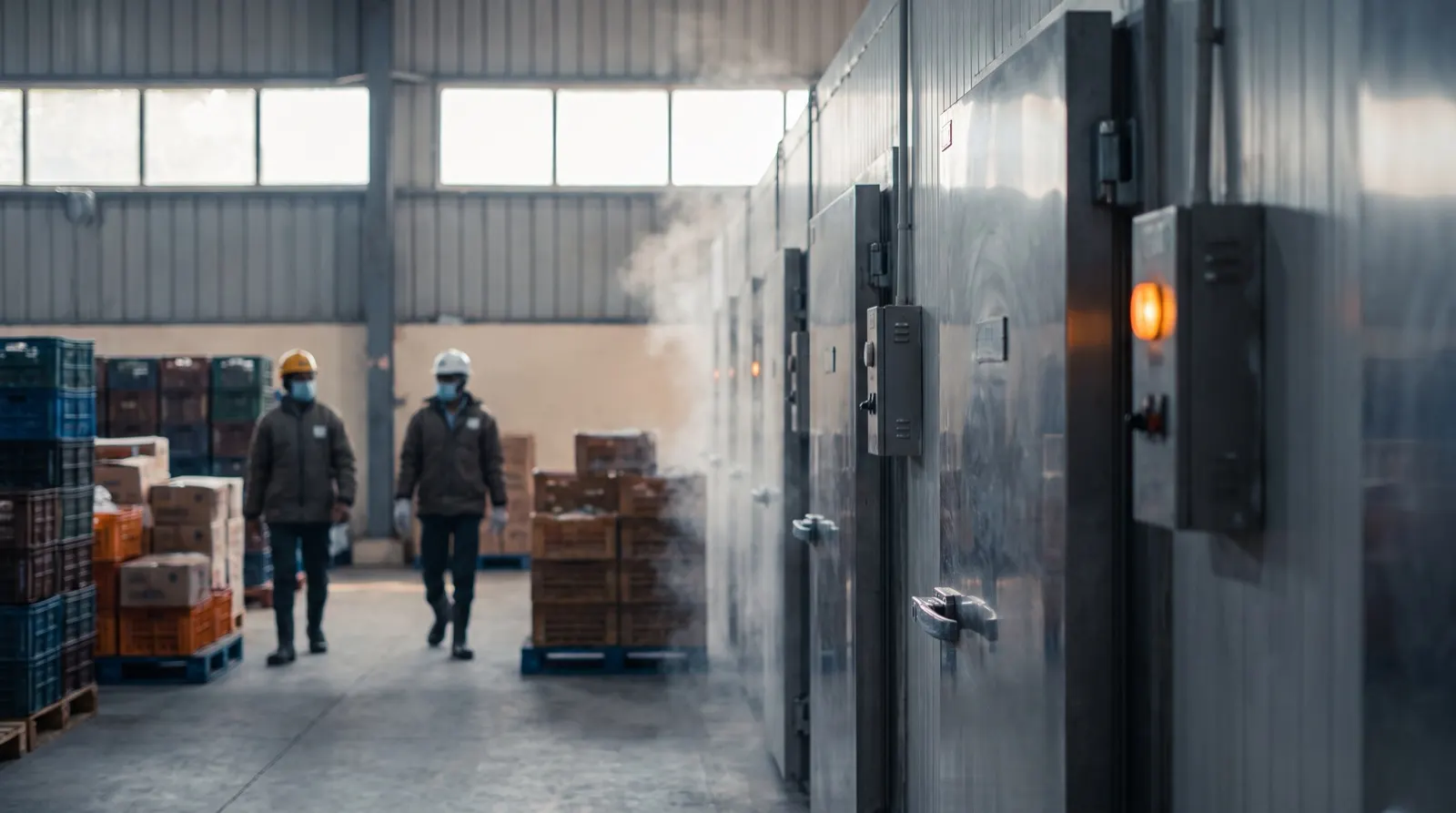
In pharmacy, the cold chain is how vaccines, insulin, many biologics, some eye drops and other refrigerated medicines reach the patient without losing potency. A typical Indian chain runs from the manufacturer's cold store to a carrying-and-forwarding agent or distributor, on to a stockist or hospital store, and finally to a chemist's pharmacy refrigerator. Each hand-off is a point where product can warm up or freeze. The same idea applies to dairy, frozen food, fruit and seafood, with different temperature bands.
For refrigerated medicines, the common band is 2 to 8 °C, but the product label and its stability data set the real limit, and some products must also never freeze. Frozen products sit in freezers, and ultra-cold products in much colder units. Wording such as "cool place" is defined differently in different pharmacopoeias, so check the text your product is registered against. Our guide to what temperature a pharma cold room should be explains set points and alarm limits in detail.
Illustrative only. A shipper of insulin labelled 2 to 8 °C arrives at a distributor. The logger shows 9.5 °C for 40 minutes during unloading. The correct response is to quarantine the stock, record the excursion with duration and peak, and send the logger data to the manufacturer or the QA team, who decide against stability data whether it can be released. Releasing it because "it was only 40 minutes", or destroying it without asking, are both decisions taken without evidence.
Continuous monitoring closes that last gap. With pharma cold chain monitoring software such as Autowhat's ColdWatch, a site reads freezers and cold rooms on existing sensors, escalates alarms until someone acknowledges them with a comment, and keeps an append-only audit trail of every reading and action.
Where this shows up in our work. ColdWatch: Freezers and cold rooms monitored live, escalating alarms, AI breach prediction and an ALCOA+ audit trail. Book a 30-minute working session with an engineer.
A cold chain is the chain of refrigerated storage and transport that keeps products such as vaccines, medicines, dairy and frozen food at the right temperature from the factory until they are used.
Most refrigerated vaccines are stored at 2 to 8 °C, and many must not be frozen. Some vaccines need frozen or ultra-cold storage, so always follow the label and the programme's official guidance.
Many medicines lose potency if they get too warm or freeze, often with no visible change. A broken cold chain can mean a patient receives a product that no longer works as intended.