3D twinFuel terminals and tank farms

Fuel terminal digital twin for tank farms and gantries: every litre, pipeline to tanker.

A live 3D model of your receipt manifold, tank farm, blending skids, gate, parking and loading gantry, fed by the tank gauges, terminal automation and gate records you already keep. It shows stock, bay use and safety checks in one place, and who should act next.

  • 8 tanks · 8 bays levels, ullage and bay status in the sample terminal, live
  • Safety first a failed gate check or permissive stops the tanker, and the twin says why
  • WhatsApp alerts to the person who can act, with the next step

01Live 3D twin

The whole terminal, in one live model.

Step through eleven views from the pipeline manifold to the fire pumps, then trace one tanker load from indent to gate-out. Click any tank, bay or tanker for its record.

Loading the 3D plant…
3D Plant digital twin
LIVE · — · Shift B Colour by

What you see
    What AutoWhat does
      Fictional layout · sample data
      AI insights0 in this view
      Click a card to fly to the machine. Each alert reaches its owner on WhatsApp and the 9 am brief.
      Drag to rotate · scroll to zoom · click a machine or an insight card

      Fictional inland fuel terminal with sample data — your twin is drawn from your own site and systems.

      02Definition

      What a fuel terminal digital twin is, area by area.

      Each area is drawn to scale and tied to the system that records it, so every number has a source and a time.

      A fuel terminal digital twin is a live 3D model of a petroleum storage terminal that updates from tank gauges, the terminal automation system (TAS), gate and weighbridge records and safety logs. It shows stock in every tank, blend ratios, where each tanker is waiting and why, and the state of fire and gas systems, and sends each exception to the person who can act on it. It reads from control systems; it does not operate valves or pumps.

      Pipeline receipt

      Receipt
      What you see
      The manifold, metering skid, densitometer and pig receiver, with each batch tracked from ticket to tank.
      Data it reads
      Pipeline tickets, fence meter readings, densitometer, valve positions from the control system.
      What it flags
      Receipts outside the loss norm, slow valve strokes, interface cuts larger than planned.

      Tank farm

      Inventory
      What you see
      Every tank with level, temperature, net stock at 15 °C, ullage to the high-level alarm and status such as on issue or QC hold.
      Data it reads
      Radar or servo tank gauges, lab certificates, receipt and issue records.
      What it flags
      Tanks close to high level before a receipt, low days of cover, book and gauged stock drifting apart.

      Blending

      E20 and additive
      What you see
      Ethanol injection and additive dosing at the bays, with the blend ratio of every compartment.
      Data it reads
      Batch controller and blend meter records from the TAS, meter proving results.
      What it flags
      Bays drifting from the 20% target, additive running low, meters due for proving.

      Gate and safety check

      Gate-in
      What you see
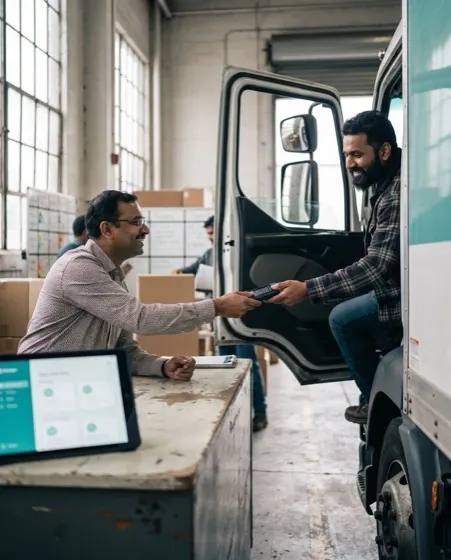
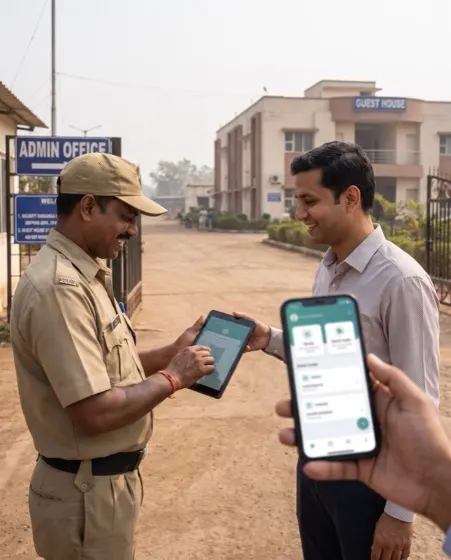
      FASTag and ANPR at the gate, then the tanker safety check on a handheld with photos before the load card is released.
      Data it reads
      FASTag and plate reads, indents, the safety checklist, tank-truck licence and calibration validity.
      What it flags
      Missing spark arrestor or earthing cable, extinguishers due, licences close to expiry.

      Tanker parking

      Sequencing
      What you see
      Numbered bays with the tanker in each, minutes waited, product and compartments, and the gantry bay it should go to next.
      Data it reads
      Weighbridge entry, load cards, bay capability and status from the TAS.
      What it flags
      Long waits when a matching bay is free, waits past the slot, bays filling faster than the gantry clears.

      Loading gantry

      8 bays
      What you see
      Each bay with its tanker, product, flow rate, loaded litres, permissives and utilisation.
      Data it reads
      TAS batch records, earthing and overfill permissive status, meter proving logs.
      What it flags
      Stopped batches, bays idle while tankers wait, meters out of service.

      Sealing, invoicing and exit

      Gate-out
      What you see
      RFID seals matched to compartments and invoice, invoice and e-way bill from metered quantity, and a weighbridge cross-check.
      Data it reads
      Seal reader, TAS quantities, invoice and e-way bill records, WB-2 readings.
      What it flags
      Seal numbers not on the invoice, weight outside tolerance against metered litres.

      Fire and safety systems

      Readiness
      What you see
      Fire-water tanks, fire pumps, hydrants and monitors, foam, sprinkler rings, gas detectors and emergency shutdown buttons.
      Data it reads
      Fire panel and detector status, pump test logs, permits, drill and inspection records.
      What it flags
      Detector faults, missed pump runs, open hot-work permits needing a gas test, low foam.

      Trace

      One load
      What you see
      The timeline of any tanker load, from indent and gate-in to loading, sealing and gate-out.
      Data it reads
      All of the above, joined on the tanker and the load card.
      What it flags
      Loads running late for the outlet, time lost in parking.

      03Measures

      Terminal measures, each with a written definition.

      The numbers the twin keeps for every shift, each computed from records rather than typed in, so operations, supply and safety see the same figure.

      MeasureWhat it tells youWhere it comes from
      KL dispatched against planMetered litres loaded into tankers in the day, at 15 °C, against the dispatch plan by product.TAS batch records, dispatch plan
      Gantry utilisationMinutes each bay is loading divided by the minutes it is available in the shift.TAS batch start and end stamps, bay status
      Bay idle minutesMinutes a bay is available with no tanker while tankers wait in parking for that product.Bay status, parking records
      Tanker turnaround timeGate-out time minus gate-in time per tanker, split into safety check, parking, loading and exit.FASTag or ANPR, weighbridge, TAS, seal reader
      Ullage and days of coverVolume left to the high-level alarm in each tank, and usable stock divided by the planned daily draw.Tank gauges, dispatch plan
      Blend ratio accuracyEthanol volume as a percentage of each compartment, against the 20% target and its tolerance.Blend meters, batch controller
      Product loss or gainGauged stock minus book stock after temperature correction, as a percentage of throughput.Tank gauges, receipt and issue records
      Safety checklist complianceShare of tankers that passed every gate safety item first time, and the items that failed.Safety handheld records
      Seal mismatchesTankers whose seal numbers on the compartments do not match the invoice at exit.RFID seal reader, invoice

      04Problems it removes

      Four terminal problems the twin takes off the table.

      Most terminals have the data in several systems. What they lack is one view of where litres and minutes go.

      Problem 01

      Bays sit idle while tankers wait in parking.

      Bay status and parking share one screen, so the next tanker that matches a bay's products is called before the bay frees. Idle bay minutes become a number with an owner.

      Problem 02

      A tank fills close to high level before anyone re-plans the receipt.

      The twin shows ullage against every planned receipt, so a batch heading for a nearly full tank is re-lined hours ahead, not in the middle of the receipt.

      Problem 03

      Blend drift is found after the loads have left.

      Every compartment's ethanol ratio is checked as it is loaded, so a drifting meter is stopped and proved after the first load out of tolerance, not after a complaint.

      Problem 04

      Fire and gas systems are checked only on drill day.

      Detector faults, missed pump runs, open permits and foam levels show on the twin every shift, and each goes to the safety or fire officer with the next step.

      LeanLean on the twin

      Lean tools at the terminal, from the gate to the gantry.

      Lean works in a fuel terminal too: standard work at the bay, interlocks that make mistakes impossible, levelled tanker slots and maintenance that stops breakdowns. In the twin each one is a clickable board placed where the work happens, and every view lists the lean tools at work in it.

      Gantry bays · pipeline receipt

      Standard work

      The loading sequence (earth, card, arms, preset, arms off) and the batch-change steps, with time against standard for every load and receipt.

      Minutes a load · steps skipped

      Gantry · gate · seal booth

      Poka-yoke

      Earthing, overfill, load-card and seal-match interlocks shown per bay and per tanker, with every trip and override recorded.

      Interlock trips · overrides

      Over the 8-bay gantry

      Andon

      One lamp per bay: green loading, amber idle or checking, red stopped; the twin times the response to every red lamp.

      Red-lamp response time

      Tanker parking · planning

      Heijunka slot board

      Booked tanker slots by hour against gantry capacity, so the after-lunch peak is visible days ahead and moved to empty morning slots.

      Slots booked vs capacity · parking wait

      Pump house · loading arms · fire pumps

      TPM

      Pump current and vibration, arm swivel leaks, PM jobs and fire-pump runs tracked against each asset.

      PM compliance · MTBF · bay-minutes lost

      Pump house · additive store

      5S & kanban

      5S audit scores and red tags at the pump house, and an additive-drum kanban that raises the indent when positions empty.

      5S score · drums on hand

      Control room

      Visual management

      One board for the shift: KL dispatched, bays loading, tanker turnaround, open alerts and days without a lost-time injury.

      Shift KPIs at a glance

      MaintenancePredictive maintenance and spares

      Sensors on 46 pumps, arms and fire pumps, and the spare checked before the bay stops.

      A terminal stops dispatching when a product pump seal leaks, a loading arm drips or a fire pump will not start. The twin reads vibration, temperature, current, seal leakage and valve stroke times, predicts what will fail and when, checks the spare in SAP stores and books the job, with its permit, into the low-load shift.

      Vibration · bearing temperature · seal pot level · current

      Product transfer pumps

      Mechanical seal and bearing failures days to weeks ahead, from seal pot top-ups, the vibration trend and current against flow. The seal is changed on the low-load shift with the standby pump on duty, not after a leak.

      Spare: Seal cartridges and bearing pairs, with bin and quantity checked in SAP

      Remaining life · mm/s trend · seal leaks per year

      Swivel leaks · months since seal change · bay stops

      Loading arms

      Which bays will leak at the swivels next, from leak reports, loads per arm and the age of each seal set, so the change is planned before an arm drips on a tanker.

      Spare: Swivel seal kits, shown with lead time when stock is zero

      Swivel leaks a month · bay minutes lost

      Weekly run log · crank voltage · jacket temperature

      Fire pumps and DG

      A diesel fire pump or DG that may not start, from missed runs, starter battery voltage on the crank and jacket heater faults, before the next drill or a real fire call.

      Spare: Battery sets, starter motors and filter kits

      Pumps available · days since last run · crank volts

      Vibration · discharge temperature · recovery rate

      VRU and tank mixers

      Vacuum pump wear from discharge temperature and falling recovery, and mixer gearbox wear, before vent limits or product quality are at risk.

      Spare: Vacuum pump seal kits and mixer gearbox bearings

      KL recovered a day · vent HC · mixer health

      Valve stroke time · meter factor drift

      MOVs and flow meters

      Actuators slowing down and meters drifting between provings, so a slow MOV is fixed before a receipt and a meter is proved before it short-loads a tanker.

      Spare: Actuator gear sets, torque switches and meter spares

      Seconds to close vs limit · meter factor change

      SAP MM · work orders · permits

      Stores and workshop

      Which critical spares are at zero or under minimum against the jobs the sensors are predicting, and the workshop backlog in days.

      Spare: 148 critical items tracked against open predictions

      Critical spares at zero · PM compliance · backlog days

      AgentsAgents on this terminal

      One command, every phone and Mac at the terminal. Agents act on what the twin shows.

      The twin shows the tank farm, the gantry bays and the tanker gate; Android X and Autowhat for Mac do the paperwork and the calls. Say one thing from your phone and it splits it across the control-room Mac, the planning desk and the phones of the people on shift. Safety steps always wait for a person to approve.

      Pick an example
      1. 1You say it onceOn Android X, by voice or text
      2. 2Android X splits itOne job per phone or Mac
      3. 3Each device worksIts agent, in apps already there
      4. 4You OK anything finalOne tap on your phone
      5. 5One summary backWhat was done, what is next
      You · Android X3:10:00 pmDone

      Bay 6 stopped on an overfill trip. Clear it safely and keep the tankers moving.

      Split into 6 jobs across 4 Android phones and 2 Macs

      Jobs done6 of 6
      1. 1Control-room MacTook the job · IoT sensor monitor
      2. 4Safety officer phoneTook the job · Quality checklist runner
      3. 3Shift in-charge · VikramTook the job · Maintenance scheduler
      4. 5Gate guard phoneTook the job · Driver coordinator
      5. 2Planning Mac · FarahTook the job · Dispatch coordinator
      6. 6Tanker driver · GurpreetTook the job · Trip and POD tracker
      7. 1Control-room MacProbe tripped at 96% on comp 3 · no spill
      8. 6Tanker driver · GurpreetEngine off · earthing on · out of cab
      9. 4Safety officer phoneArea checked · no vapour, no spill
      10. 3Shift in-charge · VikramPreset 400 L over on comp 3
      11. 1Control-room MacCause: wrong preset · trip worked
      12. 2Planning Mac · FarahMoving 9 tankers to bays 4 and 7
      13. 5Gate guard phone9 drivers told new bays · queue moving
      14. 4Safety officer phoneReset trip, drain 400 L to slop tank?
      15. 4Safety officer phoneSafety officer tapped Allow
      16. 4Safety officer phoneTrip reset · 400 L to slop · permit closed
      17. 2Planning Mac · FarahKeep bay 6 shut till meter proving?
      18. 2Planning Mac · FarahFarah tapped Allow
      19. 2Planning Mac · FarahBay 6 shut · 9 tankers on bays 4, 7
      20. 3Shift in-charge · VikramAll presets checked · proving at 17:00
      Android X

      Bay 6 tripped because the preset on compartment 3 was 400 L too high; the overfill probe did its job and nothing spilled. The trip is reset under permit, the excess drained to the slop tank, bay 6 stays shut until meter proving at 17:00, and 9 tankers are loading on bays 4 and 7.

      Send me the proving result?
      Your fleet 4 Android phones · 2 Macs · all onlineWorkingNeeds your OKDone
      1Control-room MacAutowhat for Mac · My own device

      NowCause: wrong preset · trip worked

      H07IoT sensor monitor Done
      2Planning Mac · FarahAutowhat for Mac · Runs with approval

      NowBay 6 shut · 9 tankers on bays 4, 7

      C08Dispatch coordinator Done
      3Shift in-charge · VikramAndroid X · Runs freely

      NowAll presets checked · proving at 17:00

      H04Maintenance scheduler Done
      4Safety officer phoneAndroid X · Runs with approval

      NowTrip reset · 400 L to slop · permit closed

      H03Quality checklist runner Done
      5Gate guard phoneAndroid X · Runs freely

      Now9 drivers told new bays · queue moving

      F08Driver coordinator Done
      6Tanker driver · GurpreetAndroid X · Ask only

      NowEngine off · earthing on · out of cab

      F02Trip and POD tracker Done

      Every device follows its own rule: my own device runs freely, with approval waits for a tap, ask only just answers. Messages between devices are end-to-end encrypted.

      05A shift on the twin

      One afternoon shift, three calls the twin made.

      Illustrative events in the sample terminal, showing who saw what and who acted.

      14:22

      A tanker without a spark arrestor

      The safety handheld recorded a missing spark arrestor with a photo. The tanker stayed outside, its load moved to the next MS tanker in parking, and the transporter was told on WhatsApp what to fit before re-presenting.

      14:24

      An overfill trip at Bay 6

      The overfill permissive stopped compartment 3 at 4.62 of 5.00 KL, and a gas detector beside the bay was already in fault. The twin told the shift-in-charge not to reset from the control room until the probe was checked, the compartment dipped and the detector replaced.

      14:26

      An HSD tanker waiting 74 minutes

      With Bay 6 stopped, the HSD tanker in P-02 had no bay. The twin proposed sending it to Bay 7 ahead of an MS tanker, and the TAS operator called the driver on WhatsApp.

      06How it is built

      How a fuel terminal digital twin is built from the records you already keep.

      Five steps, starting with your site plan, tank gauges and TAS data, adding devices only where a stage cannot be timed.

      1. 01

        Draw the site

        We trace the manifold, dykes, tanks, pump house, gantry, gate and parking from a drawing or satellite view, then confirm on site.

      2. 02

        Connect the records

        Tank gauges, TAS batch records, gate and weighbridge reads, safety checklists and fire panel status are joined on the tank, the bay and the load card.

      3. 03

        Write the norms

        Loss norms, high-level margins, blend tolerances, bay standards and safety rules are agreed with your operations and safety teams.

      4. 04

        Route the alerts

        Every exception goes to its owner on WhatsApp with the next step: receipt officer, TAS operator, shift-in-charge, safety officer or transporter.

      5. 05

        Review on replay

        Each shift is replayed tank by tank and bay by bay, so the weekly review starts from where litres and minutes were lost.

      Data it connects to

      • Tank gauging system — level, temperature and density by tank
      • Terminal automation system (TAS) — load cards, batch records, bay and permissive status
      • Pipeline tickets and fence meters — batch quantities, interface and meter factors
      • FASTag, ANPR and gate passes — gate-in and gate-out reads, indents and slots
      • Safety handheld — tanker checklist items with photos
      • Weighbridge — tare and gross readings
      • RFID seal reader, invoice and e-way bill — seal numbers and dispatch documents
      • Fire panel, gas detectors and permits — detector status, pump tests, hot-work permits and drills

      Rollout

      1. Weeks 1–2 · DrawSite traced and confirmed; tank gauge and gate stamps switched on, even if some are by hand.
      2. Weeks 3–4 · ConnectTAS batch records, weighbridge and seal data joined to the load card; first report on bay idle time and turnaround.
      3. Weeks 5–6 · AlertNorms agreed and WhatsApp alerts live for ullage, cover, blend drift, bay idle and gate safety checks.
      4. Weeks 7–8 · ExtendFire and gas system status, permits and pipeline receipt reconciliation added; replay used in the weekly review.

      07Compared

      Fuel terminal digital twin vs registers and terminal automation, compared

      Registers & spreadsheetsTerminal automation system (TAS)Autowhat fuel terminal digital twin
      What it doesRecords stock and dispatch by handControls loading: load cards, batch controllers, permissivesShows the whole terminal and routes exceptions; reads from the TAS
      Tank stockDip sheets once or twice a shiftGauge readings on the control screenNet stock, ullage and days of cover against the receipt and dispatch plan
      Tanker flowGate registerFrom load card to batch endGate-in, safety check, parking, bay, seal and gate-out, timed
      Safety systemsTest registers on paperPermissives at the bayDetectors, pumps, permits and drills tracked by asset every shift
      View of the siteNoneProcess screensLive 3D model of manifold, tanks, gantry, gate and fire systems
      AlertsPhone callsAlarms in the control roomWhatsApp to the owner of each exception, with the next step
      Best fitVery small depotsEvery terminal that loads tankersTerminals where stock, bays and safety need one shared view

      Terms used on this page

      TAS
      Terminal automation system: software and controllers that issue load cards, run batch controllers at the bays and record what was loaded.
      Bottom loading
      Filling a tanker through couplings at the bottom of each compartment, with a vapour arm returning vapour to a recovery unit.
      Ullage
      The empty volume left in a tank, usually counted up to its high-level alarm.
      Floating-roof tank
      A tank whose roof floats on the product to cut evaporation, used for volatile products such as petrol.
      Dyke
      A bunded area around tanks, with a wall sized to hold a spill.
      E20
      Petrol blended with 20% ethanol by volume.
      Overfill permissive
      A sensor in each compartment that stops loading if the product reaches a high level.
      Pig receiver
      A pipeline end where cleaning or batch pigs are caught and removed.
      Interface
      The mixed slug where one product meets the next in a pipeline, cut to a slop tank.

      Read next

      FAQQuestions about fuel terminal digital twins

      Straight answers, before the call.

      Answers to what terminal managers, supply planners and safety officers ask us most.

      What is a fuel terminal digital twin?

      A fuel terminal digital twin is a live 3D model of a petroleum storage terminal that updates from tank gauges, the terminal automation system, gate and weighbridge records and safety logs. It shows stock, blending, tanker flow and fire system readiness together, and sends each exception to the person who can act.

      How is it different from a terminal automation system (TAS)?

      A TAS controls loading: it issues load cards, runs batch controllers and enforces permissives at the bay. The digital twin reads from the TAS and joins it with tank gauges, gate, weighbridge, seal and safety records, so delays and risks show in place with an owner. It does not replace the TAS or operate equipment.

      Does the twin control valves, pumps or loading?

      No. The twin reads from your control systems and records; it does not open valves, start pumps or reset permissives. When a safety device trips, it tells the right person what was seen and what to check on site, and the reset stays with your operators and procedures.

      How does it track tank levels and stock?

      It reads level and temperature from your tank gauging system and converts them to net stock at 15 °C using your tank calibration tables. It then shows ullage to the high-level alarm, days of cover at the dispatch plan, and the gap between gauged and book stock every shift.

      How does it help reduce tanker turnaround time?

      It times each stage, from gate-in and safety check to parking, loading, sealing and gate-out, so the largest block is visible. Bay status and parking share one view, so the next tanker that matches a free bay is called on WhatsApp before the bay goes idle.

      Can it check E20 blend accuracy?

      Yes, where the TAS records blend meter readings. The twin computes the ethanol ratio of every compartment, compares it with your target and tolerance, and flags a bay whose ratio drifts so the meter can be proved before more loads leave.

      What tanker safety checks can it record at the gate?

      Whatever your checklist holds, typically spark arrestor, earthing cable, fire extinguishers, tank-truck licence and calibration validity, and a breath test. Each item is recorded on a handheld with a photo, and a failed item holds the load card until the tanker re-presents.

      Does it work with RFID seals and the weighbridge?

      Yes. Seal numbers read at the booth are matched to the compartments on the invoice, and the exit weighbridge reading is compared with metered litres times density. A mismatch holds the tanker with the evidence attached.

      Can it track fire and gas safety systems?

      Yes. Fire pump runs, fire-water levels, hydrant and monitor inspections, foam stock, gas detector status, emergency shutdown tests, permits and drills can be recorded against each asset. The twin shows what is not ready before each shift. Compliance with your regulator's rules remains your terminal's responsibility.

      Do we need new sensors to start?

      Usually not. Most terminals start with the tank gauges, TAS, weighbridge and gate records they already have, plus handheld checklists where a stage is on paper. Readers or detectors are added later, only where they remove a manual step.

      Who uses a fuel terminal digital twin?

      Terminal managers use it for the whole-site view, supply planners for stock and cover, TAS operators for bay sequencing, safety and fire officers for readiness and permits, and transporters and drivers get their bay calls and rejections on WhatsApp.

      How much does a fuel terminal digital twin cost in India?

      It is priced per deployment after a 30-minute working session on your own data; there is no public list price. Cost depends on the number of tanks and bays, the systems to connect, and whether handhelds or readers are needed.

      How long does it take to set up?

      The first areas typically go live within weeks: the site is drawn and tank and gate data connected first, then TAS batch records, seal and weighbridge data, alerts agreed with your team, and fire and gas systems added.

      Where does the data live, and who owns it?

      The data stays yours, wherever the twin runs. It runs on managed cloud, in your own VPC on AWS, Azure or GCP, or on-premises with your keys, and India data residency is available when required. Stock, dispatch and safety records remain your company's data, not ours.

      Can lean tools be used in a fuel terminal?

      Yes. A terminal runs repeated, timed work: tanker checks, bay loading, receipts and maintenance. Standard work for loading, poka-yoke interlocks, an andon per bay, levelled tanker slots (heijunka), TPM for pumps and loading arms and 5S at the pump house all show in the twin with their live measures.

      How does heijunka cut tanker waiting time at a terminal?

      The slot board compares tankers booked each hour with what the gantry can load. When the after-lunch hours are overbooked, the planner offers empty morning slots to large transporters, so arrivals spread across the day and parking waits fall without adding bays.

      08Briefing

      Send us a week of tank and gantry records. We'll show you your terminal as a twin.

      A working session: your terminal drawn, a week of tankers and tank levels replayed, and the first alerts written with your team.